<?xml version="1.0" encoding="utf-8"?>
<!DOCTYPE html>
<html xmlns:xsi="http://www.w3.org/2001/XMLSchema-instance"
xsi:schemaLocation="http://www.w3.org/1999/xhtml https://raw.githubusercontent.com/oreillymedia/HTMLBook/master/schema/htmlbook.xsd"
xmlns="http://www.w3.org/1999/xhtml"
lang="en">
<head>
<title>Enabling Accessible Healthcare Delivery</title>
</head>
<body data-type="book">
<section data-type="halftitlepage">
    <h1 class="title">Enabling Accessible Healthcare Delivery</h1>
</section>
<section data-type="titlepage">
    <h1 class="title">Enabling Accessible Healthcare Delivery</h1>
    <p class="subtitle"></p>
    <p class="author">Tali Cherniawsky</p>
    <p class="publisher">Toronto Metropolitan University Pressbooks</p>
    <p class="publisher-city">Toronto, ON</p>
</section>
<section data-type="copyright-page">
    <h1>Enabling Accessible Healthcare Delivery</h1>
    <div class="license-attribution">
         <p><img src="https://pressbooks.library.torontomu.ca/accessiblehealthcare/wp-content/themes/pressbooks-book/packages/buckram/assets/images/cc-by.svg" alt="Icon for the Creative Commons Attribution 4.0 International License" /></p>
         <p>Enabling Accessible Healthcare Delivery Copyright © 2025 by <span>Toronto Metropolitan University</span> is licensed under a <a rel="license" href="https://creativecommons.org/licenses/by/4.0/">Creative Commons Attribution 4.0 International License</a>, except where otherwise noted.</p>
    </div>
    <p data-start="694" data-end="845"><strong data-start="694" data-end="736">© 2025 Toronto Metropolitan University</strong><br data-start="736" data-end="739" />
    This work is licensed under a <strong data-start="772" data-end="842">Creative Commons Attribution 4.0 International (CC BY 4.0) License</strong>.</p>
    <p data-start="850" data-end="868">You are free to:</p>
    <ul data-start="872" data-end="1048">
         <li data-start="872" data-end="947"><strong data-start="874" data-end="883">Share</strong> — Copy and redistribute the material in any medium or format.</li>
         <li data-start="951" data-end="1048"><strong data-start="953" data-end="962">Adapt</strong> — Remix, transform, and build upon the material for any purpose, even commercially.</li>
    </ul>
    <p data-start="1053" data-end="1086">Under the following conditions:</p>
    <ul data-start="1090" data-end="1211">
         <li data-start="1090" data-end="1211"><strong data-start="1092" data-end="1107">Attribution</strong> — You must give appropriate credit, provide a link to the license, and indicate if changes were made.</li>
    </ul>
    <p data-start="1216" data-end="1337"><strong data-start="1216" data-end="1242">View the full license:</strong> <a rel="noopener" target="_new" data-start="1243" data-end="1335" href="https://creativecommons.org/licenses/by/4.0/">https://creativecommons.org/licenses/by/4.0/</a></p>
    <p data-start="1342" data-end="1522">This open textbook is available in multiple formats free of charge. A printed version can be purchased at cost through the Toronto Metropolitan University Campus Store or Copyrite.</p>
</section>
<nav data-type="toc">
    <h1>Contents</h1>
    <ol>
         <li class="front-matter introduction"><a href="#front-matter-about"><span class="toc-chapter-title">About</span></a></li>
         <li class="front-matter miscellaneous post-introduction"><a href="#front-matter-license"><span class="toc-chapter-title">Licence</span></a></li>
         <li class="front-matter miscellaneous post-introduction"><a href="#front-matter-authorship"><span class="toc-chapter-title">Authorship</span></a></li>
         <li class="front-matter miscellaneous post-introduction"><a href="#front-matter-accessibility-statement"><span class="toc-chapter-title">Accessibility Statement</span></a></li>
         <li class="front-matter introduction post-introduction"><a href="#front-matter-learning-objectives"><span class="toc-chapter-title">Learning Objectives</span></a></li>
         <li class="front-matter miscellaneous post-introduction"><a href="#front-matter-how-to-use-this-pressbook"><span class="toc-chapter-title">How to Use This Pressbook</span></a></li>
         <li class="part"><a href="#part-module-2">Module 1: Acknowledging How We're Starting</a></li>
         <li class="chapter standard"><a href="#chapter-new-relationships"><span class="toc-chapter-title">New Relationships</span></a></li>
         <li class="chapter standard"><a href="#chapter-beginning-with-land-acknowledgments"><span class="toc-chapter-title">Beginning with Land Acknowledgments</span></a></li>
         <li class="chapter standard"><a href="#chapter-more-to-explore-1"><span class="toc-chapter-title">More to Explore</span></a></li>
         <li class="part"><a href="#part-module-2-medicalization-and-re-framing-expertise">Module 2: Medicalization and Reframing Expertise</a></li>
         <li class="chapter standard"><a href="#chapter-other-models-of-disability"><span class="toc-chapter-title">Other Models of Disability</span></a></li>
         <li class="chapter standard"><a href="#chapter-the-medical-model"><span class="toc-chapter-title">The Medical Model</span></a></li>
         <li class="chapter standard"><a href="#chapter-medicalization-and-control"><span class="toc-chapter-title">Medicalization and Control</span></a></li>
         <li class="chapter standard"><a href="#chapter-more-to-explore2"><span class="toc-chapter-title">More to Explore</span></a></li>
         <li class="part"><a href="#part-module-3-intersectionality-and-positionality">Module 3: Reframing Disability</a></li>
         <li class="chapter standard"><a href="#chapter-ableism-and-disableism"><span class="toc-chapter-title">Ableism and Disableism</span></a></li>
         <li class="chapter standard"><a href="#chapter-the-frameworks"><span class="toc-chapter-title">The Frameworks</span></a></li>
         <li class="chapter standard"><a href="#chapter-disability-justice"><span class="toc-chapter-title">Disability Justice</span></a></li>
         <li class="chapter standard"><a href="#chapter-unpacking-intersectionality"><span class="toc-chapter-title">Unpacking Intersectionality</span></a></li>
         <li class="chapter standard"><a href="#chapter-more-to-explore3"><span class="toc-chapter-title">More to Explore</span></a></li>
         <li class="part"><a href="#part-module-4-rights-and-justice">Module 4: Access, Accommodation, Rights, and Justice</a></li>
         <li class="chapter standard"><a href="#chapter-the-right-to-health-care"><span class="toc-chapter-title">The Right to Health Care</span></a></li>
         <li class="chapter standard"><a href="#chapter-gaps-in-service-and-rights-unfulfilled"><span class="toc-chapter-title">Gaps in Service and Rights Unfulfilled</span></a></li>
         <li class="chapter standard"><a href="#chapter-more-to-explore4"><span class="toc-chapter-title">More to Explore</span></a></li>
         <li class="part"><a href="#part-module-5-accessing-care">Module 5: Accessing Care</a></li>
         <li class="chapter standard"><a href="#chapter-accessing-care"><span class="toc-chapter-title">Accessing Care</span></a></li>
         <li class="chapter standard"><a href="#chapter-care-within-healthcare"><span class="toc-chapter-title">Care and the Institution</span></a></li>
         <li class="part"><a href="#part-module-6-disability-the-good-human-life">Module 6: Cripping Health Promotion</a></li>
         <li class="chapter standard"><a href="#chapter-health-promotion"><span class="toc-chapter-title">Health Promotion</span></a></li>
         <li class="chapter standard"><a href="#chapter-defining-health-disability-and-the-aims-of-health-promotion"><span class="toc-chapter-title">Defining Health, Disability, and the Aims of Health Promotion</span></a></li>
         <li class="chapter standard"><a href="#chapter-social-performance-and-health-promotion"><span class="toc-chapter-title">Social Performance and Health Promotion</span></a></li>
         <li class="chapter standard"><a href="#chapter-more-to-explore6"><span class="toc-chapter-title">More to Explore</span></a></li>
         <li class="part"><a href="#part-module-7-cripping-health-promotion">Module 7: Disability Justice and the Good Human Life</a></li>
         <li class="chapter standard"><a href="#chapter-medical-community-and-disability"><span class="toc-chapter-title">The Medical Community and Disability</span></a></li>
         <li class="part"><a href="#part-module-8-crip-futures">Module 8: Documentary</a></li>
         <li class="chapter standard"><a href="#chapter-documentary"><span class="toc-chapter-title">Documentary [OUTLINE]</span></a></li>
         <li class="chapter standard"><a href="#chapter-podcast"><span class="toc-chapter-title">Podcast [OUTLINE]</span></a></li>
         <li class="chapter standard"><a href="#chapter-more-to-explore8"><span class="toc-chapter-title">More to Explore</span></a></li>
         <li class="part"><a href="#part-ephemera">Activities</a></li>
         <li class="chapter standard"><a href="#chapter-activity-1-ephemera"><span class="toc-chapter-title">Activity 1: Ephemera</span></a></li>
         <li class="chapter standard"><a href="#chapter-exercise-2-mapping-health-access"><span class="toc-chapter-title">Activity 2: Mapping Health Access</span></a></li>
         <li class="part display-none"><a href="#part-transcripts">Transcripts</a></li>
         <li class="part display-none"><a href="#part-module-sample-template-only">Module Sample [TEMPLATE ONLY]</a></li>
         <li class="back-matter glossary"><a href="#back-matter-glossary"><span class="toc-chapter-title">Glossary</span></a></li>
         <li class="back-matter miscellaneous"><a href="#back-matter-sample-syllabus"><span class="toc-chapter-title">Sample Syllabus</span></a></li>
         <li class="back-matter acknowledgements"><a href="#back-matter-acknowledgements"><span class="toc-chapter-title">Acknowledgements</span></a></li>
    </ol>
</nav>
<section data-type="introduction" class="front-matter introduction" id="front-matter-about" title="About">
    <header>
         <h1 class="front-matter-title display-none">About</h1>
         <p data-type="subtitle" class="front-matter-number display-none">1</p>
    </header>
    <p data-start="1026" data-end="1428"><img src="https://pressbooks.library.torontomu.ca/accessiblehealthcare/wp-content/uploads/sites/422/2024/07/ON_POS_LOGO_RGB-300x120.png" alt="Government of Ontario logo" width="300" height="120" class="alignnone size-medium wp-image-557" srcset="https://pressbooks.library.torontomu.ca/accessiblehealthcare/wp-content/uploads/sites/422/2024/07/ON_POS_LOGO_RGB-300x120.png 300w, https://pressbooks.library.torontomu.ca/accessiblehealthcare/wp-content/uploads/sites/422/2024/07/ON_POS_LOGO_RGB-1024x410.png 1024w, https://pressbooks.library.torontomu.ca/accessiblehealthcare/wp-content/uploads/sites/422/2024/07/ON_POS_LOGO_RGB-768x307.png 768w, https://pressbooks.library.torontomu.ca/accessiblehealthcare/wp-content/uploads/sites/422/2024/07/ON_POS_LOGO_RGB-1536x614.png 1536w, https://pressbooks.library.torontomu.ca/accessiblehealthcare/wp-content/uploads/sites/422/2024/07/ON_POS_LOGO_RGB-2048x819.png 2048w, https://pressbooks.library.torontomu.ca/accessiblehealthcare/wp-content/uploads/sites/422/2024/07/ON_POS_LOGO_RGB-65x26.png 65w, https://pressbooks.library.torontomu.ca/accessiblehealthcare/wp-content/uploads/sites/422/2024/07/ON_POS_LOGO_RGB-225x90.png 225w, https://pressbooks.library.torontomu.ca/accessiblehealthcare/wp-content/uploads/sites/422/2024/07/ON_POS_LOGO_RGB-350x140.png 350w" sizes="(max-width: 300px) 100vw, 300px" /></p>
    <p data-start="1026" data-end="1428">This project is funded by the Government of Ontario through the <a href="https://www.ontario.ca/page/enabling-change-program">EnAbling Change Program</a>, administered by the Ministry for Seniors and Accessibility. The EnAbling Change Program supports projects that promote accessibility and inclusion in Ontario by increasing awareness and compliance with the Accessibility for Ontarians with Disabilities Act (AODA).</p>
    <p data-start="1434" data-end="1562">The views expressed in this resource are those of the authors and do not necessarily reflect those of the Government of Ontario.</p>
    <section class="numberless post-184 chapter type-chapter status-publish hentry chapter-type-numberless focusable focusable" data-type="chapter">
         <h1><span style="color: #004c9b"><strong>About</strong></span></h1>
         <p data-start="736" data-end="1143">This Pressbook is a free, open-access resource for learning about <strong data-start="806" data-end="845">accessible and inclusive healthcare</strong>, centering the expertise of <strong data-start="874" data-end="908">disabled, Deaf, and mad people</strong>. Developed in collaboration with researchers, educators, disability networks, and community members, it brings together curriculum and multimedia resources to support learning in classroom settings and independent study.</p>
         <p data-start="1145" data-end="1555">Many of the materials in this Pressbook were first piloted in Fall 2024 in the <strong data-start="1228" data-end="1295">School of Disability Studies at Toronto Metropolitan University</strong>, where 51 students participated in lectures and facilitated community visits with disabled, Deaf, and mad people across the Greater Toronto Area. This resource includes recordings, interviews, and other multimedia content produced during that pilot.</p>
         <h2><span style="color: #004c9b"><strong>Using This Resource</strong></span></h2>
         <p data-start="1598" data-end="1644">This Pressbook can be used in multiple ways:</p>
         <ul data-start="1645" data-end="1952">
              <li data-start="1645" data-end="1724">As a <strong data-start="1652" data-end="1684">standalone learning resource</strong> for students and independent learners</li>
              <li data-start="1725" data-end="1823">As <strong data-start="1730" data-end="1760">curriculum for instructors</strong> integrating accessible healthcare content into their courses</li>
              <li data-start="1824" data-end="1952">As a <strong data-start="1831" data-end="1892">guide for running a course that includes community visits</strong>, or as an alternative for those unable to facilitate them</li>
         </ul>
         <p data-start="1954" data-end="2038">For more details on how to use this resource, see <a href="#front-matter-how-to-use-this-pressbook"><strong data-start="2004" data-end="2035">How to Use This Pressbook</strong></a>.</p>
         <p>We encourage you to use this resource and would love to hear if you have integrated it into your curriculum. Please consider notifying Dr. Ignagni if you are using part of this Pressbook, identifying the learning focus and the number of learners. <a href="https://openlibrary.ecampusontario.ca/share-an-adoption/" target="_blank" rel="noopener"></a></p>
         <div class="textbox shaded">
              <p><strong>Dr. Esther Ignagni</strong><br />
               Toronto Metropolitan University<br />
               <a href="mailto:eignagni@torontomu.ca">eignagni@torontomu.ca</a><br />
               350 Victoria St.<br />
               Toronto, ON M5B 2K3</p>
         </div>
    </section>
    <section data-type="chapter">
    </section>
    <p>&nbsp;</p>
    <section data-type="chapter">
    </section>
    <section data-type="chapter">
    </section>
    <section data-type="chapter">
    </section>
    <section data-type="chapter">
    </section>
    <section data-type="chapter">
    </section>
    <section data-type="chapter">
    </section>
    <section data-type="chapter">
    </section>
</section>
<section data-type="halftitlepage" class="front-matter miscellaneous post-introduction" id="front-matter-license" title="Licence">
    <header>
         <h1 class="front-matter-title">Licence</h1>
         <p data-type="subtitle" class="front-matter-number">2</p>
    </header>
    <p>This open textbook, <em>Enabling Accessible Healthcare Delivery</em>, has been published openly using a Creative Commons Attribution 4.0 International (CC BY 4.0) license. This means you are free to:</p>
    <ul>
         <li>Share — copy and redistribute the material in any medium or format</li>
         <li>Adapt — remix, transform, and build upon the material for any purpose, even commercially</li>
    </ul>
    <p>Under the following conditions:</p>
    <ul>
         <li>Attribution — You must give appropriate credit, provide a link to the license, and indicate if changes were made. You may do so in any reasonable manner, but not in any way that suggests the licensor endorses you or your use.</li>
    </ul>
    <p><a href="https://creativecommons.org/licenses/by/4.0/">View the full Creative Commons Attribution 4.0 International license.</a></p>
    <p>This book is offered in various e-book formats free of charge, and a printed version is available at cost through the Toronto Metropolitan University Campus Store or Copyrite.</p>
</section>
<section data-type="halftitlepage" class="front-matter miscellaneous post-introduction" id="front-matter-authorship" title="Authorship">
    <header>
         <h1 class="front-matter-title">Authorship</h1>
         <p data-type="subtitle" class="front-matter-number">3</p>
    </header>
    <p>This Pressbook was written by many authors in a collaborative, interdependent process, involving members from the mad, Deaf, and disabled community. All names are listed alphabetically.</p>
    <h2><span style="color: #004c9b;background-color: #ffffff">Funding Secured By</span></h2>
    <p>Tali Cherniawsky, Lab Coordinator, Disability Publics Lab, School of Disability Studies, Toronto Metropolitan University<br />
     Esther Ignagni, Associate Professor, School of Disability Studies &amp; Executive Director, Center for Excellence in Learning and Teaching, Toronto Metropolitan University<br />
     Lauren Munro, Assistant Professor (Limited Term Faculty), School of Disability Studies, Toronto Metropolitan University<br />
     Heather Willis, Accessibility Coordinator, Office of the Vice-President, Equity and Community Inclusion, Toronto Metropolitan University</p>
    <h2><span style="color: #004c9b;background-color: #ffffff">Pressbook Editors</span></h2>
    <p>Esther Ignagni<br />
     Loree Erickson, Researcher and Sessional Lecturer, Toronto<br />
     Kelly Flinn, Project Coordinator, School of Disability Studies, Toronto Metropolitan University<br />
     Lauren Munro<br />
     Heather Willis</p>
    <h2><span style="color: #004c9b;background-color: #ffffff">Pressbook Developers</span></h2>
    <p><span style="background-color: #ffffff">Feven Araya, Instructional Designer and Course Developer<br />
     Tali Cherniawsky<br />
     Leah Bennink, Research Assistant and Access Support, School of Disability Studies, Toronto Metropolitan University<br />
     </span></p>
    <h2><span style="color: #004c9b;background-color: #ffffff">Content Writers</span></h2>
    <p data-start="175" data-end="263">The original text was assembled by Dr. Loree Erickson. Other contributors include:</p>
    <p data-start="175" data-end="263">Dahlia Benedikt, Educational Developer, Undergraduate Medical Education, School of Medicine, Toronto Metropolitan University<br />
     Cameron Crawford, Adjunct Professor, School of Disability Studies, Toronto Metropolitan University<br />
     Kelly Flinn<br data-start="442" data-end="445" />
    Esther Ignagni<br data-start="586" data-end="589" />
    Genya Kleiner, Research Associate, University of Toronto; Curriculum Writer, Toronto Metropolitan University<br />
     Lauren Munro<br />
     Fran Odette, Part-time Faculty, George Brown College (CPLS); Sessional Instructor, School of Disability Studies, Toronto Metropolitan University<br data-start="685" data-end="688" />
    Heather Willis</p>
    <h3 data-start="184" data-end="209"><span style="color: #004c9b"><strong data-start="188" data-end="207">Copy Editing</strong></span></h3>
    <p data-start="210" data-end="225">Scott Uzelman &#8211; <a href="http://www.spot-on-editing.com">www.spot-on-editing.com </a></p>
    <h3 data-start="227" data-end="258"><span style="color: #004c9b"><strong data-start="231" data-end="256">Multimedia Production</strong></span></h3>
    <p data-start="260" data-end="348">Lisa East, Videography and Video Editing – <a rel="noopener" target="_new" data-start="191" data-end="236" href="https://www.lisaeast.com/">www.lisaeast.com</a><br data-start="236" data-end="239" />
    Nicolas Field, Sound Production and Editing – <a rel="noopener" target="_new" data-start="285" data-end="340" href="https://nicolasfield.studio/">www.nicolasfield.studio</a></p>
    <h3 data-start="244" data-end="273"><span style="color: #004c9b"><strong data-start="248" data-end="271">Research Assistance</strong></span></h3>
    <p data-start="274" data-end="307">Erica Friesen<br />
     Amira Mahamud<br />
     Akhila Varghese</p>
</section>
<section data-type="halftitlepage" class="front-matter miscellaneous post-introduction" id="front-matter-accessibility-statement" title="Accessibility Statement">
    <header>
         <h1 class="front-matter-title">Accessibility Statement</h1>
         <p data-type="subtitle" class="front-matter-number">4</p>
    </header>
    <p data-start="265" data-end="595">This Pressbook has been designed with <strong data-start="303" data-end="328">accessibility in mind</strong> to ensure that it is usable by the widest possible audience, including those who use <strong data-start="414" data-end="440">assistive technologies</strong>. The web version of this book has been developed to meet the <a data-start="502" data-end="592" rel="noopener" target="_new" href="https://www.w3.org/TR/WCAG21/">Web Content Accessibility Guidelines (WCAG) 2.1, Level AA</a>.</p>
    <p data-start="597" data-end="946">We recognize that accessibility is an <strong data-start="635" data-end="654">ongoing process</strong>, and while we strive to make this resource as accessible as possible, <strong data-start="725" data-end="755">some third-party materials</strong> (e.g., external videos, linked PDFs) may not fully meet accessibility standards. This may include videos without accurate closed captioning, inaccessible PDFs, or other external media.</p>
    <p data-start="948" data-end="1097">If you experience any accessibility issues with this Pressbook, please contact:<br data-start="1027" data-end="1030" />
    <strong data-start="1033" data-end="1058"><a data-start="1035" data-end="1056" rel="noopener" href="mailto:eignagni@torontomu.ca">eignagni@torontomu.ca</a></strong><br data-start="1058" data-end="1061" />
    When reaching out, please include:</p>
    <ul data-start="1098" data-end="1222">
         <li data-start="1098" data-end="1144">The <strong data-start="1104" data-end="1112">page</strong> you’re having difficulty with</li>
         <li data-start="1145" data-end="1222">The <strong data-start="1151" data-end="1206">browser, operating system, and assistive technology</strong> you are using</li>
    </ul>
    <h2><span style="color: #004c9b">Starting with Standard Access</span></h2>
    <p>We encourage users of this Pressbook to begin with the standard accessibility and accommodation policies within their institutions and to share feedback on where we could improve. <strong>Standard access and accommodation texts serve as an important foundation for critical discussions on accessibility.</strong></p>
    <h2><span style="color: #004c9b">Our Access Principles</span></h2>
    <p>The approach to access in this Pressbook is informed by the ethos and practices developed within Disability Studies courses at the School of Disability Studies at Toronto Metropolitan University.</p>
    <p>Access is<span> </span><strong>collectively</strong><span> </span>and<span> </span><strong>interdependently</strong><span> </span>created as students, guests, and faculty are invited to share what they need for an accessible learning environment  As such, access is understood to be an interdependent practice that is created by all those who participate in a course.</p>
    <p><strong>Negotiation</strong><span> </span>and<span> </span><strong>flexibility</strong><span> </span>are crucial to access and accommodation, as it is understood that our bodies and minds are dynamic and that what we may need in terms of access can change over time and with circumstance and context. Access check-ins are conducted regularly throughout a course.</p>
    <p data-start="241" data-end="740">As part of our commitments to <strong data-start="271" data-end="345">honoring the <a href="https://nctr.ca/records/reports/">Truth and Reconciliation Commission (TRC) Calls to Action</a></strong>, we work to <strong data-start="358" data-end="400">unsettle access and the course content</strong> by critically examining how accessibility is framed and practiced. Many dominant accessibility frameworks privilege a white-settler colonial model that focuses on achieving equal access to all spaces without questioning who those spaces were designed for, who is excluded, and whose knowledge is valued in defining accessibility.</p>
    <p>Another way we acknowledge the intersectionality of access is through its<span> </span><strong>generous framing</strong>. Access is not only about assistive technology or accommodations—it is shaped by broader systemic barriers that impact learning. In this Pressbook, we recognize that factors such as food insecurity, housing precarity, and safety concerns intersect with access needs, shaping how and where learning takes place.</p>
    <p>This Pressbook has made every effort to follow principles of<span> </span><strong>universal design in learning</strong><span> </span>within the course materials (e.g. transcripts, open-captioned videos, image descriptions). While these practices are logistical, they work symbolically for students, serving as an invitation for those who may have few opportunities to witness accessible curriculum design.</p>
</section>
<section data-type="halftitlepage" class="front-matter introduction post-introduction" id="front-matter-learning-objectives" title="Learning Objectives">
    <header>
         <h1 class="front-matter-title">Learning Objectives</h1>
         <p data-type="subtitle" class="front-matter-number">5</p>
    </header>
    <p data-start="249" data-end="546">This <strong>Open Educational Resource (OER)</strong> foregrounds the expertise of <strong>disabled, Deaf, and <span class="glossary-term">mad</span> people</strong> in educating future professionals about delivering accessible, inclusive healthcare. Through course materials, videos, and audio recordings, learners will engage directly with the day-to-day realities of these communities. The curriculum emphasizes the intersectionality of healthcare experiences with disability, madness, and Deafhood, and their interrelationships with Indigeneity, Blackness, race, gender, 2SLGBTQ+ identities, class, age, and other power dynamics.</p>
    <p data-start="950" data-end="1146">The OER is structured into <strong>seven modules</strong>, each introducing key theoretical and practical conversations at the intersection of critical disability studies and healthcare. It includes:</p>
    <ul data-start="1147" data-end="1282">
         <li data-start="1322" data-end="1359">Text-based learning materials</li>
         <li data-start="1360" data-end="1449">Multimedia resources featuring community perspectives and lived experiences</li>
         <li>Open-access required and suggested readings</li>
         <li data-start="1360" data-end="1449">Activities designed to encourage reflection and application of key concepts</li>
         <li data-start="1534" data-end="1621">A mini documentary and two podcasts that animate course learnings</li>
    </ul>
    <p>&nbsp;</p>
    <div class="textbox textbox--learning-objectives">
         <header class="textbox__header">
              <strong>Upon completion of this course, learners will be able to:</strong>
         </header>
         <div class="textbox__content">
              <ul>
                   <li data-start="1378" data-end="1553">Identify <strong data-start="1389" data-end="1421">Ableism, Saneism, and Audism</strong>, explore their relationship with other forms of power, and identify some ways they manifest in healthcare education and delivery.</li>
                   <li data-start="1554" data-end="1681">Practice <strong data-start="1565" data-end="1593">critical self-reflection</strong> as well as positioning oneself with respect to <strong data-start="1641" data-end="1678">disability, madness, and Deafhood</strong>.</li>
                   <li data-start="1682" data-end="1817">Navigate <strong data-start="1693" data-end="1759">tools to support centering disability experience and expertise</strong> in a variety of healthcare environments and encounters.</li>
                   <li data-start="1818" data-end="1931">Define and distinguish among <strong data-start="1849" data-end="1902">accommodation, accessibility, and critical access</strong> as relevant to healthcare.</li>
                   <li data-start="1932" data-end="2174">Identify <strong data-start="1943" data-end="1996">different frameworks for understanding disability</strong>, including <strong data-start="2008" data-end="2041">disability rights and justice</strong>, attending to how rights and justice in healthcare are responsive to one another while holding space for tensions and specificity.</li>
              </ul>
         </div>
    </div>
    <p>&nbsp;</p>
</section>
<section data-type="halftitlepage" class="front-matter miscellaneous post-introduction" id="front-matter-how-to-use-this-pressbook" title="How to Use This Pressbook">
    <header>
         <h1 class="front-matter-title">How to Use This Pressbook</h1>
         <p data-type="subtitle" class="front-matter-number">6</p>
    </header>
    <h1 data-start="235" data-end="278"><span style="color: #004c9b"><strong data-start="239" data-end="276">Ways to Engage With This Resource</strong></span></h1>
    <p data-start="279" data-end="393">This Pressbook is designed to be used in <strong data-start="320" data-end="337">multiple ways</strong>, depending on your learning needs and goals. You can:</p>
    <ul data-start="395" data-end="712">
         <li data-start="395" data-end="482"><strong data-start="397" data-end="445">Work through the full resource independently</strong> as a complete learning experience.</li>
         <li data-start="483" data-end="604"><strong data-start="485" data-end="512">Use individual sections</strong> as a reference to explore specific topics related to accessible and inclusive healthcare.</li>
         <li data-start="605" data-end="712"><strong data-start="607" data-end="656">Instructors can integrate modules or resources</strong> into their courses to supplement existing curriculum.</li>
    </ul>
    <h2 data-start="1158" data-end="1180"><span style="color: #004c9b"><strong data-start="1162" data-end="1178">For Learners</strong></span></h2>
    <ul data-start="1181" data-end="1425">
         <li data-start="1181" data-end="1262">You can engage with the modules in any order, but following them sequentially is recommended.</li>
         <li data-start="1263" data-end="1341">Some sections include <strong data-start="1287" data-end="1314">self-reflection prompts</strong> to deepen your learning.</li>
         <li data-start="1342" data-end="1425">The <a href="#back-matter-glossary"><strong data-start="1348" data-end="1360">glossary</strong></a> at the end of the Pressbook provides definitions of key terms.</li>
    </ul>
    <h2 data-start="1427" data-end="1452"><span style="color: #004c9b"><strong data-start="1431" data-end="1450">For Instructors</strong></span></h2>
    <ul data-start="1453" data-end="1802">
         <li data-start="1453" data-end="1556">A <strong data-start="1457" data-end="1521"><a href="#back-matter-sample-syllabus">sample syllabus</a>&nbsp;</strong>is included in the back matter.</li>
         <li data-start="1661" data-end="1802">This resource is <strong data-start="1680" data-end="1709">open-access and adaptable</strong>, meaning instructors can integrate different components into their own teaching as needed.</li>
    </ul>
    <h1 data-start="999" data-end="1073"><span style="color: #004c9b"><strong data-start="1003" data-end="1071">Using This Pressbook to Facilitate Community Visits</strong></span></h1>
    <p data-start="1075" data-end="1388">One of the core components of this curriculum model is <strong data-start="1124" data-end="1217">learning directly from disabled, Deaf, and mad community members through community visits</strong>. These visits provide students with first-hand insight into the barriers, facilitators, and lived realities of disabled people navigating healthcare and daily life.</p>
    <p data-start="1390" data-end="1435">This Pressbook can be used in two key ways:</p>
    <ol data-start="1437" data-end="2739">
         <li data-start="1437" data-end="2162">
         <p data-start="1440" data-end="1508"><strong data-start="1440" data-end="1506">As a guide for running a course that includes community visits</strong></p>
         <ul data-start="1512" data-end="2162">
              <li data-start="1512" data-end="1700">
              <p data-start="1514" data-end="1700">This model is based on work by <strong data-start="1545" data-end="1595">Dr. Karen Yoshida at the University of Toronto</strong> and was piloted in <strong data-start="1615" data-end="1697">Fall 2024 at the School of Disability Studies, Toronto Metropolitan University</strong>.</p>
               </li>
              <li data-start="1704" data-end="1998">
              <p data-start="1706" data-end="1735">In this approach, students:</p>
              <ul data-start="1741" data-end="1998">
                   <li data-start="1741" data-end="1798">Visit Community Hosts who share their experiences</li>
                   <li data-start="1804" data-end="1894">Are supported by Community Facilitators who meet with them before and after visits</li>
                   <li data-start="1900" data-end="1998">Reflect critically on their experiences through group discussions, assignments, and coursework</li>
              </ul>
               </li>
              <li data-start="2003" data-end="2162">
              <p data-start="2005" data-end="2162">For detailed guidance on facilitating community visits, see “How to Do Community Visits” (Google Doc link coming soon).</p>
               </li>
         </ul>
          </li>
         <li data-start="2164" data-end="2739">
         <p data-start="2167" data-end="2244"><strong>As an alternative way to engage with the community visit model</strong></p>
         <ul data-start="2248" data-end="2739">
              <li data-start="2248" data-end="2541">We recognize that <strong data-start="1507" data-end="1592">not all students or institutions have the capacity to facilitate in-person visits</strong>. To address this, this Pressbook includes:
              <ul data-start="2381" data-end="2541">
                   <li data-start="2455" data-end="2541">A <a href="#part-module-8-crip-futures">mini-documentary</a> and two podcasts featuring discussions with community hosts and other disabled, Deaf, and Mad people.</li>
              </ul>
               </li>
              <li data-start="2545" data-end="2739">These multimedia resources are not a substitute for in-person visits, but they offer:
              <ul data-start="1906" data-end="2109">
                   <li data-start="1906" data-end="1993">Opportunities for students to hear directly from disabled, Deaf, and mad people</li>
                   <li data-start="1999" data-end="2109">Insights into the community visit process that can inform their understanding of accessible healthcare</li>
              </ul>
               </li>
         </ul>
          </li>
    </ol>
    <h1 data-start="1804" data-end="1840"><span style="color: #004c9b"><strong data-start="1808" data-end="1838">Navigation</strong></span></h1>
    <ul data-start="1841" data-end="2297">
         <li data-start="1841" data-end="1971">This Pressbook is structured for <strong data-start="1876" data-end="1899">easy online reading</strong> and can also be <strong data-start="1916" data-end="1950">downloaded in multiple formats</strong> (ePub, PDF, etc.).</li>
         <li data-start="1841" data-end="1971">Please see the video below with instructions on how to navigate Pressbooks:</li>
    </ul>
    <div class="textbox interactive-content interactive-content--oembed">
         <span class="interactive-content__icon"></span>
         <p>One or more interactive elements has been excluded from this version of the text. You can view them online here: <a href="#oembed-1" title="Navigating Your Course Pressbook">https://pressbooks.library.torontomu.ca/accessiblehealthcare/?p=579#oembed-1</a> </p>
    </div>
    <p>&nbsp;</p>
</section>
<div data-type="part" class="part" id="part-module-2">
    <header>
         <h1 class="part-title">Module 1: Acknowledging How We're Starting</h1>
         <p data-type="subtitle" class="part-number">I</p>
    </header>
    <section data-type="chapter" class="chapter" id="chapter-new-relationships" title="New Relationships">
         <header>
              <h1 class="chapter-title">New Relationships</h1>
              <p data-type="subtitle" class="chapter-number">1</p>
         </header>
         <h2><span style="color: #004c9b">Relationality to Disability</span></h2>
         <p>In the modules that follow, we will be thinking about the relationship between disability and healthcare. In this material, we aim to challenge the conventional</p>
         <p><img src="https://pressbooks.library.torontomu.ca/accessiblehealthcare/wp-content/uploads/sites/422/2024/08/noun-relation-7276407-300x300.png" alt="" width="262" height="262" class="wp-image-177 alignright" srcset="https://pressbooks.library.torontomu.ca/accessiblehealthcare/wp-content/uploads/sites/422/2024/08/noun-relation-7276407-300x300.png 300w, https://pressbooks.library.torontomu.ca/accessiblehealthcare/wp-content/uploads/sites/422/2024/08/noun-relation-7276407-1024x1024.png 1024w, https://pressbooks.library.torontomu.ca/accessiblehealthcare/wp-content/uploads/sites/422/2024/08/noun-relation-7276407-150x150.png 150w, https://pressbooks.library.torontomu.ca/accessiblehealthcare/wp-content/uploads/sites/422/2024/08/noun-relation-7276407-768x768.png 768w, https://pressbooks.library.torontomu.ca/accessiblehealthcare/wp-content/uploads/sites/422/2024/08/noun-relation-7276407-65x65.png 65w, https://pressbooks.library.torontomu.ca/accessiblehealthcare/wp-content/uploads/sites/422/2024/08/noun-relation-7276407-225x225.png 225w, https://pressbooks.library.torontomu.ca/accessiblehealthcare/wp-content/uploads/sites/422/2024/08/noun-relation-7276407-350x350.png 350w, https://pressbooks.library.torontomu.ca/accessiblehealthcare/wp-content/uploads/sites/422/2024/08/noun-relation-7276407.png 1200w" sizes="(max-width: 262px) 100vw, 262px" /></p>
         <p>separation between patients and providers, with the latter being positioned as the sole “legitimate” experts in healthcare. Instead, we emphasize the importance of bringing together many forms of experience and expertise to promote access to healthcare and health itself.</p>
         <p>As you will see in this module, one form of expertise that promotes wellbeing is through Indigenous ways of knowing.</p>
         <p>One way to expand the range of experience and expertise utilized in healthcare is to acknowledge Indigenous sovereignty of the land. We begin to shift relationships by thinking with Indigenous ways of knowing and understanding difference, as Lovanna L. Lovern (2021) suggests in her <a href="#chapter-more-to-explore-1">reading for this module</a>. This also means that we must acknowledge and address <span class="glossary-term">white supremacy</span> in the systems that shape our lives and futures (Inneesh-Nash, 2021).</p>
    </section>
    <section data-type="chapter" class="chapter" id="chapter-beginning-with-land-acknowledgments" title="Beginning with Land Acknowledgments">
         <header>
              <h1 class="chapter-title">Beginning with Land Acknowledgments</h1>
              <p data-type="subtitle" class="chapter-number">2</p>
         </header>
         <p>We acknowledge that the School of Disability Studies, Faculty of Community Services, is on Treaty 13 Territory. This treaty was established between the Mississauga of the Credit River and the British Crown. We are surrounded by Treaty 13A, Treaty 20 (also known as the Williams Treaty), and Treaty 19. We come to you today from Toronto Metropolitan University in the city currently called Toronto, which is in the Dish With One Spoon Treaty Territory. The Dish With One Spoon is a treaty between the Haudenosaunee Confederacy and the Anishinaabek, including allied nations, to peacefully share and protect the resources around the Great Lakes. We acknowledge that we are also on Treaty 13 Territory. This treaty was established between the Mississauga of the Credit River and the British Crown. We are surrounded by Treaty 13A, Treaty 20 (also known as the Williams Treaty), and Treaty 19.</p>
         <p>While those of us who are not Indigenous have arrived as settlers on Indigenous territory in different ways—and we acknowledge that some of our ancestors and elders were forcibly settled on this land, particularly those brought here as a result of the transatlantic slave trade—we recognize that we are all treaty people, and we are grateful to be living and working on this land.</p>
         <p><img src="https://pressbooks.library.torontomu.ca/accessiblehealthcare/wp-content/uploads/sites/422/2025/01/3-300x90.jpg" alt="Four treaty belts with various patterns in white and dark blue." width="714" height="214" class="wp-image-181 alignnone" srcset="https://pressbooks.library.torontomu.ca/accessiblehealthcare/wp-content/uploads/sites/422/2025/01/3-300x90.jpg 300w, https://pressbooks.library.torontomu.ca/accessiblehealthcare/wp-content/uploads/sites/422/2025/01/3-65x19.jpg 65w, https://pressbooks.library.torontomu.ca/accessiblehealthcare/wp-content/uploads/sites/422/2025/01/3-225x67.jpg 225w, https://pressbooks.library.torontomu.ca/accessiblehealthcare/wp-content/uploads/sites/422/2025/01/3-350x105.jpg 350w, https://pressbooks.library.torontomu.ca/accessiblehealthcare/wp-content/uploads/sites/422/2025/01/3.jpg 468w" sizes="(max-width: 714px) 100vw, 714px" /></p>
         <p>To learn more about land and treaties, visit <a href="https://talkingtreaties.ca/">A Treaty Guide for Torontonians</a>.</p>
         <p>Land acknowledgments are Indigenous protocols to express gratitude and appreciation to those whose territory you are on. They are also an imperfect way for settlers to recognize and respect Indigenous people who have been living, loving, and working on and with the land for generations. If you find yourself somewhere other than Toronto right now, we hope you are able to acknowledge both the history and the present of the Indigenous community in the place you call home.</p>
         <p>It is important to keep this practice active. We need to understand the longstanding history of this territory and our roles within it. Land acknowledgements also offer a moment to reflect on what has brought you to this land and your relationship to it. They are not merely reflections on the past. <span class="glossary-term">Colonialism</span> is an ongoing process, and thus we must approach <span class="glossary-term">decolonization</span> as an ongoing process, one led by Indigenous peoples.</p>
         <p>The ancestral caretakers of this land (Tkaronto) are the Wendat, Anishinaabe, Seneca, Haudenosaunee Confederacy, Métis, and Mississaugas of the Credit. Land acknowledgments should also amplify the voices of Indigenous people whose territory you are on.</p>
         <div class="textbox textbox--key-takeaways">
              <header class="textbox__header">
                   <img src="https://pressbooks.library.torontomu.ca/accessiblehealthcare/wp-content/uploads/sites/422/2025/01/noun-video-7467494-300x300.png" alt="Video icon." width="66" height="66" class="wp-image-182 alignright" style="font-size: 14.4px" srcset="https://pressbooks.library.torontomu.ca/accessiblehealthcare/wp-content/uploads/sites/422/2025/01/noun-video-7467494-300x300.png 300w, https://pressbooks.library.torontomu.ca/accessiblehealthcare/wp-content/uploads/sites/422/2025/01/noun-video-7467494-1024x1024.png 1024w, https://pressbooks.library.torontomu.ca/accessiblehealthcare/wp-content/uploads/sites/422/2025/01/noun-video-7467494-150x150.png 150w, https://pressbooks.library.torontomu.ca/accessiblehealthcare/wp-content/uploads/sites/422/2025/01/noun-video-7467494-768x768.png 768w, https://pressbooks.library.torontomu.ca/accessiblehealthcare/wp-content/uploads/sites/422/2025/01/noun-video-7467494-65x65.png 65w, https://pressbooks.library.torontomu.ca/accessiblehealthcare/wp-content/uploads/sites/422/2025/01/noun-video-7467494-225x225.png 225w, https://pressbooks.library.torontomu.ca/accessiblehealthcare/wp-content/uploads/sites/422/2025/01/noun-video-7467494-350x350.png 350w, https://pressbooks.library.torontomu.ca/accessiblehealthcare/wp-content/uploads/sites/422/2025/01/noun-video-7467494.png 1200w" sizes="(max-width: 66px) 100vw, 66px" /><span style="font-size: 1.602em;font-style: normal">Media Moment<br />
                    </span><strong style="color: #792082;text-align: initial;font-size: 0.9em">Time: 3 minutes, 41 seconds</strong>
              </header>
              <div class="textbox__content">
                   <p>Watch the following video here, access it at the link below, or the transcript.</p>
                   <div class="textbox interactive-content interactive-content--oembed">
                        <span class="interactive-content__icon"></span>
                        <p>One or more interactive elements has been excluded from this version of the text. You can view them online here: <a href="#oembed-2" title="Land acknowledgements: uncovering an oral history of Tkaronto">https://pressbooks.library.torontomu.ca/accessiblehealthcare/?p=179#oembed-2</a> </p>
                   </div>
                   <p><span style="text-align: initial;font-size: 1em"></span><a href="https://youtu.be/voXySM-knRc" style="text-align: initial;font-size: 1em" target="_blank" rel="noopener">Land acknowledgements: uncovering an oral history of Tkaronto</a></p>
                   <p><span style="text-align: initial;font-size: 1em"></span><a href="#chapter-module-1-transcripts" style="text-align: initial;font-size: 1em" target="_blank" rel="noopener"><strong><code></code></strong></a></p>
                   <div class="textbox interactive-content">
                        <span class="interactive-content__icon"></span>
                        <p>An interactive H5P element has been excluded from this version of the text. You can view it online here:<br />
                         <a href="https://pressbooks.library.torontomu.ca/accessiblehealthcare/?p=179#h5p-30" title="Module 1 - Transcript: Land acknowledgements: uncovering an oral history of Tkaronto">https://pressbooks.library.torontomu.ca/accessiblehealthcare/?p=179#h5p-30</a> </p>
                   </div>
                   <p></p>
                   <p><span style="text-align: initial;font-size: 1em">This is a land acknowledgment for Tkaronto, illustrated by Chief Lady Bird, narrated by Sara Roque, and directed by Selena Mills. If you are engaging with this content from another territory, we invite you to visit </span><a href="https://native-land.ca/" style="text-align: initial;font-size: 1em">Native Land</a> <span style="text-align: initial;font-size: 1em">to begin or continue learning about the land you are living on.</span></p>
              </div>
         </div>
         <h2><span style="color: #004c9b">TRC Calls to Action</span></h2>
         <p>In the Faculty of Community Services, we also work to be responsive to the calls for action of the Truth and Reconciliation Commission (TRC). Call to Action 10 most directly informs our teaching and learning practices as it relates to barriers and concerns within the sphere of education in the context of white settler colonialism. Call to Action 10 begins:</p>
         <p style="padding-left: 40px"><strong>“We call on the federal government to draft new Aboriginal education legislation with the full participation and informed consent of Aboriginal peoples,” and outlines seven principles to enact this call.</strong></p>
         <p>Take a moment to read Calls to Action 9 and 10 regarding education as well as 18 to 24, which are specifically related to health: <a href="https://nctr.ca/about/history-of-the-trc/truth-and-reconciliation-commission-of-canada/" target="_blank" rel="noopener">Truth and Reconciliation Commission of Canada – NCTR</a>.</p>
         <p><img src="https://pressbooks.library.torontomu.ca/accessiblehealthcare/wp-content/uploads/sites/422/2025/01/4-e1736729320194-181x300.png" alt="The book cover for &quot;The Truth About Stories: A Native Narrative&quot; by Thomas King. The background features a sepia-toned collage of Indigenous cultural items, including an &quot;Indian Motorcycles&quot; logo, a baseball cap with the mascot of the &quot;Cleveland Indians&quot;, traditional art pieces, and other objects, overlaid with the book title and author name." width="181" height="300" class="wp-image-180 size-medium alignleft" srcset="https://pressbooks.library.torontomu.ca/accessiblehealthcare/wp-content/uploads/sites/422/2025/01/4-e1736729320194-181x300.png 181w, https://pressbooks.library.torontomu.ca/accessiblehealthcare/wp-content/uploads/sites/422/2025/01/4-e1736729320194-65x108.png 65w, https://pressbooks.library.torontomu.ca/accessiblehealthcare/wp-content/uploads/sites/422/2025/01/4-e1736729320194-225x372.png 225w, https://pressbooks.library.torontomu.ca/accessiblehealthcare/wp-content/uploads/sites/422/2025/01/4-e1736729320194.png 269w" sizes="(max-width: 181px) 100vw, 181px" /></p>
         <h2><span style="color: #004c9b">Thomas King: The Truth About Stories</span></h2>
         <p>In his book, The Truth about Stories: A Native Narrative (2003), writer Thomas King (Cherokee and Greek) works with Indigenous narratives to introduce us to the power of storytelling.</p>
         <p>&nbsp;</p>
         <div class="textbox textbox--key-takeaways">
              <header class="textbox__header">
                   <img src="https://pressbooks.library.torontomu.ca/accessiblehealthcare/wp-content/uploads/sites/422/2025/01/noun-podcast-6781942-300x300.png" alt="" width="51" height="51" class="wp-image-183 alignright" srcset="https://pressbooks.library.torontomu.ca/accessiblehealthcare/wp-content/uploads/sites/422/2025/01/noun-podcast-6781942-300x300.png 300w, https://pressbooks.library.torontomu.ca/accessiblehealthcare/wp-content/uploads/sites/422/2025/01/noun-podcast-6781942-1024x1024.png 1024w, https://pressbooks.library.torontomu.ca/accessiblehealthcare/wp-content/uploads/sites/422/2025/01/noun-podcast-6781942-150x150.png 150w, https://pressbooks.library.torontomu.ca/accessiblehealthcare/wp-content/uploads/sites/422/2025/01/noun-podcast-6781942-768x768.png 768w, https://pressbooks.library.torontomu.ca/accessiblehealthcare/wp-content/uploads/sites/422/2025/01/noun-podcast-6781942-65x65.png 65w, https://pressbooks.library.torontomu.ca/accessiblehealthcare/wp-content/uploads/sites/422/2025/01/noun-podcast-6781942-225x225.png 225w, https://pressbooks.library.torontomu.ca/accessiblehealthcare/wp-content/uploads/sites/422/2025/01/noun-podcast-6781942-350x350.png 350w, https://pressbooks.library.torontomu.ca/accessiblehealthcare/wp-content/uploads/sites/422/2025/01/noun-podcast-6781942.png 1200w" sizes="(max-width: 51px) 100vw, 51px" /><span style="font-size: 1.602em;font-style: normal">Media Moment<br />
                    </span><strong style="color: #792082;text-align: initial;font-size: 0.9em">Time: 36 minutes, 52 seconds</strong>
              </header>
              <div class="textbox__content">
                   <p>Access the following podcast or transcript wherein King reads the first chapter of The Truth About Stories. Start listening at 17:30 where King begins to share creation stories. You are invited to stretch your understanding by listening to all 50 minutes of the podcast:</p>
                   <ul>
                        <li style="font-weight: 400"><a href="https://www.cbc.ca/player/play/audio/1.1465105" target="_blank" rel="noopener">CBC Massey Lectures: The Truth About Stories – Part 1</a></li>
                        <li style="font-weight: 400"><a href="https://www.cbc.ca/player/play/audio/1.1465105" target="_blank" rel="noopener">The Truth About Stories: Chapter Transcript</a></li>
                   </ul>
                   <p>As you listen, note how King places his version of the Haudenosaunee creation story of Turtle Island into conversation with the King James Bible genesis creation story. One creation story emphasizes cooperation, balance, and diversity, the other hierarchy (creation is an individual act by an all-powerful creator), punishment, and competition. King muses about the dominance of the King James creation story and asks: “do the stories we tell reflect the world as it truly is, or did we simply start off with the wrong story?” (2003, p. 26).</p>
                   <p>Engaging with King’s work, we see that beginnings are important. We invite you to begin your learning journey by being attentive to this relational decolonizing framework as we carry out the work of learning and unlearning. Take time to gain wisdom from the land as well as human and nonhuman life. We need to question how white settler colonialism has taught us to see only a narrow range of knowledge holders as experts and how it has marginalized and silenced other voices. This course asks us to centre the decentred. This includes the land, nonhuman life, BIPOC (Black, Indigenous, People of Colour) communities, disabled communities (sick/chronically ill, mad, Deaf and disabled people), queer and trans communities, and people without status.</p>
                   <p><strong>After listening to the podcast or reading the transcript, reflect on the following questions:&nbsp;</strong></p>
                   <p><img src="https://pressbooks.library.torontomu.ca/accessiblehealthcare/wp-content/uploads/sites/422/2025/01/noun-question-2597215-300x300.png" alt="Question icon." width="128" height="128" class="wp-image-206 alignright" srcset="https://pressbooks.library.torontomu.ca/accessiblehealthcare/wp-content/uploads/sites/422/2025/01/noun-question-2597215-300x300.png 300w, https://pressbooks.library.torontomu.ca/accessiblehealthcare/wp-content/uploads/sites/422/2025/01/noun-question-2597215-1024x1024.png 1024w, https://pressbooks.library.torontomu.ca/accessiblehealthcare/wp-content/uploads/sites/422/2025/01/noun-question-2597215-150x150.png 150w, https://pressbooks.library.torontomu.ca/accessiblehealthcare/wp-content/uploads/sites/422/2025/01/noun-question-2597215-768x768.png 768w, https://pressbooks.library.torontomu.ca/accessiblehealthcare/wp-content/uploads/sites/422/2025/01/noun-question-2597215-65x65.png 65w, https://pressbooks.library.torontomu.ca/accessiblehealthcare/wp-content/uploads/sites/422/2025/01/noun-question-2597215-225x225.png 225w, https://pressbooks.library.torontomu.ca/accessiblehealthcare/wp-content/uploads/sites/422/2025/01/noun-question-2597215-350x350.png 350w, https://pressbooks.library.torontomu.ca/accessiblehealthcare/wp-content/uploads/sites/422/2025/01/noun-question-2597215.png 1200w" sizes="(max-width: 128px) 100vw, 128px" /></p>
                   <ul>
                        <li style="font-weight: 400">
                        <p class="indent no-indent">What stories have you been told about disability experience?</p>
                         </li>
                        <li style="font-weight: 400">
                        <p class="indent no-indent">Whose perspectives were centred in these stories?</p>
                         </li>
                        <li style="font-weight: 400">
                        <p class="indent no-indent">Whose stories are missing? Whose perspectives are subsumed or hidden?</p>
                         </li>
                   </ul>
              </div>
         </div>
         <div class="textbox textbox--key-takeaways">
              <header class="textbox__header">
                   <img src="https://pressbooks.library.torontomu.ca/accessiblehealthcare/wp-content/uploads/sites/422/2025/01/noun-video-7467494-300x300.png" alt="Video icon." width="40" height="40" class="wp-image-182 alignright" srcset="https://pressbooks.library.torontomu.ca/accessiblehealthcare/wp-content/uploads/sites/422/2025/01/noun-video-7467494-300x300.png 300w, https://pressbooks.library.torontomu.ca/accessiblehealthcare/wp-content/uploads/sites/422/2025/01/noun-video-7467494-1024x1024.png 1024w, https://pressbooks.library.torontomu.ca/accessiblehealthcare/wp-content/uploads/sites/422/2025/01/noun-video-7467494-150x150.png 150w, https://pressbooks.library.torontomu.ca/accessiblehealthcare/wp-content/uploads/sites/422/2025/01/noun-video-7467494-768x768.png 768w, https://pressbooks.library.torontomu.ca/accessiblehealthcare/wp-content/uploads/sites/422/2025/01/noun-video-7467494-65x65.png 65w, https://pressbooks.library.torontomu.ca/accessiblehealthcare/wp-content/uploads/sites/422/2025/01/noun-video-7467494-225x225.png 225w, https://pressbooks.library.torontomu.ca/accessiblehealthcare/wp-content/uploads/sites/422/2025/01/noun-video-7467494-350x350.png 350w, https://pressbooks.library.torontomu.ca/accessiblehealthcare/wp-content/uploads/sites/422/2025/01/noun-video-7467494.png 1200w" sizes="(max-width: 40px) 100vw, 40px" /><span style="font-size: 1.602em;font-style: normal">Media Moment<br />
                    </span><strong style="color: #792082;text-align: initial;font-size: 0.9em">Time: 18 minutes, 35 seconds</strong>
              </header>
              <div class="textbox__content">
                   <p>Watch the following video here, access it at the link below, or the transcript.</p>
                   <div class="textbox interactive-content interactive-content--oembed">
                        <span class="interactive-content__icon"></span>
                        <p>One or more interactive elements has been excluded from this version of the text. You can view them online here: <a href="#oembed-1" title="Indigenous Knowledge to Close Gaps in Indigenous Health | Marcia Anderson-DeCoteau | TEDxUManitoba">https://pressbooks.library.torontomu.ca/accessiblehealthcare/?p=179#oembed-1</a> </p>
                   </div>
                   <p><a href="https://youtu.be/IpKjtujtEYI" target="_blank" rel="noopener">Indigenous Knowledge to Close Gaps in Indigenous Health | Marcia Anderson-DeCoteau | TEDxUManitoba</a></p>
                   <p><span></span></p>
                   <div class="textbox interactive-content">
                        <span class="interactive-content__icon"></span>
                        <p>An interactive H5P element has been excluded from this version of the text. You can view it online here:<br />
                         <a href="https://pressbooks.library.torontomu.ca/accessiblehealthcare/?p=179#h5p-33" title="Module 1 - Transcript: Indigenous Knowledge to Close Gaps in Indigenous Health">https://pressbooks.library.torontomu.ca/accessiblehealthcare/?p=179#h5p-33</a> </p>
                   </div>
                   <p><br />
                    <strong>After listening to the podcast or reading the transcript, reflect on the following questions:&nbsp;</strong></p>
                   <p><img src="https://pressbooks.library.torontomu.ca/accessiblehealthcare/wp-content/uploads/sites/422/2025/01/noun-question-2597215-300x300.png" alt="Question icon." width="128" height="128" class="wp-image-206 alignright" srcset="https://pressbooks.library.torontomu.ca/accessiblehealthcare/wp-content/uploads/sites/422/2025/01/noun-question-2597215-300x300.png 300w, https://pressbooks.library.torontomu.ca/accessiblehealthcare/wp-content/uploads/sites/422/2025/01/noun-question-2597215-1024x1024.png 1024w, https://pressbooks.library.torontomu.ca/accessiblehealthcare/wp-content/uploads/sites/422/2025/01/noun-question-2597215-150x150.png 150w, https://pressbooks.library.torontomu.ca/accessiblehealthcare/wp-content/uploads/sites/422/2025/01/noun-question-2597215-768x768.png 768w, https://pressbooks.library.torontomu.ca/accessiblehealthcare/wp-content/uploads/sites/422/2025/01/noun-question-2597215-65x65.png 65w, https://pressbooks.library.torontomu.ca/accessiblehealthcare/wp-content/uploads/sites/422/2025/01/noun-question-2597215-225x225.png 225w, https://pressbooks.library.torontomu.ca/accessiblehealthcare/wp-content/uploads/sites/422/2025/01/noun-question-2597215-350x350.png 350w, https://pressbooks.library.torontomu.ca/accessiblehealthcare/wp-content/uploads/sites/422/2025/01/noun-question-2597215.png 1200w" sizes="(max-width: 128px) 100vw, 128px" /></p>
                   <ul>
                        <li style="font-weight: 400">
                        <p class="indent no-indent">How does the talk address racism and colonialism? What are some of the examples raised?</p>
                         </li>
                        <li style="font-weight: 400">
                        <p class="indent no-indent">How is expertise framed in this video? What knowledges are upheld and what knowledges are subsumed?</p>
                         </li>
                        <li style="font-weight: 400">
                        <p class="indent no-indent">Disability experience is not explicitly referenced in this video; why do you think this is? (Note: We’ll come back to this question in Module 3).</p>
                         </li>
                        <li style="font-weight: 400">
                        <p class="indent no-indent">What new language did you learn through this video, or anywhere in this module?</p>
                         </li>
                   </ul>
              </div>
         </div>
    </section>
    <section data-type="chapter" class="chapter" id="chapter-more-to-explore-1" title="More to Explore">
         <header>
              <h1 class="chapter-title">More to Explore</h1>
              <p data-type="subtitle" class="chapter-number">3</p>
         </header>
         <h2><span style="color: #004c9b">Works Cited</span></h2>
         <p>Burghardt, M., Edelist, T., Schormans, A. F., &amp; Yoshida, K. (2021). Coming to critical disability studies: Critical reflections on disability in health and social work professions. <em>Canadian Journal of Disability Studies, 10</em>(1), 23-53.</p>
         <p>Ineese-Nash, Nicole. (2021). Ontologies of Welcoming: Anishinaabe Narratives of Relationality and Practices for Educators. Occasional Paper Series, 2021 (45). DOI: <a href="https://doi.org/10.58295/2375-3668.1388">https://doi.org/10.58295/2375-3668.1388</a></p>
         <p>Lovern, L. (2021). Indigenous concepts of disability: An alternative to Western disability labeling. <em>Disability Studies Quarterly, 4</em>(4).</p>
         <div class="textbox">
              <p><img src="https://pressbooks.library.torontomu.ca/accessiblehealthcare/wp-content/uploads/sites/422/2025/01/noun-continue-111852-300x300.png" alt="" width="167" height="167" class="wp-image-225 alignright" srcset="https://pressbooks.library.torontomu.ca/accessiblehealthcare/wp-content/uploads/sites/422/2025/01/noun-continue-111852-300x300.png 300w, https://pressbooks.library.torontomu.ca/accessiblehealthcare/wp-content/uploads/sites/422/2025/01/noun-continue-111852-1024x1024.png 1024w, https://pressbooks.library.torontomu.ca/accessiblehealthcare/wp-content/uploads/sites/422/2025/01/noun-continue-111852-150x150.png 150w, https://pressbooks.library.torontomu.ca/accessiblehealthcare/wp-content/uploads/sites/422/2025/01/noun-continue-111852-768x768.png 768w, https://pressbooks.library.torontomu.ca/accessiblehealthcare/wp-content/uploads/sites/422/2025/01/noun-continue-111852-65x65.png 65w, https://pressbooks.library.torontomu.ca/accessiblehealthcare/wp-content/uploads/sites/422/2025/01/noun-continue-111852-225x225.png 225w, https://pressbooks.library.torontomu.ca/accessiblehealthcare/wp-content/uploads/sites/422/2025/01/noun-continue-111852-350x350.png 350w, https://pressbooks.library.torontomu.ca/accessiblehealthcare/wp-content/uploads/sites/422/2025/01/noun-continue-111852.png 1200w" sizes="(max-width: 167px) 100vw, 167px" />Read <a href="https://dsq-sds.org/index.php/dsq/article/view/8468/6302" target="_blank" rel="noopener">Indigenous Concepts of Difference: An alternative to Western disability labeling by Lovanna L. Lovern</a> where Indigenous understandings of difference are introduced. Read the sections “Indigenous Constructs of Difference Foundations” and “Patterns in Indigenous Difference Understandings”. You may also read the entire article if you wish.</p>
         </div>
    </section>
</div>
<div data-type="part" class="part" id="part-module-2-medicalization-and-re-framing-expertise">
    <header>
         <h1 class="part-title">Module 2: Medicalization and Reframing Expertise</h1>
         <p data-type="subtitle" class="part-number">II</p>
    </header>
    <section data-type="chapter" class="chapter" id="chapter-other-models-of-disability" title="Other Models of Disability">
         <header>
              <h1 class="chapter-title">Other Models of Disability</h1>
              <p data-type="subtitle" class="chapter-number">4</p>
         </header>
         <div class="textbox shaded">
              <p class="indent"><img src="https://pressbooks.library.torontomu.ca/accessiblehealthcare/wp-content/uploads/sites/422/2025/01/noun-previous-7416910-300x300.png" alt="" width="88" height="88" class="wp-image-234 alignleft" srcset="https://pressbooks.library.torontomu.ca/accessiblehealthcare/wp-content/uploads/sites/422/2025/01/noun-previous-7416910-300x300.png 300w, https://pressbooks.library.torontomu.ca/accessiblehealthcare/wp-content/uploads/sites/422/2025/01/noun-previous-7416910-1024x1024.png 1024w, https://pressbooks.library.torontomu.ca/accessiblehealthcare/wp-content/uploads/sites/422/2025/01/noun-previous-7416910-150x150.png 150w, https://pressbooks.library.torontomu.ca/accessiblehealthcare/wp-content/uploads/sites/422/2025/01/noun-previous-7416910-768x768.png 768w, https://pressbooks.library.torontomu.ca/accessiblehealthcare/wp-content/uploads/sites/422/2025/01/noun-previous-7416910-65x65.png 65w, https://pressbooks.library.torontomu.ca/accessiblehealthcare/wp-content/uploads/sites/422/2025/01/noun-previous-7416910-225x225.png 225w, https://pressbooks.library.torontomu.ca/accessiblehealthcare/wp-content/uploads/sites/422/2025/01/noun-previous-7416910-350x350.png 350w, https://pressbooks.library.torontomu.ca/accessiblehealthcare/wp-content/uploads/sites/422/2025/01/noun-previous-7416910.png 1200w" sizes="(max-width: 88px) 100vw, 88px" />At the end of Module 1, we were introduced to Indigenous understandings of body-mind difference. These understandings revolved around values of diversity, spirit, collaboration, and interdependence. Lovern (2021) cautions against valourizing any one way of knowing and understanding disability over others. Instead, she encourages openness and generosity in starting our conversations about disability differently.</p>
         </div>
         <p>There are many different models for thinking about and with disability. Some, such as the medical and <a href="#chapter-the-frameworks" target="_blank" rel="noopener">charity models</a>, are broadly categorized as individual deficit or defect models. They define the problem of disability within the individual as an inherent functional failing or limitation that results from disease or injury.</p>
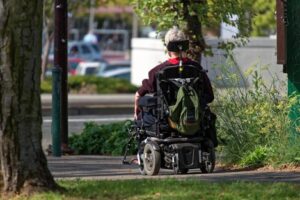
         <p><img src="https://pressbooks.library.torontomu.ca/accessiblehealthcare/wp-content/uploads/sites/422/2025/01/5-300x200.jpg" alt="Photo of a person using an electrical wheelchair on a cement pathway lines with grass, trees, and flowers." width="300" height="200" class="size-medium wp-image-238 alignright" srcset="https://pressbooks.library.torontomu.ca/accessiblehealthcare/wp-content/uploads/sites/422/2025/01/5-300x200.jpg 300w, https://pressbooks.library.torontomu.ca/accessiblehealthcare/wp-content/uploads/sites/422/2025/01/5-65x43.jpg 65w, https://pressbooks.library.torontomu.ca/accessiblehealthcare/wp-content/uploads/sites/422/2025/01/5-225x150.jpg 225w, https://pressbooks.library.torontomu.ca/accessiblehealthcare/wp-content/uploads/sites/422/2025/01/5-350x233.jpg 350w, https://pressbooks.library.torontomu.ca/accessiblehealthcare/wp-content/uploads/sites/422/2025/01/5.jpg 469w" sizes="(max-width: 300px) 100vw, 300px" /></p>
         <p>In response to the dominance of these models within mainstream society, disabled activists and scholars have proposed frameworks like the <span class="glossary-term">social model</span> (Oliver, 1990) and <span class="glossary-term">Black feminist health science studies</span> (Bailey &amp; Peoples, 2017; Bailey &amp; Mobley, 2016) or <span class="glossary-term">transnational disability theories</span> (Kim, 2017; Nguyen, 2015; Grech &amp; Soldatic, 2016). These critical alternative frameworks of disability emphasize how body-mind differences are shaped by a range of social forces/<span class="glossary-term">power relations</span>.</p>
         <p>For example, the social model would identify a wheelchair as an access device rather than a piece of medical equipment. How do these differing perspectives expand or transform how we think about wheelchairs and the people who use them? We will go into these kinds of questions in more depth later in this and subsequent modules.</p>
         <h2><span style="color: #004c9b">Medicine and Healthcare</span></h2>
         <p>Medicine and healthcare shape almost every aspect of our lives in the Global North, even when access to formal medical and health care is precarious. For many Ontarians, access to consistent and acceptable health care is insecure, yet governments and health care providers continually implicitly and explicitly reinforce through various forms of communications that one’s health and well-being is the responsibility of individuals and their family.</p>
         <div class="textbox textbox--examples">
              <header class="textbox__header">
                   <img src="https://pressbooks.library.torontomu.ca/accessiblehealthcare/wp-content/uploads/sites/422/2025/01/noun-question-3407906-300x300.png" alt="" width="80" height="80" class="wp-image-240 alignright" srcset="https://pressbooks.library.torontomu.ca/accessiblehealthcare/wp-content/uploads/sites/422/2025/01/noun-question-3407906-300x300.png 300w, https://pressbooks.library.torontomu.ca/accessiblehealthcare/wp-content/uploads/sites/422/2025/01/noun-question-3407906-1024x1024.png 1024w, https://pressbooks.library.torontomu.ca/accessiblehealthcare/wp-content/uploads/sites/422/2025/01/noun-question-3407906-150x150.png 150w, https://pressbooks.library.torontomu.ca/accessiblehealthcare/wp-content/uploads/sites/422/2025/01/noun-question-3407906-768x768.png 768w, https://pressbooks.library.torontomu.ca/accessiblehealthcare/wp-content/uploads/sites/422/2025/01/noun-question-3407906-65x65.png 65w, https://pressbooks.library.torontomu.ca/accessiblehealthcare/wp-content/uploads/sites/422/2025/01/noun-question-3407906-225x225.png 225w, https://pressbooks.library.torontomu.ca/accessiblehealthcare/wp-content/uploads/sites/422/2025/01/noun-question-3407906-350x350.png 350w, https://pressbooks.library.torontomu.ca/accessiblehealthcare/wp-content/uploads/sites/422/2025/01/noun-question-3407906.png 1200w" sizes="(max-width: 80px) 100vw, 80px" />
                   <h3 class="textbox__title"><strong>Reflection Moment</strong></h3>
              </header>
              <div class="textbox__content">
                   <p>Take a moment to reflect on your relationship to healthcare and medicine. Consider the following questions:</p>
                   <ul>
                        <li style="font-weight: 400">Describe your health routine.</li>
                        <li style="font-weight: 400">What technologies does this include (e.g., think fitness trackers or diet apps)?</li>
                        <li style="font-weight: 400">Where have you sought information about health and well-being?</li>
                        <li style="font-weight: 400">Do you feel you have appropriate access to healthcare? What barriers do you navigate, and how do these barriers impact your sense of well-being?</li>
                        <li style="font-weight: 400">How do you make decisions around medical treatments and interventions for yourself and loved ones?</li>
                        <li style="font-weight: 400">What concerns do you have about medicine and medical interventions, personally and more broadly?</li>
                   </ul>
              </div>
         </div>
    </section>
    <section data-type="chapter" class="chapter" id="chapter-the-medical-model" title="The Medical Model">
         <header>
              <h1 class="chapter-title">The Medical Model</h1>
              <p data-type="subtitle" class="chapter-number">5</p>
         </header>
         <p>The medical model is a “find it and fix it approach to disability” (Elliott &amp; Dreer, 2014, p. 80). Adherents to the model assume that there is an ideal body and mind that meets standards of functioning, regulation, capacity, acuity, comportment, reason, and so forth. The <span class="glossary-term">body-minds</span> that deviate from these standards are understood by the medical model as abnormal, “disabled,” and need to be addressed by medical intervention.</p>
         <div class="textbox textbox--key-takeaways">
              <header class="textbox__header">
                   <p class="textbox__title"><strong>Key Assumptions of the Medical Model</strong></p>
              </header>
              <div class="textbox__content">
                   <ul>
                        <li>Disability is an individual problem located in the body due to genetic or life event causes;</li>
                        <li style="font-weight: 400">Disability is incompatible with health, well-being and flourishing;</li>
                        <li style="font-weight: 400">The problems faced by disabled people are a direct consequence of an individual impairment.</li>
                   </ul>
              </div>
         </div>
         <p>One of the significant concerns with the medical model is that it operates from what Kafer (2013) refers to as a “curative imaginary.” A curative imaginary is “an understanding of disability that not only expects and assumes intervention but also cannot imagine or comprehend anything other than intervention” (Kafer, 2013, p. 27). Under this model, everything that falls outside of what is considered normal or <span class="glossary-term">normative</span> is viewed as pathological or tragic problems that require intervention by medical experts. “The touchstone of the medical model is that by deploying medical intervention, physiological or psychological irregularities can be corrected and cured or, in the worst case, contained and controlled through <span class="glossary-term">institutionalization</span>” (Chadha &amp; Rogers, 2023, p. 237). Because the medical model frames disability as a problem that exists within individual bodies and/or minds rather than as a <span class="glossary-term">socially constructed</span> category, it follows that all solutions to this problem reside within individual bodies and minds.</p>
         <div class="textbox textbox--key-takeaways">
              <header class="textbox__header">
                   <img src="https://pressbooks.library.torontomu.ca/accessiblehealthcare/wp-content/uploads/sites/422/2025/01/noun-video-7467494-300x300.png" alt="Video icon." width="40" height="40" class="wp-image-182 alignright" srcset="https://pressbooks.library.torontomu.ca/accessiblehealthcare/wp-content/uploads/sites/422/2025/01/noun-video-7467494-300x300.png 300w, https://pressbooks.library.torontomu.ca/accessiblehealthcare/wp-content/uploads/sites/422/2025/01/noun-video-7467494-1024x1024.png 1024w, https://pressbooks.library.torontomu.ca/accessiblehealthcare/wp-content/uploads/sites/422/2025/01/noun-video-7467494-150x150.png 150w, https://pressbooks.library.torontomu.ca/accessiblehealthcare/wp-content/uploads/sites/422/2025/01/noun-video-7467494-768x768.png 768w, https://pressbooks.library.torontomu.ca/accessiblehealthcare/wp-content/uploads/sites/422/2025/01/noun-video-7467494-65x65.png 65w, https://pressbooks.library.torontomu.ca/accessiblehealthcare/wp-content/uploads/sites/422/2025/01/noun-video-7467494-225x225.png 225w, https://pressbooks.library.torontomu.ca/accessiblehealthcare/wp-content/uploads/sites/422/2025/01/noun-video-7467494-350x350.png 350w, https://pressbooks.library.torontomu.ca/accessiblehealthcare/wp-content/uploads/sites/422/2025/01/noun-video-7467494.png 1200w" sizes="(max-width: 40px) 100vw, 40px" /><span style="font-size: 1.602em;font-style: normal">Media Moment<br />
                    </span><strong style="color: #792082;text-align: initial;font-size: 0.9em">Time: 11 minutes, 29 seconds</strong>
              </header>
              <div class="textbox__content">
                   <p>Watch the following video here, access it at the link below, or the transcript.</p>
                   <div class="textbox interactive-content interactive-content--oembed">
                        <span class="interactive-content__icon"></span>
                        <p>One or more interactive elements has been excluded from this version of the text. You can view them online here: <a href="#oembed-1" title="Living in an inaccessible world | Jessica Smith | TEDxGEMSNewMillenniumSchool">https://pressbooks.library.torontomu.ca/accessiblehealthcare/?p=242#oembed-1</a> </p>
                   </div>
                   <p><a href="https://www.youtube.com/watch?v=hYdP6JMvHTs" target="_blank" rel="noopener">Living in an inaccessible world | Jessica Smith | TEDxGEMSNewMillenniumSchool</a></p>
                   <p><span></span></p>
                   <div class="textbox interactive-content">
                        <span class="interactive-content__icon"></span>
                        <p>An interactive H5P element has been excluded from this version of the text. You can view it online here:<br />
                         <a href="https://pressbooks.library.torontomu.ca/accessiblehealthcare/?p=242#h5p-34" title="Module 2 - Transcript: Living in an inaccessible world">https://pressbooks.library.torontomu.ca/accessiblehealthcare/?p=242#h5p-34</a> </p>
                   </div>
                   <p></p>
                   <p class="indent no-indent"></p>
              </div>
         </div>
         <h2><span style="color: #004c9b"><strong>Medicalization and Its Impact</strong></span></h2>
         <p>Medicine, and the medical model, has a profound impact on disabled people’s lives and stretches beyond the doctor’s office or hospital. Abby Wilkerson shares the story of a young woman with an intellectual disability who felt the need to ask her doctor’s approval before getting married. “Her experience reflects the widespread social reliance on <span class="glossary-term">medical discourse</span> as a source of moral, not merely scientific information. The challenge to the medical profession and to related institutions is to become self-critical of discursive practices in the field that undermine the status and the self-regard of particular groups” (Wilkerson, 2002, p. 35). We navigate messages, architecture, and policies that reinforce the assumptions inherent in the medical model in an everyday way. Medicine’s powerful influence is pervasive, operating from the threshold of life itself (e.g., which pregnancies are fit to carry to term, who is deserving of ventilator support, who is eligible for medical assistance in dying).</p>
         <div class="textbox textbox--examples">
              <header class="textbox__header">
                   <img src="https://pressbooks.library.torontomu.ca/accessiblehealthcare/wp-content/uploads/sites/422/2025/01/noun-question-3407906-300x300.png" alt="" width="80" height="80" class="wp-image-240 alignright" srcset="https://pressbooks.library.torontomu.ca/accessiblehealthcare/wp-content/uploads/sites/422/2025/01/noun-question-3407906-300x300.png 300w, https://pressbooks.library.torontomu.ca/accessiblehealthcare/wp-content/uploads/sites/422/2025/01/noun-question-3407906-1024x1024.png 1024w, https://pressbooks.library.torontomu.ca/accessiblehealthcare/wp-content/uploads/sites/422/2025/01/noun-question-3407906-150x150.png 150w, https://pressbooks.library.torontomu.ca/accessiblehealthcare/wp-content/uploads/sites/422/2025/01/noun-question-3407906-768x768.png 768w, https://pressbooks.library.torontomu.ca/accessiblehealthcare/wp-content/uploads/sites/422/2025/01/noun-question-3407906-65x65.png 65w, https://pressbooks.library.torontomu.ca/accessiblehealthcare/wp-content/uploads/sites/422/2025/01/noun-question-3407906-225x225.png 225w, https://pressbooks.library.torontomu.ca/accessiblehealthcare/wp-content/uploads/sites/422/2025/01/noun-question-3407906-350x350.png 350w, https://pressbooks.library.torontomu.ca/accessiblehealthcare/wp-content/uploads/sites/422/2025/01/noun-question-3407906.png 1200w" sizes="(max-width: 80px) 100vw, 80px" />
                   <h3 class="textbox__title"><strong>Reflection Moment</strong></h3>
              </header>
              <div class="textbox__content">
                   <p>Take a moment to reflect on your relationship to medicalization.</p>
                   <p>Name some examples of activities or resources you sought that required medical approval or legitimation.</p>
              </div>
         </div>
         <h2><span style="color: #004c9b"><strong>Canadian Immigration Policy and Medicine</strong></span></h2>
         <p>One example of how medicine infiltrates many areas of life is in Canadian immigration policy. Already critiqued as institutionalizing racism and classism (see for example Abu-Laban et al., 2022), Canadian immigration policy screens applicants in terms of their medical status. Potential migrants to Canada require a medical examination to secure a visa. As a result of this process, applicants may be refused entry based on their posing an “excessive demand.” Disabled, <span class="glossary-term">psychiatrized</span>, and chronically ill applicants are deemed to pose an excessive demand on medical and health care resources or as posing a potential public health risk (Immigration, Refugees and Citizenship Canada, 2024). It’s noteworthy that this impacts families with disabled children as well.</p>
         <p>Access the following resources to read more:</p>
         <ul>
              <li style="font-weight: 400"><a href="https://globalnews.ca/news/4027378/mother-fears-discrimination-canada-disability-excessive-demand/" target="_blank" rel="noopener">Mother fears Canadian government could force her family to leave due to son’s disability</a></li>
              <li style="font-weight: 400"><a href="https://www.canada.ca/en/immigration-refugees-citizenship/services/immigrate-canada/inadmissibility/reasons/medical-inadmissibility.html" target="_blank" rel="noopener">Medical inadmissibility – Canada.ca</a></li>
         </ul>
         <p>This interaction of medicine and government priorities constructs disabled people not as citizens or members of the general public but as a drain on Canada’s health care system and a danger to the public.</p>
         <p>Similarly, consider how medicine shapes common meanings of gender, childhood, aging, and body size. More immediately, consider how medicine influences what we understand about our own or others’ capacities to meet deadlines, stay focused, and be compliant.</p>
         <h2><span style="color: #004c9b"><strong>Naturalizing and Depoliticizing Disability</strong></span></h2>
         <p>In addition to framing disability as a deficit to be addressed through medical intervention, many disability scholars have written about how the medical model understands the categories of disability and health as knowable facts that are readily observable, objective, and separate from wider social relations. By contrast, Bailey and Peoples’ (2017) scholarship presents health as “both a desired state of being and a social construct necessary of interrogation because race, gender, ablebodiedness, and other aspects of cultural production profoundly shape our notions of what is healthy” (p. 3).</p>
         <p>Alison Kafer (2013) shows how framing disability, health, and medicine as indisputable facts depoliticizes them. When something is depoliticized, it is stripped of important social and political context and complexity. Recognizing disability as being socially constructed means that disability is fluid – its meaning shifts over time and in different situations or spaces. Yet, how we experience disability is relational; it is “experienced in and through relationships; it does not occur in isolation” (Kafer, 2013, p. 8). This means disability is connected to our culture and environments as well as other social relations which shape our lives, such as race, gender, and class. This approach to disability also acknowledges that there is no one disability experience. It allows for an analysis that grapples with complexity and asks important questions to recognize relations of power and challenge taken-for-granted assumptions about success, effort, productivity, merit, and humanity itself.</p>
         <div class="textbox">
              <p><img src="https://pressbooks.library.torontomu.ca/accessiblehealthcare/wp-content/uploads/sites/422/2025/01/noun-key-7464013-300x300.png" alt="" width="54" height="54" class="wp-image-253 alignright" srcset="https://pressbooks.library.torontomu.ca/accessiblehealthcare/wp-content/uploads/sites/422/2025/01/noun-key-7464013-300x300.png 300w, https://pressbooks.library.torontomu.ca/accessiblehealthcare/wp-content/uploads/sites/422/2025/01/noun-key-7464013-1024x1024.png 1024w, https://pressbooks.library.torontomu.ca/accessiblehealthcare/wp-content/uploads/sites/422/2025/01/noun-key-7464013-150x150.png 150w, https://pressbooks.library.torontomu.ca/accessiblehealthcare/wp-content/uploads/sites/422/2025/01/noun-key-7464013-768x768.png 768w, https://pressbooks.library.torontomu.ca/accessiblehealthcare/wp-content/uploads/sites/422/2025/01/noun-key-7464013-65x65.png 65w, https://pressbooks.library.torontomu.ca/accessiblehealthcare/wp-content/uploads/sites/422/2025/01/noun-key-7464013-225x225.png 225w, https://pressbooks.library.torontomu.ca/accessiblehealthcare/wp-content/uploads/sites/422/2025/01/noun-key-7464013-350x350.png 350w, https://pressbooks.library.torontomu.ca/accessiblehealthcare/wp-content/uploads/sites/422/2025/01/noun-key-7464013.png 1200w" sizes="(max-width: 54px) 100vw, 54px" /></p>
              <h2><span style="color: #eb0072">Key Takeaways</span></h2>
              <p>The “able body”: Just as the medical model defines disability in specific ways, it also tacitly and overtly defines an able body as adhering to specific standards of functioning, fitness, appearance, strength, energy, capacity, reason, and competence, among other factors.</p>
         </div>
         <div class="textbox textbox--examples">
              <header class="textbox__header">
                   <img src="https://pressbooks.library.torontomu.ca/accessiblehealthcare/wp-content/uploads/sites/422/2025/01/noun-question-3407906-300x300.png" alt="" width="80" height="80" class="wp-image-240 alignright" srcset="https://pressbooks.library.torontomu.ca/accessiblehealthcare/wp-content/uploads/sites/422/2025/01/noun-question-3407906-300x300.png 300w, https://pressbooks.library.torontomu.ca/accessiblehealthcare/wp-content/uploads/sites/422/2025/01/noun-question-3407906-1024x1024.png 1024w, https://pressbooks.library.torontomu.ca/accessiblehealthcare/wp-content/uploads/sites/422/2025/01/noun-question-3407906-150x150.png 150w, https://pressbooks.library.torontomu.ca/accessiblehealthcare/wp-content/uploads/sites/422/2025/01/noun-question-3407906-768x768.png 768w, https://pressbooks.library.torontomu.ca/accessiblehealthcare/wp-content/uploads/sites/422/2025/01/noun-question-3407906-65x65.png 65w, https://pressbooks.library.torontomu.ca/accessiblehealthcare/wp-content/uploads/sites/422/2025/01/noun-question-3407906-225x225.png 225w, https://pressbooks.library.torontomu.ca/accessiblehealthcare/wp-content/uploads/sites/422/2025/01/noun-question-3407906-350x350.png 350w, https://pressbooks.library.torontomu.ca/accessiblehealthcare/wp-content/uploads/sites/422/2025/01/noun-question-3407906.png 1200w" sizes="(max-width: 80px) 100vw, 80px" />
                   <h3 class="textbox__title"><strong>Reflection Moment</strong></h3>
              </header>
              <div class="textbox__content">
                   <p>Take a moment to reflect on naturalizing disability. Consider the following questions:</p>
                   <ul>
                        <li style="font-weight: 400">Who tells us disability exists?</li>
                        <li style="font-weight: 400">Who decides what counts as disability?</li>
                        <li style="font-weight: 400">Identify illnesses or impairments that are or have been contested (e.g., chronic fatigue syndrome).</li>
                        <li style="font-weight: 400">Similarly, identify new “disabilities” that have been legitimated by the medical establishment (e.g., shyness).</li>
                        <li style="font-weight: 400">What or whose interests are served by asserting that some “conditions” exist and others do not?</li>
                   </ul>
              </div>
         </div>
    </section>
    <section data-type="chapter" class="chapter" id="chapter-medicalization-and-control" title="Medicalization and Control">
         <header>
              <h1 class="chapter-title">Medicalization and Control</h1>
              <p data-type="subtitle" class="chapter-number">6</p>
         </header>
         <p>Medicalization assigns medical meaning to certain behaviours and conditions and then positions medical practices as the method of treatment and resolution. Because disability tends to be identified as a “medical” issue, disabled people find that everything in our lives becomes imbued with medical meanings. As Oliver notes, all our problems become defined as medical problems and are therefore best resolved by medicine. More significantly, medicalization is socially and politically useful, offering powerful stakeholders, like <span class="glossary-term">neoliberal</span> governments and insurance and pharmaceutical companies, the means to establish interventions and practices that appear neutral, and even benevolent, while consolidating their own interests.</p>
         <p>A.J. Withers (2024) highlights how “medicalization works to identify new categories of deviance from the norm, and as new disabilities are created and disability is individualized, the social phenomena involved in the process of medicalization are erased” (p. 98).</p>
         <div class="textbox textbox--key-takeaways">
              <header class="textbox__header">
                   <p class="textbox__title"><strong>Key Assumptions of Medicalization</strong></p>
              </header>
              <div class="textbox__content">
                   <ul>
                        <li>All problems are, by definition, medical issues</li>
                        <li style="font-weight: 400">The most appropriate response to disability is to erase it or return the individual as close to “normal” as possible</li>
                        <li style="font-weight: 400">That living with disability means living a life of suffering</li>
                   </ul>
              </div>
         </div>
         <p>&nbsp;</p>
         <p>The readings for this module by Clare (2017) and Bailey and Peoples (2017) trace the threads of dehumanizing and controlling practices of diagnosis starting in the 1850s with conditions like Drapetomania and dysaesthesia aethiopica, through to the “protest psychosis” diagnoses of the 1960s to “suicide by police” in the past decade (see also Meerai et al., 2016; Jackson, 2003; Metzi, 2020; and Schalk, 2023). Consider how medicine works together with systems of slavery, <span class="glossary-term">colonialism</span>, policing, <span class="glossary-term">heteropatriarchy</span>, immigration, and transnational <span class="glossary-term">capitalism</span> to control populations and maintain powerful, primarily white, <span class="glossary-term">Eurocentric</span> settler interests.</p>
         <div class="textbox textbox--key-takeaways">
              <header class="textbox__header">
                   <img src="https://pressbooks.library.torontomu.ca/accessiblehealthcare/wp-content/uploads/sites/422/2025/01/noun-podcast-6781942-300x300.png" alt="" width="51" height="51" class="wp-image-183 alignright" srcset="https://pressbooks.library.torontomu.ca/accessiblehealthcare/wp-content/uploads/sites/422/2025/01/noun-podcast-6781942-300x300.png 300w, https://pressbooks.library.torontomu.ca/accessiblehealthcare/wp-content/uploads/sites/422/2025/01/noun-podcast-6781942-1024x1024.png 1024w, https://pressbooks.library.torontomu.ca/accessiblehealthcare/wp-content/uploads/sites/422/2025/01/noun-podcast-6781942-150x150.png 150w, https://pressbooks.library.torontomu.ca/accessiblehealthcare/wp-content/uploads/sites/422/2025/01/noun-podcast-6781942-768x768.png 768w, https://pressbooks.library.torontomu.ca/accessiblehealthcare/wp-content/uploads/sites/422/2025/01/noun-podcast-6781942-65x65.png 65w, https://pressbooks.library.torontomu.ca/accessiblehealthcare/wp-content/uploads/sites/422/2025/01/noun-podcast-6781942-225x225.png 225w, https://pressbooks.library.torontomu.ca/accessiblehealthcare/wp-content/uploads/sites/422/2025/01/noun-podcast-6781942-350x350.png 350w, https://pressbooks.library.torontomu.ca/accessiblehealthcare/wp-content/uploads/sites/422/2025/01/noun-podcast-6781942.png 1200w" sizes="(max-width: 51px) 100vw, 51px" /><span style="font-size: 1.602em;font-style: normal">Media Moment<br />
                    </span><strong style="color: #792082;text-align: initial;font-size: 0.9em">Time: 47 minutes, 48 seconds</strong>
              </header>
              <div class="textbox__content">
                   <p>Access the following podcast or transcript for <strong>an example of medicalization and de-medicalization</strong>:</p>
                   <ul>
                        <li><a href="https://www.youtube.com/watch?v=xv3YF5QhTio">Dismantling a Diagnosis: Episode 2: The Cure</a></li>
                        <li><a href="https://makinggayhistory.org/podcast/dismantling-a-diagnosis-episode-two-the-cure/">Podcast Transcript</a></li>
                   </ul>
                   <p>This is part of a terrific podcast series examining 2SLGBTQI from the early part of the 20th century onwards called “Making Gay History,” narrated by historian Eric Marcus. The early episodes focus on the consequences of homosexuality’s inclusion in the Diagnostic and Statistical Manual of Mental Disorders (DSM), a compendium of psychiatric and mental health conditions, and its eventual removal in 1973.</p>
              </div>
         </div>
         <div class="textbox textbox--key-takeaways">
              <header class="textbox__header">
                   <img src="https://pressbooks.library.torontomu.ca/accessiblehealthcare/wp-content/uploads/sites/422/2025/01/noun-video-7467494-300x300.png" alt="Video icon." width="66" height="66" class="wp-image-182 alignright" style="font-size: 14.4px" srcset="https://pressbooks.library.torontomu.ca/accessiblehealthcare/wp-content/uploads/sites/422/2025/01/noun-video-7467494-300x300.png 300w, https://pressbooks.library.torontomu.ca/accessiblehealthcare/wp-content/uploads/sites/422/2025/01/noun-video-7467494-1024x1024.png 1024w, https://pressbooks.library.torontomu.ca/accessiblehealthcare/wp-content/uploads/sites/422/2025/01/noun-video-7467494-150x150.png 150w, https://pressbooks.library.torontomu.ca/accessiblehealthcare/wp-content/uploads/sites/422/2025/01/noun-video-7467494-768x768.png 768w, https://pressbooks.library.torontomu.ca/accessiblehealthcare/wp-content/uploads/sites/422/2025/01/noun-video-7467494-65x65.png 65w, https://pressbooks.library.torontomu.ca/accessiblehealthcare/wp-content/uploads/sites/422/2025/01/noun-video-7467494-225x225.png 225w, https://pressbooks.library.torontomu.ca/accessiblehealthcare/wp-content/uploads/sites/422/2025/01/noun-video-7467494-350x350.png 350w, https://pressbooks.library.torontomu.ca/accessiblehealthcare/wp-content/uploads/sites/422/2025/01/noun-video-7467494.png 1200w" sizes="(max-width: 66px) 100vw, 66px" /><span style="font-size: 1.602em;font-style: normal">Media Moment<br />
                    </span><strong style="color: #792082;text-align: initial;font-size: 0.9em">Time: 13 minutes, 5 seconds</strong>
              </header>
              <div class="textbox__content">
                   <p>Watch the following video here, access it at the link below, or the transcript.</p>
                   <div class="textbox interactive-content interactive-content--oembed">
                        <span class="interactive-content__icon"></span>
                        <p>One or more interactive elements has been excluded from this version of the text. You can view them online here: <a href="#oembed-1" title="INTERVIEW: Canadian health care and Truth and Reconciliation">https://pressbooks.library.torontomu.ca/accessiblehealthcare/?p=259#oembed-1</a> </p>
                   </div>
              </div>
              <div class="textbox__content">
                   <p><a href="https://www.youtube.com/watch?v=AslN704qQCo">INTERVIEW: Canadian health care and Truth and Reconciliation</a></p>
                   <p><span></span></p>
                   <div class="textbox interactive-content">
                        <span class="interactive-content__icon"></span>
                        <p>An interactive H5P element has been excluded from this version of the text. You can view it online here:<br />
                         <a href="https://pressbooks.library.torontomu.ca/accessiblehealthcare/?p=259#h5p-35" title="Module 2 - Transcript: INTERVIEW: Canadian health care and Truth and Reconciliation">https://pressbooks.library.torontomu.ca/accessiblehealthcare/?p=259#h5p-35</a> </p>
                   </div>
                   <p><br />
                    This shorter YouTube video features Dr. Alika LaFontaine (Metis, Anishinaabe, Cree, and Pacific Islander), the 2022 president of the Canadian Medical Association. The interview, in observance of National Truth and Reconciliation Day, explores the continuing legacy of colonization on Indigenous health.</p>
                   <p><strong>Take note of the different ways the Canadian settler colonial state used medicine to meet the aims of white nation-building. How did the impacts of Eurocentrism on Dr. LaFontaine as a school child become medicalized?</strong></p>
              </div>
         </div>
         <p>Access the following resource to read more:</p>
         <ul>
              <li style="font-weight: 400"><a href="https://www.cbc.ca/radio/whitecoat/she-was-sterilized-without-her-consent-at-14-now-she-wants-the-practice-made-a-crime-1.6450647">She was sterilized without her consent at 14. Now she wants the practice made a crime</a></li>
         </ul>
         <div>
              <h2><span style="color: #004c9b">Anti-Black Racism and Medicalization</span></h2>
              <p>“Black youth face barriers in mental health care access: experts”: This article affirms psychiatry and the healthcare system but points to how anti-Black racism directed towards Black male youth is medicalized. Consider how the disproportionate diagnosis of young Black males with behavioural and oppositional defiant disorders results in them not being given accommodations or helpful resources, and traps them in “the sticky web of criminalization” (e.g., Nanda, 2019). Read here: <a href="https://www.cbc.ca/news/canada/toronto/black-youth-canada-mental-health-care-access-barriers-1.7194322" target="_blank" rel="noopener">Black youth face barriers in mental health care access: experts</a>.</p>
         </div>
         <div class="textbox textbox--key-takeaways">
              <header class="textbox__header">
                   <img src="https://pressbooks.library.torontomu.ca/accessiblehealthcare/wp-content/uploads/sites/422/2025/01/noun-video-7467494-300x300.png" alt="Video icon." width="40" height="40" class="wp-image-182 alignright" srcset="https://pressbooks.library.torontomu.ca/accessiblehealthcare/wp-content/uploads/sites/422/2025/01/noun-video-7467494-300x300.png 300w, https://pressbooks.library.torontomu.ca/accessiblehealthcare/wp-content/uploads/sites/422/2025/01/noun-video-7467494-1024x1024.png 1024w, https://pressbooks.library.torontomu.ca/accessiblehealthcare/wp-content/uploads/sites/422/2025/01/noun-video-7467494-150x150.png 150w, https://pressbooks.library.torontomu.ca/accessiblehealthcare/wp-content/uploads/sites/422/2025/01/noun-video-7467494-768x768.png 768w, https://pressbooks.library.torontomu.ca/accessiblehealthcare/wp-content/uploads/sites/422/2025/01/noun-video-7467494-65x65.png 65w, https://pressbooks.library.torontomu.ca/accessiblehealthcare/wp-content/uploads/sites/422/2025/01/noun-video-7467494-225x225.png 225w, https://pressbooks.library.torontomu.ca/accessiblehealthcare/wp-content/uploads/sites/422/2025/01/noun-video-7467494-350x350.png 350w, https://pressbooks.library.torontomu.ca/accessiblehealthcare/wp-content/uploads/sites/422/2025/01/noun-video-7467494.png 1200w" sizes="(max-width: 40px) 100vw, 40px" /><span style="font-size: 1.602em;font-style: normal">Media Moment<br />
                    </span><strong style="color: #792082;text-align: initial;font-size: 0.9em">Time: 8 minutes, 49 seconds</strong>
              </header>
              <div class="textbox__content">
                   <p>Watch the following video here, access it at the link below, or the transcript.</p>
                   <div class="textbox interactive-content interactive-content--oembed">
                        <span class="interactive-content__icon"></span>
                        <p>One or more interactive elements has been excluded from this version of the text. You can view them online here: <a href="#oembed-2" title="The US medical system is still haunted by slavery">https://pressbooks.library.torontomu.ca/accessiblehealthcare/?p=259#oembed-2</a> </p>
                   </div>
                   <p><a href="https://www.youtube.com/watch?v=IfYRzxeMdGs" target="_blank" rel="noopener">The US medical system is still haunted by slavery</a></p>
                   <p><span></span></p>
                   <div class="textbox interactive-content">
                        <span class="interactive-content__icon"></span>
                        <p>An interactive H5P element has been excluded from this version of the text. You can view it online here:<br />
                         <a href="https://pressbooks.library.torontomu.ca/accessiblehealthcare/?p=259#h5p-36" title="Module 2 - Transcript: The US medical system is still haunted by slavery">https://pressbooks.library.torontomu.ca/accessiblehealthcare/?p=259#h5p-36</a> </p>
                   </div>
                   <p><br />
                    <strong>After watching the video or reading the transcript, reflect on the following questions: </strong></p>
                   <p><img src="https://pressbooks.library.torontomu.ca/accessiblehealthcare/wp-content/uploads/sites/422/2025/01/noun-question-2597215-300x300.png" alt="Question icon." width="128" height="128" class="wp-image-206 alignright" srcset="https://pressbooks.library.torontomu.ca/accessiblehealthcare/wp-content/uploads/sites/422/2025/01/noun-question-2597215-300x300.png 300w, https://pressbooks.library.torontomu.ca/accessiblehealthcare/wp-content/uploads/sites/422/2025/01/noun-question-2597215-1024x1024.png 1024w, https://pressbooks.library.torontomu.ca/accessiblehealthcare/wp-content/uploads/sites/422/2025/01/noun-question-2597215-150x150.png 150w, https://pressbooks.library.torontomu.ca/accessiblehealthcare/wp-content/uploads/sites/422/2025/01/noun-question-2597215-768x768.png 768w, https://pressbooks.library.torontomu.ca/accessiblehealthcare/wp-content/uploads/sites/422/2025/01/noun-question-2597215-65x65.png 65w, https://pressbooks.library.torontomu.ca/accessiblehealthcare/wp-content/uploads/sites/422/2025/01/noun-question-2597215-225x225.png 225w, https://pressbooks.library.torontomu.ca/accessiblehealthcare/wp-content/uploads/sites/422/2025/01/noun-question-2597215-350x350.png 350w, https://pressbooks.library.torontomu.ca/accessiblehealthcare/wp-content/uploads/sites/422/2025/01/noun-question-2597215.png 1200w" sizes="(max-width: 128px) 100vw, 128px" /></p>
                   <ul>
                        <li style="font-weight: 400">
                        <p class="indent no-indent">What do you notice about how Black women are treated both historically and currently by healthcare/research? Pay special attention to the disparate experiences of Black women.</p>
                         </li>
                        <li style="font-weight: 400">
                        <p class="indent no-indent">What is the function of the medical belief that Black people experience less pain?</p>
                         </li>
                        <li style="font-weight: 400">
                        <p class="indent no-indent">What evidence of this myth and others mentioned in the video can still be seen in contemporary healthcare and beyond?</p>
                         </li>
                   </ul>
              </div>
         </div>
         <h2><span style="color: #004c9b">Profits Over Patients</span></h2>
         <p>One of the excerpts by Eli Clare introduces “the medical industrial complex.” Disability justice activist Mia Mingus elaborates on this idea:</p>
         <p><img src="https://pressbooks.library.torontomu.ca/accessiblehealthcare/wp-content/uploads/sites/422/2025/01/6.png" alt="Icon of a power fist holding a syringe with an outline of a chain link around the symbol." width="280" height="270" class="wp-image-275 alignleft" srcset="https://pressbooks.library.torontomu.ca/accessiblehealthcare/wp-content/uploads/sites/422/2025/01/6.png 177w, https://pressbooks.library.torontomu.ca/accessiblehealthcare/wp-content/uploads/sites/422/2025/01/6-65x63.png 65w" sizes="(max-width: 280px) 100vw, 280px" /></p>
         <p style="padding-left: 40px"><em>The Medical Industrial Complex is an enormous system with tentacles that reach beyond simply doctors, nurses, clinics, and hospitals. It is a system about profit, fi</em><em>rst and foremost, rather than “health,” wellbeing and care. Its roots run deep and its history and present are connected to everything including eugenics, capitalism, colonization, slavery, immigration, war, prisons, and reproductive oppression. It is not just a major piece of the history of ableism, but all systems of oppression” (Mingus, 2015, para. 3).</em></p>
         <div class="textbox textbox--key-takeaways">
              <header class="textbox__header">
                   <img src="https://pressbooks.library.torontomu.ca/accessiblehealthcare/wp-content/uploads/sites/422/2025/01/noun-podcast-6781942-300x300.png" alt="" width="51" height="51" class="wp-image-183 alignright" srcset="https://pressbooks.library.torontomu.ca/accessiblehealthcare/wp-content/uploads/sites/422/2025/01/noun-podcast-6781942-300x300.png 300w, https://pressbooks.library.torontomu.ca/accessiblehealthcare/wp-content/uploads/sites/422/2025/01/noun-podcast-6781942-1024x1024.png 1024w, https://pressbooks.library.torontomu.ca/accessiblehealthcare/wp-content/uploads/sites/422/2025/01/noun-podcast-6781942-150x150.png 150w, https://pressbooks.library.torontomu.ca/accessiblehealthcare/wp-content/uploads/sites/422/2025/01/noun-podcast-6781942-768x768.png 768w, https://pressbooks.library.torontomu.ca/accessiblehealthcare/wp-content/uploads/sites/422/2025/01/noun-podcast-6781942-65x65.png 65w, https://pressbooks.library.torontomu.ca/accessiblehealthcare/wp-content/uploads/sites/422/2025/01/noun-podcast-6781942-225x225.png 225w, https://pressbooks.library.torontomu.ca/accessiblehealthcare/wp-content/uploads/sites/422/2025/01/noun-podcast-6781942-350x350.png 350w, https://pressbooks.library.torontomu.ca/accessiblehealthcare/wp-content/uploads/sites/422/2025/01/noun-podcast-6781942.png 1200w" sizes="(max-width: 51px) 100vw, 51px" /><span style="font-size: 1.602em;font-style: normal">Media Moment<br />
                    </span><strong style="color: #792082;text-align: initial;font-size: 0.9em">Time: 51 minutes, 18 seconds</strong>
              </header>
              <div class="textbox__content">
                   <p>Access the following podcast or transcript for an <strong>example of the medical industrial complex at work</strong>:</p>
                   <ul>
                        <li><a href="https://content.blubrry.com/crackdownpod/2019-02-27_crackdown_episode_2-change_intolerance.mp3?download=true" target="_blank" rel="noopener">Crackdown Podcast, Episode 2: Change Intolerance</a></li>
                        <li><a href="https://drive.google.com/file/d/1JDTZtljrZUdMc5efKJAwFAjyv7eh-F0K/view" target="_blank" rel="noopener">Podcast Transcript</a></li>
                   </ul>
                   <p>After listening to the podcast or reading the transcript, reflect on the following questions:</p>
                   <ul>
                        <li style="font-weight: 400">What priorities informed the BC government’s decision to replace methadone with Methadose?</li>
                        <li style="font-weight: 400">What were the consequences for methadone users? Health care providers (e.g., pharmacists)?</li>
                        <li style="font-weight: 400">What does this podcast teach us about the “tentacles” of the medical industrial complex? How do we work to resist the entanglement of medicine, markets, the state, and community services?</li>
                   </ul>
              </div>
         </div>
         <p>&nbsp;</p>
    </section>
    <section data-type="chapter" class="chapter" id="chapter-more-to-explore2" title="More to Explore">
         <header>
              <h1 class="chapter-title">More to Explore</h1>
              <p data-type="subtitle" class="chapter-number">7</p>
         </header>
         <p>Access these resources if you’d like to explore more:</p>
         <ul>
              <li style="font-weight: 400"><a href="https://www.caut.ca/latest/publications/books/let-them-eat-prozac">Let Them Eat Prozac (Book Review)</a></li>
              <li style="font-weight: 400"><a href="https://www.cbc.ca/listen/live-radio/1-63-the-current/clip/16081468-has-ozempic-sparked-insulin-pen-shortage-south-africa">The Current with Matt Galloway Podcast, Episode: Has Ozempic sparked an insulin pen shortage in South Africa?</a></li>
         </ul>
         <h2><span style="color: #004c9b">Works Cited</span></h2>
         <p>Bailey, M., &amp; Peoples, W. (2017). Articulating Black feminist health science studies. <em>Catalyst: Feminism, Theory, Technoscience, 3</em>(2).</p>
         <p>Bailey, M., &amp; Mobley, I. A. (2019). Work in the intersections: A black feminist disability framework. <i>Gender &amp; Society</i>, <i>33</i>(1), 19-40.</p>
         <p>Clare, E. (2017). <em>Brilliant imperfection: Grappling with cure</em>. Duke University Press.</p>
         <p>Chadha, E., &amp; Rogers, E. (2023). Does the Supreme Court of Canada Give a “Freak” About Disability Dignity?: The Inclusion Fallacy 25 Years After Eldridge. In <i>The Supreme Court Law Review: Osgoode’s Annual Constitutional Cases Conference</i> (Vol. 108, No. 1, p. 11).</p>
         <p>Elliott, T. R., &amp; Dreer, L. (2014). Disability. In S. Ayers, A. Baum, C. McManus, S. Newman, K. Wallston, J. Weinman, &amp; R. West (Eds.), <em data-start="186" data-end="241">Cambridge Handbook of Psychology, Health and Medicine</em> (2nd ed., pp. 80–83). Cambridge University Press.</p>
         <p>Grech, S., &amp; Soldatic, K. (Eds.) (2016). Disability in the global south. <i>Cham: Springer</i>.</p>
         <p>Immigration, Refugees and Citizenship Canada. (n.d.). <em data-start="118" data-end="144">Medical inadmissibility.</em> Government of Canada. <a rel="noopener" target="_new" data-start="167" data-end="443" data-is-only-node="" href="https://www.canada.ca/en/immigration-refugees-citizenship/services/immigrate-canada/inadmissibility/reasons/medical-inadmissibility.html">https://www.canada.ca/en/immigration-refugees-citizenship/services/immigrate-canada/inadmissibility/reasons/medical-inadmissibility.html</a></p>
         <p>Jackson, V. (2003). In Our Own Voice: African-American Stories of Oppression, Survival and Recovery in Mental Health Systems. <em>Off Our Backs 33</em>(7/8), 19-21.</p>
         <p>Kafer, A. (2013). <i>Feminist, queer, crip</i>. Indiana University Press.</p>
         <p>Kim, E. (2017). <i>Curative violence: Rehabilitating disability, gender, and sexuality in modern Korea</i>. Duke University Press.</p>
         <p>Meerai, S., Abdillahi, I., &amp; Poole, J. (2016). An introduction to anti-Black sanism. <i>Intersectionalities: A Global Journal of Social Work Analysis, Research, Polity, and Practice</i>, <i>5</i>(3), 18-35.</p>
         <p>Metzl, J. M. (2019). <i>Dying of whiteness: How the politics of racial resentment is killing America&#8217;s heartland</i>. Hachette UK.</p>
         <p>Mingus, M. (2015, February 6). <em data-start="102" data-end="138">Medical industrial complex visual.</em> Leaving Evidence. <a rel="noopener" target="_new" data-start="157" data-end="327" data-is-only-node="" href="https://leavingevidence.wordpress.com/2015/02/06/medical-industrial-complex-visual/">https://leavingevidence.wordpress.com/2015/02/06/medical-industrial-complex-visual/</a></p>
         <p>Nanda, J. (2019). The construction and criminalization of disability in school incarceration. <i>Colum. J. Race &amp; L.</i>, <i>9</i>, 265.</p>
         <p>Nguyen, X. T. (2015). Genealogies of disability in global governance: A Foucauldian critique of disability and development. <i>Foucault Studies</i>, <em>19,</em> 67-83.</p>
         <p>Oliver, M. (1990, July 23). <em>The individual and social models of disability</em> [Workshop presentation]. Joint Workshop of the Living Options Group and the Research Unit of the Royal College of Physicians on People with Established Locomotor Disabilities in Hospitals. <a href="https://disability-studies.leeds.ac.uk/wp-content/uploads/sites/40/library/Oliver-in-soc-dis.pdf">https://disability-studies.leeds.ac.uk/wp-content/uploads/sites/40/library/Oliver-in-soc-dis.pdf</a></p>
         <div class="form-focus layout-padding layout-align-center-center layout-row">
              <div id="citationalma991011213169708636" class="">
                   <div class="csl-bib-body">
                        <div>
                        </div>
                        <div class="csl-entry">
                             Schalk, S. D. (2022).<span> </span><i>Black disability politics</i>. Duke University Press.
                        </div>
                   </div>
              </div>
         </div>
         <p>Wilkerson, A. (2002). Disability, sex radicalism, and political agency. <i>NWSa Journal</i>, 33-57.</p>
         <p>Withers, A. J. (2024). <em data-start="27" data-end="90">Disability politics and theory: Revised and expanded edition.</em> Fernwood Publishing.</p>
         <p>&nbsp;</p>
         <div class="textbox">
              <p><img src="https://pressbooks.library.torontomu.ca/accessiblehealthcare/wp-content/uploads/sites/422/2025/01/noun-continue-111852-300x300.png" alt="" width="202" height="202" class="wp-image-225 alignright" srcset="https://pressbooks.library.torontomu.ca/accessiblehealthcare/wp-content/uploads/sites/422/2025/01/noun-continue-111852-300x300.png 300w, https://pressbooks.library.torontomu.ca/accessiblehealthcare/wp-content/uploads/sites/422/2025/01/noun-continue-111852-1024x1024.png 1024w, https://pressbooks.library.torontomu.ca/accessiblehealthcare/wp-content/uploads/sites/422/2025/01/noun-continue-111852-150x150.png 150w, https://pressbooks.library.torontomu.ca/accessiblehealthcare/wp-content/uploads/sites/422/2025/01/noun-continue-111852-768x768.png 768w, https://pressbooks.library.torontomu.ca/accessiblehealthcare/wp-content/uploads/sites/422/2025/01/noun-continue-111852-65x65.png 65w, https://pressbooks.library.torontomu.ca/accessiblehealthcare/wp-content/uploads/sites/422/2025/01/noun-continue-111852-225x225.png 225w, https://pressbooks.library.torontomu.ca/accessiblehealthcare/wp-content/uploads/sites/422/2025/01/noun-continue-111852-350x350.png 350w, https://pressbooks.library.torontomu.ca/accessiblehealthcare/wp-content/uploads/sites/422/2025/01/noun-continue-111852.png 1200w" sizes="(max-width: 202px) 100vw, 202px" /></p>
              <h2><span style="color: #eb0072">Next Time&#8230;</span></h2>
              <p>In the next module, we’ll dive deeper into models and frameworks of disability, exploring how these perspectives inform <strong>health and social justice</strong>.</p>
         </div>
         <p>&nbsp;</p>
    </section>
</div>
<div data-type="part" class="part" id="part-module-3-intersectionality-and-positionality">
    <header>
         <h1 class="part-title">Module 3: Reframing Disability</h1>
         <p data-type="subtitle" class="part-number">III</p>
    </header>
    <section data-type="chapter" class="chapter" id="chapter-ableism-and-disableism" title="Ableism and Disableism">
         <header>
              <h1 class="chapter-title">Ableism and Disableism</h1>
              <p data-type="subtitle" class="chapter-number">8</p>
         </header>
         <div class="textbox shaded">
              <p class="indent"><img src="https://pressbooks.library.torontomu.ca/accessiblehealthcare/wp-content/uploads/sites/422/2025/01/noun-previous-7416910-300x300.png" alt="" width="88" height="88" class="wp-image-234 alignleft" srcset="https://pressbooks.library.torontomu.ca/accessiblehealthcare/wp-content/uploads/sites/422/2025/01/noun-previous-7416910-300x300.png 300w, https://pressbooks.library.torontomu.ca/accessiblehealthcare/wp-content/uploads/sites/422/2025/01/noun-previous-7416910-1024x1024.png 1024w, https://pressbooks.library.torontomu.ca/accessiblehealthcare/wp-content/uploads/sites/422/2025/01/noun-previous-7416910-150x150.png 150w, https://pressbooks.library.torontomu.ca/accessiblehealthcare/wp-content/uploads/sites/422/2025/01/noun-previous-7416910-768x768.png 768w, https://pressbooks.library.torontomu.ca/accessiblehealthcare/wp-content/uploads/sites/422/2025/01/noun-previous-7416910-65x65.png 65w, https://pressbooks.library.torontomu.ca/accessiblehealthcare/wp-content/uploads/sites/422/2025/01/noun-previous-7416910-225x225.png 225w, https://pressbooks.library.torontomu.ca/accessiblehealthcare/wp-content/uploads/sites/422/2025/01/noun-previous-7416910-350x350.png 350w, https://pressbooks.library.torontomu.ca/accessiblehealthcare/wp-content/uploads/sites/422/2025/01/noun-previous-7416910.png 1200w" sizes="(max-width: 88px) 100vw, 88px" />In Module 2, we were introduced to ideas about able-bodiedness and ableism. Take a look at the following short resource: <a href="https://www.accessliving.org/newsroom/blog/ableism-101/" target="_blank" rel="noopener">Ableism 101 – What is Ableism? What Does it Look Like?</a></p>
         </div>
         <h2><span style="color: #004c9b">Ableism</span></h2>
         <p>Take about 10 minutes to listen to Dr. Fiona Kumari-Campbell on “ability studies.” Her talk touches on several themes; pay attention to her discussion of the <span class="glossary-term">able body</span>, ableism, and her references to the intersection of disability and race. More nuanced still are her ideas about the conceptualization of “ability” at the heart of many systems of hierarchical power and what constitutes good theory.</p>
         <div class="textbox textbox--key-takeaways">
              <header class="textbox__header">
                   <img src="https://pressbooks.library.torontomu.ca/accessiblehealthcare/wp-content/uploads/sites/422/2025/01/noun-video-7467494-300x300.png" alt="Video icon." width="40" height="40" class="wp-image-182 alignright" srcset="https://pressbooks.library.torontomu.ca/accessiblehealthcare/wp-content/uploads/sites/422/2025/01/noun-video-7467494-300x300.png 300w, https://pressbooks.library.torontomu.ca/accessiblehealthcare/wp-content/uploads/sites/422/2025/01/noun-video-7467494-1024x1024.png 1024w, https://pressbooks.library.torontomu.ca/accessiblehealthcare/wp-content/uploads/sites/422/2025/01/noun-video-7467494-150x150.png 150w, https://pressbooks.library.torontomu.ca/accessiblehealthcare/wp-content/uploads/sites/422/2025/01/noun-video-7467494-768x768.png 768w, https://pressbooks.library.torontomu.ca/accessiblehealthcare/wp-content/uploads/sites/422/2025/01/noun-video-7467494-65x65.png 65w, https://pressbooks.library.torontomu.ca/accessiblehealthcare/wp-content/uploads/sites/422/2025/01/noun-video-7467494-225x225.png 225w, https://pressbooks.library.torontomu.ca/accessiblehealthcare/wp-content/uploads/sites/422/2025/01/noun-video-7467494-350x350.png 350w, https://pressbooks.library.torontomu.ca/accessiblehealthcare/wp-content/uploads/sites/422/2025/01/noun-video-7467494.png 1200w" sizes="(max-width: 40px) 100vw, 40px" /><span style="font-size: 1.602em;font-style: normal">Media Moment<br />
                    </span><strong style="color: #792082;text-align: initial;font-size: 0.9em">Time: 9 minutes, 34&nbsp;seconds</strong>
              </header>
              <div class="textbox__content">
                   <p>Watch the following video here, access it at the link below, or the transcript.</p>
                   <div class="textbox interactive-content interactive-content--oembed">
                        <span class="interactive-content__icon"></span>
                        <p>One or more interactive elements has been excluded from this version of the text. You can view them online here: <a href="#oembed-1" title="Prof Fiona Kumari Campbell What the Devil are Studies in Ableism? 2021 Discovery Lecture">https://pressbooks.library.torontomu.ca/accessiblehealthcare/?p=405#oembed-1</a> </p>
                   </div>
                   <p><a href="https://www.youtube.com/watch?v=rypmOk8rHRs" target="_blank" rel="noopener">Prof Fiona Kumari Campbell – What the Devil are Studies in Ableism? 2021 Discovery Lecture</a></p>
                   <p><span></span></p>
                   <div class="textbox interactive-content">
                        <span class="interactive-content__icon"></span>
                        <p>An interactive H5P element has been excluded from this version of the text. You can view it online here:<br />
                         <a href="https://pressbooks.library.torontomu.ca/accessiblehealthcare/?p=405#h5p-37" title="Module 3: Transcript - What the Devil are Studies in Ableism?">https://pressbooks.library.torontomu.ca/accessiblehealthcare/?p=405#h5p-37</a> </p>
                   </div>
                   <p></p>
              </div>
         </div>
         <p>Dr. Kumari-Campbell’s points about “ableism”:</p>
         <p style="padding-left: 40px">“The term references a powerful form of social oppression based on the assumption that there is a socially desired, ideal body and mind, and this assumed ideal is set as the standard against which all bodies and minds are compared and evaluated. Ableism deems bodies and minds that deviate from this ideal standard as deficient and disabled, fueling and informing many interlocking power relations including racism, colonialism, and classism.”</p>
         <p>Here’s an everyday example of ableism not targeted at disabled people: <a href="https://www.dw.com/en/vietnam-outrage-at-student-height-requirement/a-69538765" target="_blank" rel="noopener">Vietnam: Outrage at student height requirement</a>.</p>
         <p>Read the article about the decision by the School of Management and Business at Vietnam National University to place height requirements for entry into some of its programs. What does this tell us about the relationship between ableism and <span class="glossary-term">colonialism</span>? In other words, how might <span class="glossary-term">Eurocentric</span> ideals about the body inform this policy? For those of you who are so inclined, you might consider how the height requirement ties together assumptions around height, capacity, business and management acumen, and economic prosperity.</p>
         <div class="textbox">
              <p><img src="https://pressbooks.library.torontomu.ca/accessiblehealthcare/wp-content/uploads/sites/422/2025/01/noun-key-7464013-300x300.png" alt="" width="54" height="54" class="wp-image-253 alignright" srcset="https://pressbooks.library.torontomu.ca/accessiblehealthcare/wp-content/uploads/sites/422/2025/01/noun-key-7464013-300x300.png 300w, https://pressbooks.library.torontomu.ca/accessiblehealthcare/wp-content/uploads/sites/422/2025/01/noun-key-7464013-1024x1024.png 1024w, https://pressbooks.library.torontomu.ca/accessiblehealthcare/wp-content/uploads/sites/422/2025/01/noun-key-7464013-150x150.png 150w, https://pressbooks.library.torontomu.ca/accessiblehealthcare/wp-content/uploads/sites/422/2025/01/noun-key-7464013-768x768.png 768w, https://pressbooks.library.torontomu.ca/accessiblehealthcare/wp-content/uploads/sites/422/2025/01/noun-key-7464013-65x65.png 65w, https://pressbooks.library.torontomu.ca/accessiblehealthcare/wp-content/uploads/sites/422/2025/01/noun-key-7464013-225x225.png 225w, https://pressbooks.library.torontomu.ca/accessiblehealthcare/wp-content/uploads/sites/422/2025/01/noun-key-7464013-350x350.png 350w, https://pressbooks.library.torontomu.ca/accessiblehealthcare/wp-content/uploads/sites/422/2025/01/noun-key-7464013.png 1200w" sizes="(max-width: 54px) 100vw, 54px" /></p>
              <h2><span style="color: #eb0072">Key Takeaway</span></h2>
              <p>Understanding ableism helps us to better understand the vast range of everyday practices, beliefs, and interactions that cohere to maintain overgeneralized and exclusionary ideas about disability.</p>
         </div>
         <h2><span style="color: #004c9b">Disableism</span></h2>
         <p>Kumari-Campbell and other disability leaders from outside Canada and the US draw a distinction between ableism and disablism.</p>
         <p><strong>Disableism</strong> refers to discrimination or negative treatment directed towards disabled people (e.g., stereotypes, infantilizing policies, or professional or occupational regulations barring the employment of disabled people).</p>
         <p><strong>Ableism</strong> references the exclusionary valourizing of “species-typical” standards that dictate how bodies function, appear, regulate, and so forth.</p>
         <p>Like the dominance of the <span class="glossary-term">medical model</span>, Kumari-Campbell describes ableism as pervasive. Mia Mingus (2010, para. 5) extends this analysis to the intersectionality of oppressive social relations, such as racism, heterosexism, and ableism in our societies, writing “It’s in the air we breathe; it’s how the machine rolls; it’s the default.” The pervasiveness lies in how these oppressive relations are sustained by a system of power and privilege that benefits many. In Mingus’ words, “We live in an ableist society and we all have a responsibility to actively work against it.”</p>
         <div class="textbox textbox--examples">
              <header class="textbox__header">
                   <img src="https://pressbooks.library.torontomu.ca/accessiblehealthcare/wp-content/uploads/sites/422/2025/01/noun-question-3407906-300x300.png" alt="" width="80" height="80" class="wp-image-240 alignright" srcset="https://pressbooks.library.torontomu.ca/accessiblehealthcare/wp-content/uploads/sites/422/2025/01/noun-question-3407906-300x300.png 300w, https://pressbooks.library.torontomu.ca/accessiblehealthcare/wp-content/uploads/sites/422/2025/01/noun-question-3407906-1024x1024.png 1024w, https://pressbooks.library.torontomu.ca/accessiblehealthcare/wp-content/uploads/sites/422/2025/01/noun-question-3407906-150x150.png 150w, https://pressbooks.library.torontomu.ca/accessiblehealthcare/wp-content/uploads/sites/422/2025/01/noun-question-3407906-768x768.png 768w, https://pressbooks.library.torontomu.ca/accessiblehealthcare/wp-content/uploads/sites/422/2025/01/noun-question-3407906-65x65.png 65w, https://pressbooks.library.torontomu.ca/accessiblehealthcare/wp-content/uploads/sites/422/2025/01/noun-question-3407906-225x225.png 225w, https://pressbooks.library.torontomu.ca/accessiblehealthcare/wp-content/uploads/sites/422/2025/01/noun-question-3407906-350x350.png 350w, https://pressbooks.library.torontomu.ca/accessiblehealthcare/wp-content/uploads/sites/422/2025/01/noun-question-3407906.png 1200w" sizes="(max-width: 80px) 100vw, 80px" />
                   <h3 class="textbox__title"><strong>Reflection Moment</strong></h3>
              </header>
              <div class="textbox__content">
                   <p>Take a moment to reflect on your relationship to ableism.</p>
                   <p>Can you think about how dis/ableism permeates your own profession and/or the educational pathway you’ve followed?</p>
              </div>
         </div>
         <p>In this module, we’ll be picking up some ideas and terms briefly raised in previous modules. Responding to ableism, particularly as reflected in the narrow approach of the <span class="glossary-term">medical model</span>, disability scholars and activists have offered a number of critical frameworks, each broadening our ways of understanding disability. As Kumari-Campbell notes in the video above, these frameworks are always in continual elaboration and refinement.</p>
    </section>
    <section data-type="chapter" class="chapter" id="chapter-the-frameworks" title="The Frameworks">
         <header>
              <h1 class="chapter-title">The Frameworks</h1>
              <p data-type="subtitle" class="chapter-number">9</p>
         </header>
         <h2><span style="color: #004c9b">Charity Model</span></h2>
         <p>Like the <span class="glossary-term">medical model</span>, the charity model positions disability as an individual problem and is based on the dichotomy of fit and unfit. Disability is understood to be the consequence of a personal, tragic misfortune. By extension, disabled people are deserving of special support and resources, both private and public.</p>
         <p>Sometimes, the charity model is also oriented towards the cure or repair of disability, as in the case of <span class="glossary-term">medical philanthropy</span>. For example, charities seeking support to end diseases leading to visual impairments, mobility impairments, and limb amputation garner crucial scientific research funds. In doing so, however, funding pitches rely on the promise of cure or restoration of the <span class="glossary-term">“able” body</span>. Philanthropic organizations also rely on tragic and medicalized depictions of disability to inspire charitable giving, inadvertently deepening disabled people’s marginalized social and material conditions.</p>
         <div class="textbox textbox--examples">
              <header class="textbox__header">
                   <img src="https://pressbooks.library.torontomu.ca/accessiblehealthcare/wp-content/uploads/sites/422/2025/01/noun-question-3407906-300x300.png" alt="" width="80" height="80" class="wp-image-240 alignright" srcset="https://pressbooks.library.torontomu.ca/accessiblehealthcare/wp-content/uploads/sites/422/2025/01/noun-question-3407906-300x300.png 300w, https://pressbooks.library.torontomu.ca/accessiblehealthcare/wp-content/uploads/sites/422/2025/01/noun-question-3407906-1024x1024.png 1024w, https://pressbooks.library.torontomu.ca/accessiblehealthcare/wp-content/uploads/sites/422/2025/01/noun-question-3407906-150x150.png 150w, https://pressbooks.library.torontomu.ca/accessiblehealthcare/wp-content/uploads/sites/422/2025/01/noun-question-3407906-768x768.png 768w, https://pressbooks.library.torontomu.ca/accessiblehealthcare/wp-content/uploads/sites/422/2025/01/noun-question-3407906-65x65.png 65w, https://pressbooks.library.torontomu.ca/accessiblehealthcare/wp-content/uploads/sites/422/2025/01/noun-question-3407906-225x225.png 225w, https://pressbooks.library.torontomu.ca/accessiblehealthcare/wp-content/uploads/sites/422/2025/01/noun-question-3407906-350x350.png 350w, https://pressbooks.library.torontomu.ca/accessiblehealthcare/wp-content/uploads/sites/422/2025/01/noun-question-3407906.png 1200w" sizes="(max-width: 80px) 100vw, 80px" />
                   <h3 class="textbox__title"><strong>Reflection Moment</strong></h3>
              </header>
              <div class="textbox__content">
                   <p>Take a moment to reflect on the charity model.</p>
                   <p>Find an example of the charity model of disability as it relates to health and medical care.</p>
              </div>
         </div>
         <h2><span style="color: #004c9b">Social Model of Disability</span></h2>
         <p>The social model framework arose from the experience and analysis of disabled people. An analysis that “relocated” the problem of disability from bodies and minds to the social, political, cultural, and physical contexts or environments in which people lived was articulated first by the <span class="glossary-term">Union of the Physically Impaired Against Segregation</span> (UPIAS) in 1972. Growing awareness of the poor social conditions of disabled people, coupled with inspiration from the international civil rights and protest movements of the 1960s and 70s, the social model provided a powerful articulation of everyday and structural disabling conditions.</p>
         <p>A key tenet of the social model is the distinction it draws between impairment and disability. Impairment refers to functional differences (seeing differently, moving differently, etc.). Disability refers to processes of disablement – literal or figurative barriers in the world that prevent people living with impairments from enacting their desires, participating fully in and taking ownership of their lives. Advocacy, activism, service and policy were reoriented to focus on removing and dismantling disabling barriers, rather than fixing people. In this way, disability oppression would be mitigated.</p>
         <p>Locating the problems faced by disabled people in disabling contextual conditions rather than medical conditions was a necessary shift of worldview. The social model’s simplicity and remarkable effectiveness upon implementation led to its widespread adoption. Since its inception, we have seen its broad application in fields such as architecture, employment legislation, cultural production, classrooms, healthcare, and in the <span class="glossary-term">World Health Organization</span> definitions of disability (2011).</p>
         <p>Take a moment to read the <a href="https://www.who.int/teams/noncommunicable-diseases/sensory-functions-disability-and-rehabilitation/world-report-on-disability" target="_blank" rel="noopener">World Health Organization’s World Report on Disability</a> to learn more about how different frameworks of disability come together.</p>
         <div class="textbox shaded">
              <p>“The emergence of the social model in critical disability theory represented the idea that disability is not an impairment in need of repair, but rather is the byproduct of a collection of disadvantages manufactured by social norms and regulations, policies and practices, and economic and political actors. Essential to the social model is the duty to accommodate disability by removing societal barriers that impede access and propagate prejudice” (Chadha &amp; Rogers, 2023, p. 237).</p>
         </div>
         <div class="textbox textbox--key-takeaways">
              <header class="textbox__header">
                   <img src="https://pressbooks.library.torontomu.ca/accessiblehealthcare/wp-content/uploads/sites/422/2025/01/noun-video-7467494-300x300.png" alt="Video icon." width="40" height="40" class="wp-image-182 alignright" srcset="https://pressbooks.library.torontomu.ca/accessiblehealthcare/wp-content/uploads/sites/422/2025/01/noun-video-7467494-300x300.png 300w, https://pressbooks.library.torontomu.ca/accessiblehealthcare/wp-content/uploads/sites/422/2025/01/noun-video-7467494-1024x1024.png 1024w, https://pressbooks.library.torontomu.ca/accessiblehealthcare/wp-content/uploads/sites/422/2025/01/noun-video-7467494-150x150.png 150w, https://pressbooks.library.torontomu.ca/accessiblehealthcare/wp-content/uploads/sites/422/2025/01/noun-video-7467494-768x768.png 768w, https://pressbooks.library.torontomu.ca/accessiblehealthcare/wp-content/uploads/sites/422/2025/01/noun-video-7467494-65x65.png 65w, https://pressbooks.library.torontomu.ca/accessiblehealthcare/wp-content/uploads/sites/422/2025/01/noun-video-7467494-225x225.png 225w, https://pressbooks.library.torontomu.ca/accessiblehealthcare/wp-content/uploads/sites/422/2025/01/noun-video-7467494-350x350.png 350w, https://pressbooks.library.torontomu.ca/accessiblehealthcare/wp-content/uploads/sites/422/2025/01/noun-video-7467494.png 1200w" sizes="(max-width: 40px) 100vw, 40px" /><span style="font-size: 1.602em;font-style: normal">Media Moment<br />
                    </span><strong style="color: #792082;text-align: initial;font-size: 0.9em">Time: 10 minutes, 48 seconds&nbsp;</strong>
              </header>
              <div class="textbox__content">
                   <p>Take a moment to engage with this episode of TALK and its depictions of the social model of disability. Jonathan Kerrigan, of BBC’s “Casualty” fame, plays a business executive whose negative preconceptions of disability are dramatically shattered.</p>
                   <p>Watch the following video here, access it at the links below. There is a subtitled and signed version, and an audio described version.</p>
                   <div class="textbox interactive-content interactive-content--oembed">
                        <span class="interactive-content__icon"></span>
                        <p>One or more interactive elements has been excluded from this version of the text. You can view them online here: <a href="#oembed-1" title="Talk DVD: with subtitles and British Sign Language (BSL)">https://pressbooks.library.torontomu.ca/accessiblehealthcare/?p=417#oembed-1</a> </p>
                   </div>
                   <p><a href="https://youtu.be/jZ-WjPTj9nM?si=acyaJVnMox2Nxyrc" target="_blank" rel="noopener">Talk DVD: with Subtitles and British Sign Language (BSL)</a></p>
                   <p><a href="https://youtu.be/aWuxUggOl74?si=CgSYbPahgep5hiBl" target="_blank" rel="noopener">Talk DVD: Audio Described Version</a></p>
              </div>
         </div>
         <p>The <span class="glossary-term">social model</span> paved the way for foundational concepts like accessibility and accommodation, independent living, barrier removal, and disability rights legislation. No model can adequately address the complexity of disabled people’s lives; through critical engagement with its limitations, the social model has supported more nuanced understandings of disability, particularly those that hold space for chronic pain, chronic and episodic illness, and neurodiversity.</p>
         <div class="textbox textbox--key-takeaways">
              <header class="textbox__header">
                   <img src="https://pressbooks.library.torontomu.ca/accessiblehealthcare/wp-content/uploads/sites/422/2025/01/noun-video-7467494-300x300.png" alt="Video icon." width="40" height="40" class="wp-image-182 alignright" srcset="https://pressbooks.library.torontomu.ca/accessiblehealthcare/wp-content/uploads/sites/422/2025/01/noun-video-7467494-300x300.png 300w, https://pressbooks.library.torontomu.ca/accessiblehealthcare/wp-content/uploads/sites/422/2025/01/noun-video-7467494-1024x1024.png 1024w, https://pressbooks.library.torontomu.ca/accessiblehealthcare/wp-content/uploads/sites/422/2025/01/noun-video-7467494-150x150.png 150w, https://pressbooks.library.torontomu.ca/accessiblehealthcare/wp-content/uploads/sites/422/2025/01/noun-video-7467494-768x768.png 768w, https://pressbooks.library.torontomu.ca/accessiblehealthcare/wp-content/uploads/sites/422/2025/01/noun-video-7467494-65x65.png 65w, https://pressbooks.library.torontomu.ca/accessiblehealthcare/wp-content/uploads/sites/422/2025/01/noun-video-7467494-225x225.png 225w, https://pressbooks.library.torontomu.ca/accessiblehealthcare/wp-content/uploads/sites/422/2025/01/noun-video-7467494-350x350.png 350w, https://pressbooks.library.torontomu.ca/accessiblehealthcare/wp-content/uploads/sites/422/2025/01/noun-video-7467494.png 1200w" sizes="(max-width: 40px) 100vw, 40px" /><span style="font-size: 1.602em;font-style: normal">Media Moment<br />
                    </span><strong style="color: #792082;text-align: initial;font-size: 0.9em">Time: 5 minutes, 8&nbsp;seconds</strong>
              </header>
              <div class="textbox__content">
                   <p>Take a moment to engage with Patty Berne and Stacey Milburn, the co-founders of the disability justice group Sins Invalid, as they describe the social model.</p>
                   <p>Watch the following video here, access it at the link below, or the transcript.</p>
                   <div class="textbox interactive-content interactive-content--oembed">
                        <span class="interactive-content__icon"></span>
                        <p>One or more interactive elements has been excluded from this version of the text. You can view them online here: <a href="#oembed-2" title="My Body Doesn't Oppress Me, Society Does">https://pressbooks.library.torontomu.ca/accessiblehealthcare/?p=417#oembed-2</a> </p>
                   </div>
                   <p><a href="https://www.youtube.com/watch?v=7r0MiGWQY2g" target="_blank" rel="noopener">My Body Doesn’t Oppress Me, Society Does</a><span style="background-color: #ffff99"><a href="https://www.youtube.com/watch?v=hYdP6JMvHTs" style="background-color: #ffff99"></a></span></p>
                   <p><span></span></p>
                   <div class="textbox interactive-content">
                        <span class="interactive-content__icon"></span>
                        <p>An interactive H5P element has been excluded from this version of the text. You can view it online here:<br />
                         <a href="https://pressbooks.library.torontomu.ca/accessiblehealthcare/?p=417#h5p-38" title="Module 3: Transcript - My Body Doesn’t Oppress Me, Society Does">https://pressbooks.library.torontomu.ca/accessiblehealthcare/?p=417#h5p-38</a> </p>
                   </div>
                   <p></p>
              </div>
         </div>
         <div class="textbox textbox--key-takeaways">
              <header class="textbox__header">
                   <img src="https://pressbooks.library.torontomu.ca/accessiblehealthcare/wp-content/uploads/sites/422/2025/01/noun-video-7467494-300x300.png" alt="Video icon." width="40" height="40" class="wp-image-182 alignright" srcset="https://pressbooks.library.torontomu.ca/accessiblehealthcare/wp-content/uploads/sites/422/2025/01/noun-video-7467494-300x300.png 300w, https://pressbooks.library.torontomu.ca/accessiblehealthcare/wp-content/uploads/sites/422/2025/01/noun-video-7467494-1024x1024.png 1024w, https://pressbooks.library.torontomu.ca/accessiblehealthcare/wp-content/uploads/sites/422/2025/01/noun-video-7467494-150x150.png 150w, https://pressbooks.library.torontomu.ca/accessiblehealthcare/wp-content/uploads/sites/422/2025/01/noun-video-7467494-768x768.png 768w, https://pressbooks.library.torontomu.ca/accessiblehealthcare/wp-content/uploads/sites/422/2025/01/noun-video-7467494-65x65.png 65w, https://pressbooks.library.torontomu.ca/accessiblehealthcare/wp-content/uploads/sites/422/2025/01/noun-video-7467494-225x225.png 225w, https://pressbooks.library.torontomu.ca/accessiblehealthcare/wp-content/uploads/sites/422/2025/01/noun-video-7467494-350x350.png 350w, https://pressbooks.library.torontomu.ca/accessiblehealthcare/wp-content/uploads/sites/422/2025/01/noun-video-7467494.png 1200w" sizes="(max-width: 40px) 100vw, 40px" /><span style="font-size: 1.602em;font-style: normal">Media Moment<br />
                    </span><strong style="color: #792082;text-align: initial;font-size: 0.9em">Time: 1 minutes, 29&nbsp;seconds</strong>
              </header>
              <div class="textbox__content">
                   <p>Please engage with this YouTube video from the UK-based organization Whizz Kidz, which speaks to the impact of the social model.</p>
                   <p>Watch the following video here, access it at the link below, or the transcript.</p>
                   <div class="textbox interactive-content interactive-content--oembed">
                        <span class="interactive-content__icon"></span>
                        <p>One or more interactive elements has been excluded from this version of the text. You can view them online here: <a href="#oembed-3" title="The Social Model of Disability">https://pressbooks.library.torontomu.ca/accessiblehealthcare/?p=417#oembed-3</a> </p>
                   </div>
                   <p><a href="https://www.youtube.com/watch?v=z-rEnKcZ5w0" target="_blank" rel="noopener">The Social Model of Disability</a></p>
                   <p><span></span></p>
                   <div class="textbox interactive-content">
                        <span class="interactive-content__icon"></span>
                        <p>An interactive H5P element has been excluded from this version of the text. You can view it online here:<br />
                         <a href="https://pressbooks.library.torontomu.ca/accessiblehealthcare/?p=417#h5p-39" title="Module 3: Transcript - The Social Model of Disability">https://pressbooks.library.torontomu.ca/accessiblehealthcare/?p=417#h5p-39</a> </p>
                   </div>
                   <p></p>
              </div>
         </div>
         <h2><span style="color: #004c9b">Disability Rights Framework</span></h2>
         <p>Aligned with the social model, this framework strives to uphold the equal humanity and dignity of all persons. The disability rights framework contends that disability/impairment status is the basis for historical mistreatment and disadvantage. The remedy for discriminatory treatment is directed at the legislative context. Legal interventions strive to:</p>
         <ul>
              <li style="font-weight: 400">articulate and uphold equal human rights and equitable opportunities</li>
              <li style="font-weight: 400">identify and protect against discrimination at the interpersonal, organizational, and <span class="glossary-term">systemic</span> levels</li>
              <li style="font-weight: 400">intervene through legal frameworks, policies, and practices</li>
         </ul>
         <div class="textbox textbox--key-takeaways">
         </div>
         <div class="textbox textbox--key-takeaways">
              <header class="textbox__header">
                   <img src="https://pressbooks.library.torontomu.ca/accessiblehealthcare/wp-content/uploads/sites/422/2025/01/noun-video-7467494-300x300.png" alt="Video icon." width="40" height="40" class="wp-image-182 alignright" srcset="https://pressbooks.library.torontomu.ca/accessiblehealthcare/wp-content/uploads/sites/422/2025/01/noun-video-7467494-300x300.png 300w, https://pressbooks.library.torontomu.ca/accessiblehealthcare/wp-content/uploads/sites/422/2025/01/noun-video-7467494-1024x1024.png 1024w, https://pressbooks.library.torontomu.ca/accessiblehealthcare/wp-content/uploads/sites/422/2025/01/noun-video-7467494-150x150.png 150w, https://pressbooks.library.torontomu.ca/accessiblehealthcare/wp-content/uploads/sites/422/2025/01/noun-video-7467494-768x768.png 768w, https://pressbooks.library.torontomu.ca/accessiblehealthcare/wp-content/uploads/sites/422/2025/01/noun-video-7467494-65x65.png 65w, https://pressbooks.library.torontomu.ca/accessiblehealthcare/wp-content/uploads/sites/422/2025/01/noun-video-7467494-225x225.png 225w, https://pressbooks.library.torontomu.ca/accessiblehealthcare/wp-content/uploads/sites/422/2025/01/noun-video-7467494-350x350.png 350w, https://pressbooks.library.torontomu.ca/accessiblehealthcare/wp-content/uploads/sites/422/2025/01/noun-video-7467494.png 1200w" sizes="(max-width: 40px) 100vw, 40px" /><span style="font-size: 1.602em;font-style: normal">Media Moment<br />
                    </span><strong style="color: #792082;text-align: initial;font-size: 0.9em">Time: 27 minutes, 09 seconds</strong>
              </header>
              <div class="textbox__content">
                   <p>Take a moment to engage with Carol Haywood of Northwestern University and her discussion of the Americans with Disabilities Act and its impact on doctor-patient relationships.</p>
                   <p>Watch the following video here, access it at the link below, or the transcript.</p>
                   <div class="textbox interactive-content interactive-content--oembed">
                        <span class="interactive-content__icon"></span>
                        <p>One or more interactive elements has been excluded from this version of the text. You can view them online here: <a href="#oembed-4" title="Doctors, Disabled Patients &amp; Ableism | The Pulse">https://pressbooks.library.torontomu.ca/accessiblehealthcare/?p=417#oembed-4</a> </p>
                   </div>
                   <p><a href="https://www.youtube.com/watch?v=y9Fu2mG7zJI" target="_blank" rel="noopener">Doctors, Disabled Patients &amp; Ableism | The Pulse</a></p>
                   <p><strong><a href="https://www.ami.ca/The-Pulse-Ep-15-Disability-Medicine" target="_blank" rel="noopener">Video Transcript</a></strong></p>
              </div>
         </div>
         <div class="textbox textbox--examples">
              <header class="textbox__header">
                   <img src="https://pressbooks.library.torontomu.ca/accessiblehealthcare/wp-content/uploads/sites/422/2025/01/noun-question-3407906-300x300.png" alt="" width="80" height="80" class="wp-image-240 alignright" srcset="https://pressbooks.library.torontomu.ca/accessiblehealthcare/wp-content/uploads/sites/422/2025/01/noun-question-3407906-300x300.png 300w, https://pressbooks.library.torontomu.ca/accessiblehealthcare/wp-content/uploads/sites/422/2025/01/noun-question-3407906-1024x1024.png 1024w, https://pressbooks.library.torontomu.ca/accessiblehealthcare/wp-content/uploads/sites/422/2025/01/noun-question-3407906-150x150.png 150w, https://pressbooks.library.torontomu.ca/accessiblehealthcare/wp-content/uploads/sites/422/2025/01/noun-question-3407906-768x768.png 768w, https://pressbooks.library.torontomu.ca/accessiblehealthcare/wp-content/uploads/sites/422/2025/01/noun-question-3407906-65x65.png 65w, https://pressbooks.library.torontomu.ca/accessiblehealthcare/wp-content/uploads/sites/422/2025/01/noun-question-3407906-225x225.png 225w, https://pressbooks.library.torontomu.ca/accessiblehealthcare/wp-content/uploads/sites/422/2025/01/noun-question-3407906-350x350.png 350w, https://pressbooks.library.torontomu.ca/accessiblehealthcare/wp-content/uploads/sites/422/2025/01/noun-question-3407906.png 1200w" sizes="(max-width: 80px) 100vw, 80px" />
                   <h3 class="textbox__title"><strong>Reflection Moment</strong></h3>
              </header>
              <div class="textbox__content">
                   <p>Take a moment to reflect on medical ableism in Canada.</p>
                   <p>Can you find a Canadian resource that discusses the issue of medical ableism? Consider, for instance, that in Canada we do not have an equivalent to the federal Americans with Disabilities Act, but we do have a comparable provincial legislation with Ontario’s Accessibility for Ontarians with Disabilities Act (AODA). Can you find a resource (video, podcast, news article, etc.) that discusses Ontario physicians’ views of this legislation as it relates to their practices?</p>
              </div>
         </div>
    </section>
    <section data-type="chapter" class="chapter" id="chapter-disability-justice" title="Disability Justice">
         <header>
              <h1 class="chapter-title">Disability Justice</h1>
              <p data-type="subtitle" class="chapter-number">10</p>
         </header>
         <p>Distinct from disability rights, <span class="glossary-term">disability justice</span> is a <span class="glossary-term">grassroots practice</span> led by and directed towards those at the margins of previous disability movements and scholarship. Disability justice resonates with <span class="glossary-term">critical race theory</span>, <span class="glossary-term">queer theory</span>, <span class="glossary-term">feminist ethics of care</span>, and <span class="glossary-term">Marxism</span>, but remains grounded in the lives of those most impacted by injustice.</p>
         <p>In centring marginalized communities that have nevertheless survived and thrived, disability justice positions their expertise through experience, which provides principles for living, thinking, and being.</p>
         <p>Take a moment to review the <a href="https://www.sinsinvalid.org/blog/10-principles-of-disability-justice" target="_blank" rel="noopener">Ten Principles of Disability Justice</a>. There is text and an ASL video of these principles.</p>
         <div class="textbox textbox--key-takeaways">
              <header class="textbox__header">
                   <img src="https://pressbooks.library.torontomu.ca/accessiblehealthcare/wp-content/uploads/sites/422/2025/01/noun-video-7467494-300x300.png" alt="Video icon." width="40" height="40" class="wp-image-182 alignright" srcset="https://pressbooks.library.torontomu.ca/accessiblehealthcare/wp-content/uploads/sites/422/2025/01/noun-video-7467494-300x300.png 300w, https://pressbooks.library.torontomu.ca/accessiblehealthcare/wp-content/uploads/sites/422/2025/01/noun-video-7467494-1024x1024.png 1024w, https://pressbooks.library.torontomu.ca/accessiblehealthcare/wp-content/uploads/sites/422/2025/01/noun-video-7467494-150x150.png 150w, https://pressbooks.library.torontomu.ca/accessiblehealthcare/wp-content/uploads/sites/422/2025/01/noun-video-7467494-768x768.png 768w, https://pressbooks.library.torontomu.ca/accessiblehealthcare/wp-content/uploads/sites/422/2025/01/noun-video-7467494-65x65.png 65w, https://pressbooks.library.torontomu.ca/accessiblehealthcare/wp-content/uploads/sites/422/2025/01/noun-video-7467494-225x225.png 225w, https://pressbooks.library.torontomu.ca/accessiblehealthcare/wp-content/uploads/sites/422/2025/01/noun-video-7467494-350x350.png 350w, https://pressbooks.library.torontomu.ca/accessiblehealthcare/wp-content/uploads/sites/422/2025/01/noun-video-7467494.png 1200w" sizes="(max-width: 40px) 100vw, 40px" /><span style="font-size: 1.602em;font-style: normal">Media Moment<br />
                    </span><span style="color: #792082"><strong>Time: 7 minutes, 20 seconds</strong></span>
              </header>
              <div class="textbox__content">
                   <p>Take a moment to engage with this video which discusses systemic racism experienced by Black healthcare professionals from Spectrum Health Beat.</p>
                   <p>Watch the following video here, access it at the link below, or the transcript.</p>
                   <div class="textbox interactive-content interactive-content--oembed">
                        <span class="interactive-content__icon"></span>
                        <p>One or more interactive elements has been excluded from this version of the text. You can view them online here: <a href="#oembed-1" title="Black health care professionals experience racism">https://pressbooks.library.torontomu.ca/accessiblehealthcare/?p=426#oembed-1</a> </p>
                   </div>
                   <p><a href="https://youtu.be/sEch1AKl8sM?si=j2xqJ97BFhzfdMPG" target="_blank" rel="noopener">Black health care professionals experience racism</a></p>
                   <p><span></span></p>
                   <div class="textbox interactive-content">
                        <span class="interactive-content__icon"></span>
                        <p>An interactive H5P element has been excluded from this version of the text. You can view it online here:<br />
                         <a href="https://pressbooks.library.torontomu.ca/accessiblehealthcare/?p=426#h5p-40" title="Module 3: Transcript - Black health care professionals experience racism">https://pressbooks.library.torontomu.ca/accessiblehealthcare/?p=426#h5p-40</a> </p>
                   </div>
                   <p></p>
              </div>
         </div>
         <div class="textbox textbox--key-takeaways">
              <header class="textbox__header">
                   <img src="https://pressbooks.library.torontomu.ca/accessiblehealthcare/wp-content/uploads/sites/422/2025/01/noun-video-7467494-300x300.png" alt="Video icon." width="40" height="40" class="wp-image-182 alignright" srcset="https://pressbooks.library.torontomu.ca/accessiblehealthcare/wp-content/uploads/sites/422/2025/01/noun-video-7467494-300x300.png 300w, https://pressbooks.library.torontomu.ca/accessiblehealthcare/wp-content/uploads/sites/422/2025/01/noun-video-7467494-1024x1024.png 1024w, https://pressbooks.library.torontomu.ca/accessiblehealthcare/wp-content/uploads/sites/422/2025/01/noun-video-7467494-150x150.png 150w, https://pressbooks.library.torontomu.ca/accessiblehealthcare/wp-content/uploads/sites/422/2025/01/noun-video-7467494-768x768.png 768w, https://pressbooks.library.torontomu.ca/accessiblehealthcare/wp-content/uploads/sites/422/2025/01/noun-video-7467494-65x65.png 65w, https://pressbooks.library.torontomu.ca/accessiblehealthcare/wp-content/uploads/sites/422/2025/01/noun-video-7467494-225x225.png 225w, https://pressbooks.library.torontomu.ca/accessiblehealthcare/wp-content/uploads/sites/422/2025/01/noun-video-7467494-350x350.png 350w, https://pressbooks.library.torontomu.ca/accessiblehealthcare/wp-content/uploads/sites/422/2025/01/noun-video-7467494.png 1200w" sizes="(max-width: 40px) 100vw, 40px" /><span style="font-size: 1.602em;font-style: normal">Media Moment<br />
                    </span><span style="color: #792082"><strong>Time: 2 minutes, 48 seconds</strong></span>
              </header>
              <div class="textbox__content">
                   <p>Take a moment to engage with this video which discusses systemic racism in healthcare from City News Montréal.</p>
                   <p>Watch the following video here, access it at the link below, or the transcript.</p>
                   <div class="textbox interactive-content interactive-content--oembed">
                        <span class="interactive-content__icon"></span>
                        <p>One or more interactive elements has been excluded from this version of the text. You can view them online here: <a href="#oembed-2" title="Black nurses speak out about systemic racism in healthcare">https://pressbooks.library.torontomu.ca/accessiblehealthcare/?p=426#oembed-2</a> </p>
                   </div>
                   <p><a href="https://youtu.be/sEch1AKl8sM?si=j2xqJ97BFhzfdMPG" target="_blank" rel="noopener">Black health care professionals experience racism</a></p>
                   <p><span></span></p>
                   <div class="textbox interactive-content">
                        <span class="interactive-content__icon"></span>
                        <p>An interactive H5P element has been excluded from this version of the text. You can view it online here:<br />
                         <a href="https://pressbooks.library.torontomu.ca/accessiblehealthcare/?p=426#h5p-41" title="Module 3: Transcript - Black nurses speak out about systemic racism in healthcare">https://pressbooks.library.torontomu.ca/accessiblehealthcare/?p=426#h5p-41</a> </p>
                   </div>
                   <p></p>
              </div>
         </div>
    </section>
    <section data-type="chapter" class="chapter" id="chapter-unpacking-intersectionality" title="Unpacking Intersectionality">
         <header>
              <h1 class="chapter-title">Unpacking Intersectionality</h1>
              <p data-type="subtitle" class="chapter-number">11</p>
         </header>
         <p>Intersectionality, like other frameworks, is also informed by people’s lived experiences. This analytic framework emerges from the frustrations experienced by Black, working class women, who did not feel that the complexity of their material and social life conditions were adequately reflected in the civil rights and other social justice movements of the day (Hill-Collins &amp; Bilge, 2016).</p>
         <p>Intersectionality attempts to account for how people’s experiences are shaped by multiple axes of power relationships that afford both privilege and disadvantage. Disability experience within the healthcare system is not only characterized by disability, but also by race, class, gender and other <span class="glossary-term">power relations</span>. The treatment of and subsequent responses by disabled people within health care always involve a complex interplay of intersecting forms of power that inform and hold one another in place and are difficult to consider separately (Hill-Collins &amp; Bilge, 2016; Hancock, 2018; Valentine, 2022).</p>
         <p>To demonstrate how intersectionality involves the interplay of power, privilege, and disadvantage, we can look to Parin Dossa’s narrative research on the experience of racialized disabled women in Canada (Dossa, 2005; 2009). Dossa introduces a participant’s narrative, Mehrun, a disabled South Asian Muslim woman who grew up in Uganda before moving to Canada as a refugee when she was nineteen. Growing up in Uganda the 1950s and 60s, the intersection of disability, gender, ethnicity, and economic privilege afforded Mehrun both disadvantage and unanticipated opportunity. As a disabled young girl she was not understood by her parents and her wider social circle as having a future as a wife and mother (Dossa 2005, p. 2535). Her family leveraged their economic privilege to ensure she had an education, not typically available to other girls. As a young migrant woman in Toronto in the 1970s, Mehrun was able to access university education, employment opportunities as a social worker, and eligibility for direct funding and independent living. While these are all opportunities associated with the privilege and material resources of class, Mehrun continued to experience both <span class="glossary-term">ableism</span> and newfound racism in housing, education and employment. Intersectionality as a lens allows us to see how social positions come together in different contexts of lived experiences.</p>
         <p>Intersectionality is not additive. It’s not as simple as saying that a greater number of marginalized identities leads to greater oppression. As for Mehrun, there are times when different systems of oppression can come together to create opportunity. In other instances, ableism can fuel forms of oppression like racialized disablement. Desiree Valentine defines racialized disablement as an intersectional lens for understanding and taking account of how racism and ableism interact to produce health inequities (Valentine, 2022, p. 342).</p>
         <div class="textbox shaded">
              <p><img src="https://pressbooks.library.torontomu.ca/accessiblehealthcare/wp-content/uploads/sites/422/2025/01/noun-podcast-6781942-300x300.png" alt="" width="51" height="51" class="wp-image-183 alignright" srcset="https://pressbooks.library.torontomu.ca/accessiblehealthcare/wp-content/uploads/sites/422/2025/01/noun-podcast-6781942-300x300.png 300w, https://pressbooks.library.torontomu.ca/accessiblehealthcare/wp-content/uploads/sites/422/2025/01/noun-podcast-6781942-1024x1024.png 1024w, https://pressbooks.library.torontomu.ca/accessiblehealthcare/wp-content/uploads/sites/422/2025/01/noun-podcast-6781942-150x150.png 150w, https://pressbooks.library.torontomu.ca/accessiblehealthcare/wp-content/uploads/sites/422/2025/01/noun-podcast-6781942-768x768.png 768w, https://pressbooks.library.torontomu.ca/accessiblehealthcare/wp-content/uploads/sites/422/2025/01/noun-podcast-6781942-65x65.png 65w, https://pressbooks.library.torontomu.ca/accessiblehealthcare/wp-content/uploads/sites/422/2025/01/noun-podcast-6781942-225x225.png 225w, https://pressbooks.library.torontomu.ca/accessiblehealthcare/wp-content/uploads/sites/422/2025/01/noun-podcast-6781942-350x350.png 350w, https://pressbooks.library.torontomu.ca/accessiblehealthcare/wp-content/uploads/sites/422/2025/01/noun-podcast-6781942.png 1200w" sizes="(max-width: 51px) 100vw, 51px" /></p>
              <h2><span style="color: #eb0072">In Community</span></h2>
              <p>Listen to Ben talk about visiting an eye specialist as a Black man with a visual impairment.</p>
              <p><span style="background-color: #ffff99">Listen to the following clip or access the transcript below.</span></p>
              <p></p>
              <div class="textbox interactive-content interactive-content--audio">
                   <span class="interactive-content__icon"></span>
                   <p>One or more interactive elements has been excluded from this version of the text. You can view them online here: <a href="https://pressbooks.library.torontomu.ca/accessiblehealthcare/?p=435#audio-435-1" title="Unpacking Intersectionality">https://pressbooks.library.torontomu.ca/accessiblehealthcare/?p=435#audio-435-1</a> </p>
              </div>
              <p><span></span></p>
              <div class="textbox interactive-content">
                   <span class="interactive-content__icon"></span>
                   <p>An interactive H5P element has been excluded from this version of the text. You can view it online here:<br />
                    <a href="https://pressbooks.library.torontomu.ca/accessiblehealthcare/?p=435#h5p-28" title="Podcast Transcript (Ben)">https://pressbooks.library.torontomu.ca/accessiblehealthcare/?p=435#h5p-28</a> </p>
              </div>
              <p></p>
              <p>In Ben’s case, his complex lived experience and social positioning can impact not only his interpersonal treatment in the healthcare system, but his opportunities for health. This has resulted in reluctance to go to the doctor, and to get his healthcare needs met. Intersectionality pushes healthcare to consider how it can be more responsive to the complexity of lived experience, and how healthcare providers reproduce these complex relations of power, even through something as simple as an interaction with a patient.</p>
              <p>Racialized disablement affects Canadians in their everyday healthcare encounters.</p>
              <p>Listen to Sydney talk about their experiences navigating the Canadian healthcare system as a Black person with chronic pain.</p>
              <p><span style="background-color: #ffff99">Listen to the following clip or access the transcript below.</span></p>
              <p></p>
              <div class="textbox interactive-content interactive-content--audio">
                   <span class="interactive-content__icon"></span>
                   <p>One or more interactive elements has been excluded from this version of the text. You can view them online here: <a href="https://pressbooks.library.torontomu.ca/accessiblehealthcare/?p=435#audio-435-2" title="Unpacking Intersectionality">https://pressbooks.library.torontomu.ca/accessiblehealthcare/?p=435#audio-435-2</a> </p>
              </div>
              <p><span></span></p>
              <div class="textbox interactive-content">
                   <span class="interactive-content__icon"></span>
                   <p>An interactive H5P element has been excluded from this version of the text. You can view it online here:<br />
                    <a href="https://pressbooks.library.torontomu.ca/accessiblehealthcare/?p=435#h5p-29" title="Podcast Transcript (Sydney)">https://pressbooks.library.torontomu.ca/accessiblehealthcare/?p=435#h5p-29</a> </p>
              </div>
              <p></p>
              <p><span style="background-color: #ffff99">For more on this, listen to the Black Pain podcast [will be linked].</span></p>
              <p>Some of Sydney’s treatment could be understood as a form of everyday medicalized racism. Medicalized racism refers to the historical and contemporary forms of <span class="glossary-term">structural violence</span> directed towards Indigenous, Black and other racialized people through the institution, policy and practice of medicine. Medicalized racism contributes to the extractive use of racialized bodies to generate medical science, the inequitable distribution of social determinants of health including housing, income and employment; lack of access to the healthcare system and discriminatory treatment by healthcare providers.</p>
         </div>
         <p>Review the two CBC news reports for recent Canadian examples of medical racism.</p>
         <ul>
              <li style="font-weight: 400"><a href="https://www.cbc.ca/news/canada/manitoba/winnipeg-brian-sinclair-report-1.4295996" target="_blank" rel="noopener">Ignored to death: Brian Sinclair’s death caused by racism, inquest inadequate, group says</a></li>
              <li style="font-weight: 400"><a href="https://www.cbc.ca/news/canada/saskatoon/metis-man-ponytail-cut-without-consent-at-saskatoon-hospital-1.7361354" target="_blank" rel="noopener">‘Why did they do that to me?’: Métis man says ponytail was cut off without consent at Saskatoon hospital</a></li>
         </ul>
         <p>How do these news stories demonstrate facets of medicalized racism? Consider the interpersonal, procedural and structural contributors within the healthcare system itself.</p>
         <p>How did apparently neutral practices enact and reinforce racism and colonialism? For some further insights, visit <a href="https://docs.google.com/document/d/1E60m3MdkLZFoCO_-wIqM9to9lg-hbuy3bjvqTBvSTeY/edit?tab=t.0#heading=h.me0um7cf1y2d" target="_blank" rel="noopener">Module 1: Acknowledging How We’re Starting</a>.</p>
         <p>To read about medicalized racism in the US context, review this article: <a href="https://www.thelancet.com/journals/lancet/article/PIIS0140-6736(20)32032-8/fulltext" target="_blank" rel="noopener">Reckoning with histories of medical racism and violence in the USA – The Lancet</a>.</p>
    </section>
    <section data-type="chapter" class="chapter" id="chapter-more-to-explore3" title="More to Explore">
         <header>
              <h1 class="chapter-title">More to Explore</h1>
              <p data-type="subtitle" class="chapter-number">12</p>
         </header>
         <h2><span style="color: #004c9b">Works Cited</span></h2>
         <p>Eisenmenger, A. (2019). Ableism 101: <em>What it is, what it looks like, and how to become a better ally</em>. Access Living. <a href="https://www.accessliving.org/newsroom/blog/ableism-101/" target="_blank" rel="noopener">https://www.accessliving.org/newsroom/blog/ableism-101/</a></p>
         <div class="textbox">
              <p><img src="https://pressbooks.library.torontomu.ca/accessiblehealthcare/wp-content/uploads/sites/422/2025/01/noun-continue-111852-300x300.png" alt="" width="202" height="202" class="wp-image-225 alignright" srcset="https://pressbooks.library.torontomu.ca/accessiblehealthcare/wp-content/uploads/sites/422/2025/01/noun-continue-111852-300x300.png 300w, https://pressbooks.library.torontomu.ca/accessiblehealthcare/wp-content/uploads/sites/422/2025/01/noun-continue-111852-1024x1024.png 1024w, https://pressbooks.library.torontomu.ca/accessiblehealthcare/wp-content/uploads/sites/422/2025/01/noun-continue-111852-150x150.png 150w, https://pressbooks.library.torontomu.ca/accessiblehealthcare/wp-content/uploads/sites/422/2025/01/noun-continue-111852-768x768.png 768w, https://pressbooks.library.torontomu.ca/accessiblehealthcare/wp-content/uploads/sites/422/2025/01/noun-continue-111852-65x65.png 65w, https://pressbooks.library.torontomu.ca/accessiblehealthcare/wp-content/uploads/sites/422/2025/01/noun-continue-111852-225x225.png 225w, https://pressbooks.library.torontomu.ca/accessiblehealthcare/wp-content/uploads/sites/422/2025/01/noun-continue-111852-350x350.png 350w, https://pressbooks.library.torontomu.ca/accessiblehealthcare/wp-content/uploads/sites/422/2025/01/noun-continue-111852.png 1200w" sizes="(max-width: 202px) 100vw, 202px" /></p>
              <h2><span style="color: #eb0072">Next Time&#8230;</span></h2>
              <p>In the next module, we’ll explore access, accommodation, justice, and <strong>the right to health care</strong>.</p>
         </div>
         <p>&nbsp;</p>
    </section>
</div>
<div data-type="part" class="part" id="part-module-4-rights-and-justice">
    <header>
         <h1 class="part-title">Module 4: Access, Accommodation, Rights, and Justice</h1>
         <p data-type="subtitle" class="part-number">IV</p>
    </header>
    <section data-type="chapter" class="chapter" id="chapter-the-right-to-health-care" title="The Right to Health Care">
         <header>
              <h1 class="chapter-title">The Right to Health Care</h1>
              <p data-type="subtitle" class="chapter-number">13</p>
         </header>
         <div class="textbox shaded">
              <p class="indent"><img src="https://pressbooks.library.torontomu.ca/accessiblehealthcare/wp-content/uploads/sites/422/2025/01/noun-previous-7416910-300x300.png" alt="" width="88" height="88" class="wp-image-234 alignleft" srcset="https://pressbooks.library.torontomu.ca/accessiblehealthcare/wp-content/uploads/sites/422/2025/01/noun-previous-7416910-300x300.png 300w, https://pressbooks.library.torontomu.ca/accessiblehealthcare/wp-content/uploads/sites/422/2025/01/noun-previous-7416910-1024x1024.png 1024w, https://pressbooks.library.torontomu.ca/accessiblehealthcare/wp-content/uploads/sites/422/2025/01/noun-previous-7416910-150x150.png 150w, https://pressbooks.library.torontomu.ca/accessiblehealthcare/wp-content/uploads/sites/422/2025/01/noun-previous-7416910-768x768.png 768w, https://pressbooks.library.torontomu.ca/accessiblehealthcare/wp-content/uploads/sites/422/2025/01/noun-previous-7416910-65x65.png 65w, https://pressbooks.library.torontomu.ca/accessiblehealthcare/wp-content/uploads/sites/422/2025/01/noun-previous-7416910-225x225.png 225w, https://pressbooks.library.torontomu.ca/accessiblehealthcare/wp-content/uploads/sites/422/2025/01/noun-previous-7416910-350x350.png 350w, https://pressbooks.library.torontomu.ca/accessiblehealthcare/wp-content/uploads/sites/422/2025/01/noun-previous-7416910.png 1200w" sizes="(max-width: 88px) 100vw, 88px" />In Module 3, we discussed how people with disabilities encounter significant problems with the health care system in Canada. &nbsp;However, most of us, or someone we care about, will need health care services at some point in life – including health care professionals themselves. This may be for a minor infection or illness, major surgery, or a need that falls between these two extremes. Ideally the services we receive as patients and provide as health care professionals would be timely, respectful, and effective.</p>
         </div>
         <h2><span style="color: #004c9b">International Covenants, the <em>Canadian Charter of Rights and Freedoms</em>, and Human Rights Laws</span></h2>
         <p>As we live in a country with a publicly insured health care system, most of us expect to receive services without charge. We have a right to those services, after all, we pay a lot for health care through the tax system! Unfortunately, we may have rights but not be able to enact them. At the end of this section you will find a video that considers the American approach to healthcare. Take some time to reflect on what you have read about the right to healthcare in Canada and consider the different approaches taken in the two nations.</p>
         <h3><span style="direction: ltr" class="no-indent very-tight"><span class="indent loose"><span class="tight"><span style="color: #792082"><strong>International Covenants</strong></span></span></span></span></h3>
         <p>Given the importance of health care services to general health and well-being, access to health care has been enshrined in the <span class="glossary-term">United Nations’ (UN)</span> International Declaration of Human Rights since it was proclaimed in 1948 (UN General Assembly, 1948, Article 25.1). Later UN Conventions and interpretive Comments have further specified this right. Key among these is Article 12 of the International Covenant on Economic, Social, and Cultural Rights (UN General Assembly, 1966, Article 12). The UN Economic and Social Council (2000) has provided interpretive guidelines for that Article. In addition, Article 25 and related articles (e.g., 16, 22, 26, and 27) of the UN Convention on the Rights of Persons with Disabilities spell out in further detail some basic requirements for health-related rights that apply to people with disabilities. While Canada has signed these international agreements, they do not have the same status in Canadian law as laws passed by the national and provincial legislatures.</p>
         <h3><span style="direction: ltr" class="no-indent very-tight"><span class="indent loose"><span class="tight"><span style="color: #792082"><strong>The Charter</strong></span></span></span></span></h3>
         <p>The <em>Canadian Charter of Rights and Freedoms</em> (Canada, 1982) guarantees broad equality rights as well as fundamental freedoms, democratic rights, mobility rights, legal rights, and language rights. All levels of government must take the Charter into account to ensure their laws, policies, and programs are in line with it. Section 15.1 of the Charter states that “Every individual is equal before and under the law and has the right to the equal protection and equal benefit of the law without discrimination and, in particular, without discrimination based on race, national or ethnic origin, colour, religion, sex, age, or mental or physical disability.”</p>
         <h3><span style="direction: ltr" class="no-indent very-tight"><span class="indent loose"><span class="tight"><span style="color: #792082"><strong>Publicly Funded Health Care: The Canada Health Act</strong></span></span></span></span></h3>
         <p>The Canada Health Act (CHA) provides for publicly funded health care insurance to support the primary objective of Canadian health care policy, which is “to protect, promote and restore the physical and mental well-being of residents of Canada and to facilitate reasonable access to health services without financial or other barriers” (Canada, 1985: s.3). The <em>CHA</em> aims to ensure that all eligible residents of Canada have reasonable access to insured health services on a prepaid basis, without direct charges at the point of service. To meet its objective, the <em>CHA</em> sets out basic criteria and conditions the provinces must meet in exchange for a full federal cash contribution through the Canada Health Transfer (CHT – see Canada, Department of Finance, 2022). The CHT supplements the funding of provincial healthcare systems. To qualify for the federal contribution the provinces must uphold five key principles in their publicly insured systems: (a) public (non-profit) administration, (b) comprehensiveness, (c) universality, (d) portability, and (e) accessibility. Sections 8 – 12 of the CHA explain what these terms mean. Universality and accessibility mean that all insured persons of the province (S.10) must be able to receive its insured health services on uniform terms and conditions, without charge or other barriers (S.12.1). All residents of a province are to be insured. Exceptions are people in federal penitentiaries or the Canadian Forces, which have their own healthcare service arrangements, and people who have not yet resided in a province for three months and were not previously a resident of another province, e.g., tourists, visitors, transient persons.</p>
         <p>Although the federal government provides funding for healthcare services under the <em>CHA</em> and CHT, the administration and provision of healthcare is mainly a provincial/territorial responsibility.</p>
         <h3><span style="direction: ltr" class="no-indent very-tight"><span class="indent loose"><span class="tight"><span style="color: #792082"><strong>Human Rights Laws</strong></span></span></span></span></h3>
         <p>Human rights laws, such as the federal Canadian Human Rights Act, Ontario’s Human Rights Code, and other provincial/territorial human rights acts, provide safeguards against discrimination in jobs, housing, and services. These laws pertain only to the government and entities in the respective jurisdiction. For instance, Ontario’s Code and not the Canadian Human Rights Act has jurisdiction in Ontario, unless some matter in Ontario (e.g., employment discrimination in a federally regulated bank) falls within the scope of the Canadian Human Rights Act.</p>
         <p>Ontario’s Human Rights Code prohibits discrimination in access to commonly used services, which would include publicly insured healthcare, on the basis of disability, citizenship, race, place of origin, ethnic origin, colour, ancestry, age, creed, sex/pregnancy, family status, marital status, sexual orientation, gender identity, gender expression, receipt of public assistance (in housing) and record of offences (in employment) (Ontario, 1990).</p>
         <p>All human rights acts at the federal and provincial/territorial levels impose a “duty to accommodate”. This means that the needs of people with disabilities (and others covered by the legislation) who are adversely affected by a requirement, rule or standard must be accommodated so people with disabilities have equal opportunities, access and benefits. The duty to accommodate extends up to the point of “<span class="glossary-term">undue hardship</span>” for the person or organization providing the accommodation. Accordingly, to anticipate and prevent potential problems, services and facilities should be designed inclusively and must be adapted to accommodate the needs of people with disabilities in ways that promote integration and full participation (Ontario Human Rights Commission, 2016: Sections 8–9).</p>
         <h3><span style="direction: ltr" class="no-indent very-tight"><span class="indent loose"><span class="tight"><span style="color: #792082"><strong>Disability-Specific Human Rights Legislation: The AODA</strong></span></span></span></span></h3>
         <p>The human rights process is driven by individual complaints. As such it is time consuming, costly, and produces results that may address individual complaints but seldom translate to systemic solutions for others experiencing similar difficulties.</p>
         <p>Relatively new human rights legislation with a focus on people with disabilities aims to address such shortcomings by more clearly articulating expectations for accessibility and inclusion, which if met could help stem the number of individual complaints. The Accessibility for Ontarians with Disabilities Act (AODA) and its regulations is such a piece of legislation. The regulations for the AODA constitute accessibility standards that cover information and communications, employment, transportation, the design of public spaces, and customer services.</p>
         <p>Until recently the accessibility standards covered hospitals and other regulated health facilities and services, but did so in a fragmentary way. The standards did not provide specific guidelines for hospitals, clinics, doctors’ offices, or other health care spaces, and did not cover the built environments of older hospitals and health care facilities (e.g., Kovac, 2019a, 2019b). A new standard is being developed to address such issues. The final recommendations report of the Health Care Standards Development Committee (Ontario, Ministry for Seniors and Accessibility, 2022) outlined many areas that require attention. The Committee’s full report begins with sections on barriers to accessible health care in hospital settings, guiding principles for recommendations, reflections on COVID‑19 experiences, and a statement of the vision and long-term objectives of the health care standard. The report then provides twenty recommendations and some additional considerations based on the COVID-19 pandemic.</p>
         <p>Access the <a href="https://files.ontario.ca/msaa-health-care-sdc-final-recommendations-report-easy-read-version-en-2022-04-08.pdf" target="_blank" rel="noopener">Easy Read Health Care Standards Final Report</a> or <a href="https://www.ontario.ca/page/development-health-care-standards-final-recommendations-report-2022" target="_blank" rel="noopener">Health Care Standards Final Recommendations Report</a>.</p>
         <p><img src="https://pressbooks.library.torontomu.ca/accessiblehealthcare/wp-content/uploads/sites/422/2025/01/Screenshot-2025-01-30-at-4.11.26 AM-238x300.png" alt="This image shows the cover of a booklet or guide. At the top, there is the text &quot;Ontario&quot; along with the province's trillium logo. Below this, there is a person signing &quot;accessible in American Sign Language. The person's left hand is held up with fingers split between the middle and ring finger. The other hand is flat and moving up an down between the other hands open fingers. At the bottom, the word &quot;Accessible&quot; is prominently displayed. The design suggests this guide pertains to accessibility in Ontario." width="344" height="434" class="alignright wp-image-440" title="https://files.ontario.ca/msaa-health-care-sdc-final-recommendations-report-easy-read-version-en-2022-04-08.pdf" srcset="https://pressbooks.library.torontomu.ca/accessiblehealthcare/wp-content/uploads/sites/422/2025/01/Screenshot-2025-01-30-at-4.11.26 AM-238x300.png 238w, https://pressbooks.library.torontomu.ca/accessiblehealthcare/wp-content/uploads/sites/422/2025/01/Screenshot-2025-01-30-at-4.11.26 AM-813x1024.png 813w, https://pressbooks.library.torontomu.ca/accessiblehealthcare/wp-content/uploads/sites/422/2025/01/Screenshot-2025-01-30-at-4.11.26 AM-768x968.png 768w, https://pressbooks.library.torontomu.ca/accessiblehealthcare/wp-content/uploads/sites/422/2025/01/Screenshot-2025-01-30-at-4.11.26 AM-65x82.png 65w, https://pressbooks.library.torontomu.ca/accessiblehealthcare/wp-content/uploads/sites/422/2025/01/Screenshot-2025-01-30-at-4.11.26 AM-225x284.png 225w, https://pressbooks.library.torontomu.ca/accessiblehealthcare/wp-content/uploads/sites/422/2025/01/Screenshot-2025-01-30-at-4.11.26 AM-350x441.png 350w, https://pressbooks.library.torontomu.ca/accessiblehealthcare/wp-content/uploads/sites/422/2025/01/Screenshot-2025-01-30-at-4.11.26 AM.png 846w" sizes="(max-width: 344px) 100vw, 344px" /></p>
         <p>The recommendations in the full report address the following subjects:</p>
         <ul>
              <li style="font-weight: 400">the need for an accessibility lead/consultant at each hospital</li>
              <li style="font-weight: 400">engagement with persons with disabilities in hospital accessibility planning and design</li>
              <li style="font-weight: 400">procurement of services and equipment, and consideration of the design of public spaces/built environment to ensure accessibility</li>
              <li style="font-weight: 400">access to accessibility equipment</li>
              <li style="font-weight: 400">funding for accessibility and accommodations for hospitals</li>
              <li style="font-weight: 400">documenting and sharing an individual’s accessibility accommodations in hospital</li>
              <li style="font-weight: 400">accessible and inclusive person-centred care philosophy: support for persons with disabilities including accommodations</li>
              <li style="font-weight: 400">effective patient-provider communication in all health care services, and provision of informed consent</li>
              <li style="font-weight: 400">access to third-party supports for people with disabilities</li>
              <li style="font-weight: 400">development of mandatory education for health care providers and other health care workers or related staff</li>
              <li style="font-weight: 400">mandatory core competencies</li>
              <li style="font-weight: 400">implementation of education and training in hospitals</li>
              <li style="font-weight: 400">education and training for regulated health care professionals</li>
              <li style="font-weight: 400">hospital declaration of values</li>
              <li style="font-weight: 400">patient relations and complaints process</li>
              <li style="font-weight: 400">independent accreditation for putting accessibility policies into practice</li>
              <li style="font-weight: 400">compliance enforcement</li>
              <li style="font-weight: 400">enforcement strategy and framework – hospital accessibility standards</li>
              <li style="font-weight: 400">public education and outreach</li>
              <li style="font-weight: 400">access to health services for persons with disabilities during a declared provincial emergency</li>
         </ul>
         <div class="textbox textbox--key-takeaways">
              <header class="textbox__header">
                   <img src="https://pressbooks.library.torontomu.ca/accessiblehealthcare/wp-content/uploads/sites/422/2025/01/noun-video-7467494-300x300.png" alt="Video icon." width="40" height="40" class="wp-image-182 alignright" srcset="https://pressbooks.library.torontomu.ca/accessiblehealthcare/wp-content/uploads/sites/422/2025/01/noun-video-7467494-300x300.png 300w, https://pressbooks.library.torontomu.ca/accessiblehealthcare/wp-content/uploads/sites/422/2025/01/noun-video-7467494-1024x1024.png 1024w, https://pressbooks.library.torontomu.ca/accessiblehealthcare/wp-content/uploads/sites/422/2025/01/noun-video-7467494-150x150.png 150w, https://pressbooks.library.torontomu.ca/accessiblehealthcare/wp-content/uploads/sites/422/2025/01/noun-video-7467494-768x768.png 768w, https://pressbooks.library.torontomu.ca/accessiblehealthcare/wp-content/uploads/sites/422/2025/01/noun-video-7467494-65x65.png 65w, https://pressbooks.library.torontomu.ca/accessiblehealthcare/wp-content/uploads/sites/422/2025/01/noun-video-7467494-225x225.png 225w, https://pressbooks.library.torontomu.ca/accessiblehealthcare/wp-content/uploads/sites/422/2025/01/noun-video-7467494-350x350.png 350w, https://pressbooks.library.torontomu.ca/accessiblehealthcare/wp-content/uploads/sites/422/2025/01/noun-video-7467494.png 1200w" sizes="(max-width: 40px) 100vw, 40px" /><span style="font-size: 1.602em;font-style: normal">Media Moment<br />
                    </span><strong style="color: #792082;text-align: initial;font-size: 0.9em">Time: 47 minutes, 21&nbsp;seconds</strong>
              </header>
              <div class="textbox__content">
                   <p>Now that you have read through the Canadian context, watch this video by disability studies professor Dr. Aimi Hamraie. This video discusses the American context, so it is interesting to attend to the differences between the two nations. We would advise reading through the module and then coming back to this video as a way to review some of the material presented in the previous modules and to think about how accommodation and access plays out in people’s everyday lives.</p>
                   <p>Watch the following video here, access it at the link below, or the transcript.</p>
                   <div class="textbox interactive-content interactive-content--oembed">
                        <span class="interactive-content__icon"></span>
                        <p>One or more interactive elements has been excluded from this version of the text. You can view them online here: <a href="#oembed-1" title="Aimi Hamraie on &quot;Making Access Critical: Disability, Race, and Gender in Environmental Design&quot;">https://pressbooks.library.torontomu.ca/accessiblehealthcare/?p=437#oembed-1</a> </p>
                   </div>
                   <p><a href="https://youtu.be/yplo4m1vw7U" target="_blank" rel="noopener">Aimi Hamraie on “Making Access Critical: Disability, Race, and Gender in Environmental Design”</a></p>
                   <p><strong><a href="https://belonging.berkeley.edu/aimi-hamraie-making-access-critical-disability-race-and-gender-environmental-design" target="_blank" rel="noopener">Video Transcript</a></strong></p>
              </div>
         </div>
    </section>
    <section data-type="chapter" class="chapter" id="chapter-gaps-in-service-and-rights-unfulfilled" title="Gaps in Service and Rights Unfulfilled">
         <header>
              <h1 class="chapter-title">Gaps in Service and Rights Unfulfilled</h1>
              <p data-type="subtitle" class="chapter-number">14</p>
         </header>
         <h2><span style="color: #004c9b">Basic Situation</span></h2>
         <p>According to the <span class="glossary-term">Canadian Institute for Health Information</span> (CIHI), most Ontarians have a regular health care provider (90.6% compared with 85.6% nationally). However, in 2019-2020, only four in ten people in Canada (41%) were able to see their doctor on the same day they needed service (compared with 76% in Germany, 71% in the Netherlands, and 52% in the United States). In Canada, poorer women are considerably less likely to have a family doctor than wealthy women (82% vs 92%, respectively), as are poorer versus wealthier men (73% vs 86%) (Canadian Institute for Health Information, 2024). Unfortunately, similar details are not available by Indigeneity, racialization, or disability. However, it is well established that people with disabilities are more likely than people without disabilities to be living below the poverty line. See, for example, Wall (2017) and details on working-aged people (15 to 64 years) from Statistics Canada.</p>
         <p>The Canadian Senate (e.g., 2002), Parliamentary Standing Committee (e.g., 2018), private members of the Canadian Parliament, and individual court cases have pointed out many gaps between what the CHA covers and the health-related items and services people need. Tiedemann (2019) provides a helpful overview of some of the more recent controversies. The criticisms of the CHA tend to boil down to a range of system features that result in barriers to timely, equal access to insured health care services.</p>
         <h2><span style="color: #004c9b">Billing</span></h2>
         <p>It was recently reported that a general practitioner in Ontario is typically paid $37.95 for the most commonly billed patient visit (Crawley, 2024). McColl et al. (2010) have identified that the basis of payment for physicians tends to result in them according less financial value to people with disabilities than others. For example, a patient with a complex health profile may require more time on average than others from a family physician. It may seem to make more financial sense to a doctor to attend to more patients who require relatively little time than fewer people who require more time.</p>
         <h2><span style="color: #004c9b">Other Delivery Arrangements</span></h2>
         <p>Many disabled people have a heightened need for healthcare services because of the nature of their condition (e.g., a person who requires regular kidney dialysis). Other people, however, need goods or services from the health care system mainly because these are delivered through that system rather than through social services or some other system. For example, publicly funded wheelchairs and hearing aids are delivered through Ontario’s Assistive Devices Program (ADP), which is operated by the Ministry of Health and Long-Term Care. In contrast, publicly funded wheelchairs in New Brunswick are provided through that province’s Disability Supports Program, which operates under the department of Social Development.</p>
         <p>Some people experience needs for health-related goods or services that are not covered by the publicly funded health system. For instance, the CHA provides federal funds to help cover provincial costs for hospital services, physician services, and surgical-dental services provided to insured persons. The CHA, however, does not cover costs for community-based chiropractors, physiotherapists, psychologists, or speech therapists, to list only a few of the exclusions (e.g., Canada Life, 2022). Similarly, decisions were taken in Ontario for the ADP not to cover the costs of many disability-related items that include, among others, several types of mobility devices and several types of orthotic braces, compression garments, and lymphedema pumps (Ontario. Assistive Devices Program, 2024).</p>
         <p>Sometimes provincial health care systems only partially cover costs. The ADP, for instance, fully covers the cost of eligible items for people who receive financial support from <span class="glossary-term">Ontario Works</span>, the <span class="glossary-term">Ontario Disability Support Program</span>, and the Assistance for Children with Severe Disabilities program. For other Ontarians, the ADP will cover 75% of eligible costs and the user is expected to cover the other 25%. If a person has only a part-time or low-paying job, the 25% may be difficult to afford.</p>
         <p>Despite public coverage of some costs under the ADP, many people with disabilities face significant costs. These include, for instance, costs of various items and services not covered by the ADP, such as chair lifts, ramps, home renovations for greater accessibility, and repairs to aids and devices. Overall, four in ten (40.7%) adults with disabilities (15 years and older) in Canada have one or more unmet need for assistive aids, devices, or technologies, prescription medication, or health care therapies and services. High cost is the leading reason why so many have unmet needs. Those in greatest need tend to have more complex/severe levels of disability, to be women, and to live in poverty (Hebert et al., 2024). While Statistics Canada has not developed recent estimates, average unreimbursed costs for disability-related health and related services ranged between $550 and $760 in 2010 for people with less severe and more severe levels of disability, respectively, or from about $760 to $1,060 in 2024 dollars (Human Resources and Skills Development Canada, 2011: Chart 2.3). Costs of some services, however, such as assistance with everyday activities for wheelchair users, can be considerably higher (Giesbrecht et al., 2017: Figure 2).</p>
         <h2><span style="color: #004c9b">Healthcare as a Gateway to Other Services</span></h2>
         <p>Health and health-related professionals are in a real sense gatekeepers to many other systems, programs, and benefits. This is because many systems are still based on a medical model of disability. For instance, physician referral is usually required to access publicly insured non-emergency health care services. Access to the ADP requires a valid Ontario Health Card. Medical assessment is required to access the Canada Pension Plan Disability benefit (Service Canada, 2024) and medical assessment of disability for the Disability Tax Credit will be required to access the Canada Disability Benefit (Canada, 2024: Section 2). Education programs often require a formal assessment of learning disability by a licensed psychologist for a student to obtain learning-related support services.</p>
         <p>Not everyone can obtain the medical or other assessment they need so they can qualify for disability-related services. For instance, smaller communities may lack general practitioners who are able or willing to provide the assessments, and the practitioners who are available and willing do not always provide well-informed service (Crawford et al., 2022). The cost of psychological assessment is not covered under Ontario’s insured health care system, and obtaining a no-charge assessment through the education system often involves a long wait list (Learning Disabilities Association of Ontario, 2024). All such assessment fees can be difficult for people on low fixed incomes to afford, who often stand in comparatively greater need of health-related services for disability (Hébert et al., 2024). Historically, high cost and the lack of insurance coverage are the leading reasons why people with disabilities lack the health-related services they require (e.g., Canada, 2010). People with disabilities are considerably more likely than others to live in poverty and are more likely than those not living in poverty to experience affordability issues (e.g., Hébert et al., 2024; Wall, 2017). Regardless of income, half of Canadians lack any insurance coverage for disability from employer-based or private plans (Investment Executive, 2019).</p>
         <h2><span style="color: #004c9b">Standards of Practice</span></h2>
         <p>In addition to the issues discussed above, health care professionals have been criticized for disrespectful and inappropriate treatment of people with disabilities, and even for outright refusal to provide service. These are global problems (Gréaux et al., 2023; Hashemi et al., 2022; World Health Organization, 2022). They play out in affluent countries such as the United States (e.g., Lagu et al., 2022; Mulcahy et al., 2022) and have been longstanding problems in Canada (e.g., McColl et al., 2010) – especially across lines of Indigeneity and racialization, although the issue as it affects newcomers with disabilities to Canada is under-researched (e.g., Chadha, 2020; Chowdhury et al., 2021). Wealthy provinces such as Ontario are not exempt (e.g., Baiden et al., 2014; Brown et al., 2024), and neither are poorer provinces (e.g., Saint John Human Development Council, 2021).</p>
         <p>Access the Easy Read Version, Executive Summary and Full Report: <a href="https://www.ices.on.ca/publications/research-reports/report-on-the-pregnancy-outcomes-and-health-care-experiences-of-people-with-disabilities/" target="_blank" rel="noopener">Equity and inclusion in pregnancy care: report on the pregnancy outcomes and health care experiences of people with disabilities in Ontario</a>.</p>
         <h2><span style="color: #004c9b">Rights Often Unfulfilled</span></h2>
         <p>Despite all the human rights protections in law, disability is consistently the most frequent ground for the cases of discrimination that are brought before human rights commissions at the federal and provincial/territorial levels in Canada – more than 40% of all cases in most jurisdictions (Canadian Human Rights Commission, 2015: Table 1) and over 50% in Ontario as of April-June 2024 (<span class="glossary-term">Human Rights Tribunal of Ontario [HRTO]</span>, 2024a). While the number of cases of discrimination in health care is not publicly reported, a quarter of all discrimination cases before the HRTO are about discrimination in the provision of goods, services, or facilities (HRTO, 2024b). Many of the decisions reached by the Tribunal involve health care providers as respondents (defendants) (e.g., hospitals, health foundations, physician services, medical associations, etc. – HRTO, 2024c).</p>
         <h2><span style="color: #004c9b">When Things Go Badly</span></h2>
         <p>Many people with disabilities do manage to obtain the health care services they need. This can include referral from a family physician who astutely recognizes the need for more in-depth assessment of a potentially life-threatening condition, to complex surgery that can make the difference between life and death. However, many people do not receive the services they need from the health care system. Listen to the following two podcasts and consider how medical assistance in dying (MAiD) is the only alternative when disabled people do not get appropriate referral or cannot access needed services.</p>
         <div class="textbox textbox--key-takeaways">
              <header class="textbox__header">
                   <img src="https://pressbooks.library.torontomu.ca/accessiblehealthcare/wp-content/uploads/sites/422/2025/01/noun-podcast-6781942-300x300.png" alt="" width="51" height="51" class="wp-image-183 alignright" srcset="https://pressbooks.library.torontomu.ca/accessiblehealthcare/wp-content/uploads/sites/422/2025/01/noun-podcast-6781942-300x300.png 300w, https://pressbooks.library.torontomu.ca/accessiblehealthcare/wp-content/uploads/sites/422/2025/01/noun-podcast-6781942-1024x1024.png 1024w, https://pressbooks.library.torontomu.ca/accessiblehealthcare/wp-content/uploads/sites/422/2025/01/noun-podcast-6781942-150x150.png 150w, https://pressbooks.library.torontomu.ca/accessiblehealthcare/wp-content/uploads/sites/422/2025/01/noun-podcast-6781942-768x768.png 768w, https://pressbooks.library.torontomu.ca/accessiblehealthcare/wp-content/uploads/sites/422/2025/01/noun-podcast-6781942-65x65.png 65w, https://pressbooks.library.torontomu.ca/accessiblehealthcare/wp-content/uploads/sites/422/2025/01/noun-podcast-6781942-225x225.png 225w, https://pressbooks.library.torontomu.ca/accessiblehealthcare/wp-content/uploads/sites/422/2025/01/noun-podcast-6781942-350x350.png 350w, https://pressbooks.library.torontomu.ca/accessiblehealthcare/wp-content/uploads/sites/422/2025/01/noun-podcast-6781942.png 1200w" sizes="(max-width: 51px) 100vw, 51px" /><span style="font-size: 1.602em;font-style: normal">Media Moment<br />
                    </span><strong style="color: #792082;text-align: initial;font-size: 0.9em">Time: 29 minutes, 55 seconds</strong>
              </header>
              <div class="textbox__content">
                   <p>Here’s a link to an excellent rights-focused interview with Gabriel Peters, a disabled woman and activist. Access the following podcast or transcript about <strong>MAiD as ever-lurking in the background of the health care decisions of people with disabilities</strong>. She describes some of the pressures they experience to “choose” MAiD when the insured health care system fails to properly address their needs.</p>
                   <ul>
                        <li style="font-weight: 400"><a href="https://cdn.simplecast.com/audio/9cbfc35c-b8ae-496d-8562-10d911e7127c/episodes/ac34d3d6-99de-45b9-8728-795cb3d152d4/audio/21567fc7-83e9-437f-8072-3bfe46da1fe8/default_tc.mp3" target="_blank" rel="noopener">The Big Story Podcast, First Person: A disabled person in the age of MAiD</a></li>
                        <li style="font-weight: 400"><a href="https://thebigstorypodcast.ca/2024/05/31/first-person-a-perspective-on-maid/" style="text-align: initial;font-size: 1em" target="_blank" rel="noopener">Podcast Transcript (available near the bottom of webpage)</a></li>
                   </ul>
              </div>
         </div>
         <div class="textbox textbox--key-takeaways">
              <header class="textbox__header">
                   <img src="https://pressbooks.library.torontomu.ca/accessiblehealthcare/wp-content/uploads/sites/422/2025/01/noun-podcast-6781942-300x300.png" alt="" width="51" height="51" class="wp-image-183 alignright" srcset="https://pressbooks.library.torontomu.ca/accessiblehealthcare/wp-content/uploads/sites/422/2025/01/noun-podcast-6781942-300x300.png 300w, https://pressbooks.library.torontomu.ca/accessiblehealthcare/wp-content/uploads/sites/422/2025/01/noun-podcast-6781942-1024x1024.png 1024w, https://pressbooks.library.torontomu.ca/accessiblehealthcare/wp-content/uploads/sites/422/2025/01/noun-podcast-6781942-150x150.png 150w, https://pressbooks.library.torontomu.ca/accessiblehealthcare/wp-content/uploads/sites/422/2025/01/noun-podcast-6781942-768x768.png 768w, https://pressbooks.library.torontomu.ca/accessiblehealthcare/wp-content/uploads/sites/422/2025/01/noun-podcast-6781942-65x65.png 65w, https://pressbooks.library.torontomu.ca/accessiblehealthcare/wp-content/uploads/sites/422/2025/01/noun-podcast-6781942-225x225.png 225w, https://pressbooks.library.torontomu.ca/accessiblehealthcare/wp-content/uploads/sites/422/2025/01/noun-podcast-6781942-350x350.png 350w, https://pressbooks.library.torontomu.ca/accessiblehealthcare/wp-content/uploads/sites/422/2025/01/noun-podcast-6781942.png 1200w" sizes="(max-width: 51px) 100vw, 51px" /><span style="font-size: 1.602em;font-style: normal">Media Moment<br />
                    </span><strong style="color: #792082;text-align: initial;font-size: 0.9em">Time: 74 minutes, 25 seconds</strong>
              </header>
              <div class="textbox__content">
                   <p>Access the following podcast or transcript about the “perfect storm” that can happen <strong>when medical diagnosis cannot be obtained as a gateway to other health care services</strong> and when the other needed health care services are not insured, too expensive, or simply not provided in Canada. It is the first story in the program.</p>
                   <ul>
                        <li style="font-weight: 400"><a href="https://www.cbc.ca/listen/live-radio/1-63-the-current/clip/16095632-halifax-woman-asks-maid-long-fight-out-of-province-care" target="_blank" rel="noopener">The Current with Matt Galloway Podcast, Halifax woman asks for MAID after long fight for out-of-province care; one woman’s war secrets; and Iraq on the cusp of change</a></li>
                        <li style="font-weight: 400"><a href="https://www.cbc.ca/radio/thecurrent/thursday-september-19-2024-full-transcript-1.7329683" target="_blank" rel="noopener">Podcast Transcript</a></li>
                   </ul>
              </div>
         </div>
         <h2><span style="color: #004c9b">Notable Human Rights Cases on Disability in Health Care </span></h2>
         <p>A court case that some (e.g., Chadha &amp; Rogers, 2023; Malhotra, 2012) consider an important victory for the social model of disability, and which was undoubtedly a landmark for people with disabilities in their dealings with provincial/territorial health care systems, is the case of Eldridge v. British Columbia (1997). At issue was the lack of sign language provision to Deaf patients at a hospital in Vancouver. The Supreme Court of Canada ruled that the province of British Columbia’s failure to fund interpreters for Deaf people to access the province’s insured health care services violated the rights of the appellants (Robin Susan Eldridge, John Henry Warren, and Linda Jane Warren). In the absence of an interpreter, Ms. Eldridge and her specialist found they could not communicate effectively about the surgery she had to undergo. Linda Warren testified that, in the absence of an interpreter, which the Warrens could not afford, the birth of their twins and the birth’s aftermath were difficult to understand and frightening. Her physician provided further details about the risks of inadequate communication between doctor and patient during childbirth. Section 15(1) of the <em>Charter</em> guarantees equality before the law and equal protection of the law. In the words of the Supreme Court of Canada:</p>
         <p>The failure of the Medical Services Commission and hospitals to provide sign language interpretation where it is necessary for effective communication constitutes a prima facie violation of the s. 15(1) rights of Deaf persons. This failure denies them [Eldridge and the Warrens] the equal benefit of the law and discriminates against them in comparison with hearing persons… The appellants ask only for equal access to services that are available to all… The government has not made a “reasonable accommodation” of the appellants’ disability nor has it accommodated the appellants’ need to the point of <span class="glossary-term">undue hardship</span>.</p>
         <p>The Supreme Court ruled that the Government of British Columbia must administer its health care system in a manner consistent with the <em>Charter.</em></p>
         <p>In this context, the interpreter service was an essential means of obtaining equal access to, participating in, and benefiting from the health care services available to other British Columbians. Ensuring such equality and addressing historical disadvantage meant providing a dimension of service that was somewhat different than what most other residents of the province would need (Chadha &amp; Rogers, 2023; Eldridge, 1997, para. 79). The Canadian Association of the Deaf, Canadian Hearing Society, and Council of Canadians with Disabilities participated as interveners and presented a Factum in this successful case (n.d.), as did the DisAbled Women’s Network Canada (DAWN) and the Women’s Legal Education and Action Fund (LEAF, n.d.). Chadha and Rogers (2023) attribute some of the gains of the Eldridge case for people with benefits to the engagement of these interveners.</p>
         <p>Here’s some follow-up recommendations to Eldridge: <a href="https://cad-asc.ca/issues-positions/health-care/" target="_blank" rel="noopener">Health Care &#8211; Canadian Association of the Deaf</a>.</p>
         <h3><span style="direction: ltr" class="no-indent very-tight"><span class="indent loose"><span class="tight"><span style="color: #792082"><strong>Concluding Thoughts</strong></span></span></span></span></h3>
         <p>Despite the gains resulting from Eldridge described above, Chandra and Rogers (2023), in their legal analysis of disability rights case law since that victory, conclude that “disability progress has stalled” (p. 250). The authors marshal much evidence in support of their view, including that the Supreme Court has recently problematized disability rather than upholding the duty to accommodate and the idea that disabled people are not responsible for their marginalization. It remains to be seen whether the <span class="glossary-term">AODA</span>&#8216;s new Standard for health care and the continued efforts of individuals with disabilities and their organizations, along with supportive professionals and other allies, will be enough to avert the widespread demeaning, devaluing, and even ridiculing of people with disabilities that the authors see emerging. Meanwhile, the most recent Independent Review of the AODA by Rich Donovan prioritized as critically urgent a range of recommendations for health care (Donovan, 2023). Donovan and many of the people he interviewed concluded that the AODA is failing people with disabilities and is a “missed opportunity” (p. 9) because the outcomes have been poor, and enforcement, data, research, leadership, and accountability have been lacking. It remains to be seen how the new standard for health care will address these issues.</p>
    </section>
    <section data-type="chapter" class="chapter" id="chapter-more-to-explore4" title="More to Explore">
         <header>
              <h1 class="chapter-title">More to Explore</h1>
              <p data-type="subtitle" class="chapter-number">15</p>
         </header>
         <h2><span style="color: #004c9b">Works Cited</span></h2>
         <p>Chadha, E., &amp; Rogers, E. (2023). Does the Supreme Court of Canada give a “freak” about disability dignity?: The inclusion fallacy 25 years after Eldridge. The Supreme Court Law Review: Osgoode’s Annual Constitutional Cases Conference, 108. https://doi.org/10.60082/2563-8505.1442</p>
         <p>Tarasoff, L. A., Saeed, G., Lunsky, Y., Welsh, K., Proulx, L., Havercamp, S. M., Parish, S. L., &amp; Brown, H. K. (2023). Prenatal care experiences of childbearing people with disabilities in Ontario, Canada. <em>Journal of Obstetric, Gynecologic &amp; Neonatal Nursing, 52</em>(3), 235–247. https://doi.org/10.1016/j.jogn.2023.01.006</p>
         <p>Jodoin, S., Buettgen, A., Groce, N., Gurung, P., Kaiser, C., Kett, M., Keogh, M., Macanawai, S. S., Muñoz, Y., Powaseu, I., &amp; Stein, M. A. (2023). Nothing about us without us: The urgent need for disability-inclusive climate research. <em>PLOS Climate, 2</em>(3), 1–3. <a href="https://doi.org/10.1371/journal.pclm.0000153" target="_blank" rel="noopener">https://doi.org/10.1371/journal.pclm.0000153</a></p>
         <p>McIvor, A. (2024, Sep. 19). Halifax woman asks for MAID after long fight for out-of-province care; one woman’s war secrets; and Iraq on the cusp of change. CBC. <em>The Current</em>. <a href="https://www.cbc.ca/listen/live-radio/1-63-the-current/clip/16095632-halifax-woman-asks-maid-long-fight-out-of-province-care" target="_blank" rel="noopener">https://www.cbc.ca/listen/live-radio/1-63-the-current/clip/16095632-halifax-woman-asks-maid-long-fight-out-of-province-care</a></p>
         <p>Simon, R. (2024, May 31). First Person: A disabled person in the age of MAiD. <em>The Big Story</em>. <a href="https://cdn.simplecast.com/audio/9cbfc35c-b8ae-496d-8562-10d911e7127c/episodes/ac34d3d6-99de-45b9-8728-795cb3d152d4/audio/21567fc7-83e9-437f-8072-3bfe46da1fe8/default_tc.mp3" target="_blank" rel="noopener">https://cdn.simplecast.com/audio/9cbfc35c-b8ae-496d-8562-10d911e7127c/episodes/ac34d3d6-99de-45b9-8728-795cb3d152d4/audio/21567fc7-83e9-437f-8072-3bfe46da1fe8/default_tc.mp3</a></p>
         <div class="textbox">
              <p><img src="https://pressbooks.library.torontomu.ca/accessiblehealthcare/wp-content/uploads/sites/422/2025/01/noun-continue-111852-300x300.png" alt="" width="202" height="202" class="wp-image-225 alignright" srcset="https://pressbooks.library.torontomu.ca/accessiblehealthcare/wp-content/uploads/sites/422/2025/01/noun-continue-111852-300x300.png 300w, https://pressbooks.library.torontomu.ca/accessiblehealthcare/wp-content/uploads/sites/422/2025/01/noun-continue-111852-1024x1024.png 1024w, https://pressbooks.library.torontomu.ca/accessiblehealthcare/wp-content/uploads/sites/422/2025/01/noun-continue-111852-150x150.png 150w, https://pressbooks.library.torontomu.ca/accessiblehealthcare/wp-content/uploads/sites/422/2025/01/noun-continue-111852-768x768.png 768w, https://pressbooks.library.torontomu.ca/accessiblehealthcare/wp-content/uploads/sites/422/2025/01/noun-continue-111852-65x65.png 65w, https://pressbooks.library.torontomu.ca/accessiblehealthcare/wp-content/uploads/sites/422/2025/01/noun-continue-111852-225x225.png 225w, https://pressbooks.library.torontomu.ca/accessiblehealthcare/wp-content/uploads/sites/422/2025/01/noun-continue-111852-350x350.png 350w, https://pressbooks.library.torontomu.ca/accessiblehealthcare/wp-content/uploads/sites/422/2025/01/noun-continue-111852.png 1200w" sizes="(max-width: 202px) 100vw, 202px" /></p>
              <h2><span style="color: #eb0072">Next Time&#8230;</span></h2>
              <p>In the next module, we’ll explore the <strong>definitions of care</strong>.</p>
         </div>
    </section>
</div>
<div data-type="part" class="part" id="part-module-5-accessing-care">
    <header>
         <h1 class="part-title">Module 5: Accessing Care</h1>
         <p data-type="subtitle" class="part-number">V</p>
    </header>
    <section data-type="chapter" class="chapter" id="chapter-accessing-care" title="Accessing Care">
         <header>
              <h1 class="chapter-title">Accessing Care</h1>
              <p data-type="subtitle" class="chapter-number">16</p>
         </header>
         <div class="textbox shaded">
              <p class="indent"><img src="https://pressbooks.library.torontomu.ca/accessiblehealthcare/wp-content/uploads/sites/422/2025/01/noun-previous-7416910-300x300.png" alt="" width="88" height="88" class="wp-image-234 alignleft" srcset="https://pressbooks.library.torontomu.ca/accessiblehealthcare/wp-content/uploads/sites/422/2025/01/noun-previous-7416910-300x300.png 300w, https://pressbooks.library.torontomu.ca/accessiblehealthcare/wp-content/uploads/sites/422/2025/01/noun-previous-7416910-1024x1024.png 1024w, https://pressbooks.library.torontomu.ca/accessiblehealthcare/wp-content/uploads/sites/422/2025/01/noun-previous-7416910-150x150.png 150w, https://pressbooks.library.torontomu.ca/accessiblehealthcare/wp-content/uploads/sites/422/2025/01/noun-previous-7416910-768x768.png 768w, https://pressbooks.library.torontomu.ca/accessiblehealthcare/wp-content/uploads/sites/422/2025/01/noun-previous-7416910-65x65.png 65w, https://pressbooks.library.torontomu.ca/accessiblehealthcare/wp-content/uploads/sites/422/2025/01/noun-previous-7416910-225x225.png 225w, https://pressbooks.library.torontomu.ca/accessiblehealthcare/wp-content/uploads/sites/422/2025/01/noun-previous-7416910-350x350.png 350w, https://pressbooks.library.torontomu.ca/accessiblehealthcare/wp-content/uploads/sites/422/2025/01/noun-previous-7416910.png 1200w" sizes="(max-width: 88px) 100vw, 88px" /><span><strong>For a recap of the previous module, use this block. Be sure to copy over the icon as well.</strong> Lorem ipsum dolor sit amet, consectetur adipiscing elit, sed do eiusmod tempor incididunt ut labore et dolore magna aliqua. Ut enim ad minim veniam, quis nostrud exercitation ullamco laboris nisi ut aliquip ex ea commodo consequat. Duis aute irure dolor in reprehenderit in voluptate velit esse cillum dolore eu fugiat nulla pariatur. Excepteur sint occaecat cupidatat non proident, sunt in culpa qui officia deserunt mollit anim id est laborum.</span></p>
         </div>
         <p>&nbsp;</p>
         <div class="textbox">
              <p><img src="https://pressbooks.library.torontomu.ca/accessiblehealthcare/wp-content/uploads/sites/422/2025/01/noun-key-7464013-300x300.png" alt="" width="54" height="54" class="wp-image-253 alignright" srcset="https://pressbooks.library.torontomu.ca/accessiblehealthcare/wp-content/uploads/sites/422/2025/01/noun-key-7464013-300x300.png 300w, https://pressbooks.library.torontomu.ca/accessiblehealthcare/wp-content/uploads/sites/422/2025/01/noun-key-7464013-1024x1024.png 1024w, https://pressbooks.library.torontomu.ca/accessiblehealthcare/wp-content/uploads/sites/422/2025/01/noun-key-7464013-150x150.png 150w, https://pressbooks.library.torontomu.ca/accessiblehealthcare/wp-content/uploads/sites/422/2025/01/noun-key-7464013-768x768.png 768w, https://pressbooks.library.torontomu.ca/accessiblehealthcare/wp-content/uploads/sites/422/2025/01/noun-key-7464013-65x65.png 65w, https://pressbooks.library.torontomu.ca/accessiblehealthcare/wp-content/uploads/sites/422/2025/01/noun-key-7464013-225x225.png 225w, https://pressbooks.library.torontomu.ca/accessiblehealthcare/wp-content/uploads/sites/422/2025/01/noun-key-7464013-350x350.png 350w, https://pressbooks.library.torontomu.ca/accessiblehealthcare/wp-content/uploads/sites/422/2025/01/noun-key-7464013.png 1200w" sizes="(max-width: 54px) 100vw, 54px" /></p>
              <h2><span>Key Takeaway</span></h2>
              <p>Care is “complicated, contextual, and relational” (Erickson 2020).</p>
         </div>
         <p>Take a moment to watch the following TEDtalk by Janey Starling &amp; Seyi Falodun-Liburd.&nbsp; Notice how they define and practice care.</p>
         <div class="textbox textbox--key-takeaways">
              <header class="textbox__header">
                   <img src="https://pressbooks.library.torontomu.ca/accessiblehealthcare/wp-content/uploads/sites/422/2025/01/noun-video-7467494-300x300.png" alt="Video icon." width="40" height="40" class="wp-image-182 alignright" srcset="https://pressbooks.library.torontomu.ca/accessiblehealthcare/wp-content/uploads/sites/422/2025/01/noun-video-7467494-300x300.png 300w, https://pressbooks.library.torontomu.ca/accessiblehealthcare/wp-content/uploads/sites/422/2025/01/noun-video-7467494-1024x1024.png 1024w, https://pressbooks.library.torontomu.ca/accessiblehealthcare/wp-content/uploads/sites/422/2025/01/noun-video-7467494-150x150.png 150w, https://pressbooks.library.torontomu.ca/accessiblehealthcare/wp-content/uploads/sites/422/2025/01/noun-video-7467494-768x768.png 768w, https://pressbooks.library.torontomu.ca/accessiblehealthcare/wp-content/uploads/sites/422/2025/01/noun-video-7467494-65x65.png 65w, https://pressbooks.library.torontomu.ca/accessiblehealthcare/wp-content/uploads/sites/422/2025/01/noun-video-7467494-225x225.png 225w, https://pressbooks.library.torontomu.ca/accessiblehealthcare/wp-content/uploads/sites/422/2025/01/noun-video-7467494-350x350.png 350w, https://pressbooks.library.torontomu.ca/accessiblehealthcare/wp-content/uploads/sites/422/2025/01/noun-video-7467494.png 1200w" sizes="(max-width: 40px) 100vw, 40px" /><span style="font-size: 1.602em;font-style: normal">Media Moment<br />
                    </span><strong style="text-align: initial;font-size: 0.9em">Time: 12 minutes, 6 seconds</strong>
              </header>
              <div class="textbox__content">
                   <p>Watch the following video here, access it at the link below, or the transcript.</p>
                   <div class="textbox interactive-content interactive-content--oembed">
                        <span class="interactive-content__icon"></span>
                        <p>One or more interactive elements has been excluded from this version of the text. You can view them online here: <a href="#oembed-1" title="How collective care can change society | Janey Starling &amp; Seyi Falodun-Liburd | TEDxLondonWomen">https://pressbooks.library.torontomu.ca/accessiblehealthcare/?p=603#oembed-1</a> </p>
                   </div>
                   <p><a href="https://youtu.be/xj-alDQD2fg?si=pINvK17xz-B7jhZE" target="_blank" rel="noopener">How collective care can change society | Janey Starling &amp; Seyi Falodun-Liburd | TEDxLondonWomen</a></p>
                   <p><span></span></p>
                   <div class="textbox interactive-content">
                        <span class="interactive-content__icon"></span>
                        <p>An interactive H5P element has been excluded from this version of the text. You can view it online here:<br />
                         <a href="https://pressbooks.library.torontomu.ca/accessiblehealthcare/?p=603#h5p-42" title="Module 5: Transcript - How collective care can change society">https://pressbooks.library.torontomu.ca/accessiblehealthcare/?p=603#h5p-42</a> </p>
                   </div>
                   <p></p>
              </div>
         </div>
         <p>Thinking about the following quotations and the video, proceed to the reflection questions.</p>
         <p style="padding-left: 40px">“On the most general level, we suggest that caring be viewed as a species activity that includes everything we do to maintain, continue, and repair our ‘world’ so that we can live in it as well as possible. That world includes our bodies, our selves, and our environment, all of which we seek to interweave in a complex, life-sustaining web” (Fisher &amp; Tronto 1990, p. 40).</p>
         <p style="padding-left: 40px">“Care is a feeling, a concept, a practice, a form of labour (both paid and unpaid). Care can connect us. Care can harm us. Care is political and operates within the flow of power. Care work is gendered and racialized. Care is connected to historical legacies and current enactments of both state and interpersonal violence, control, and containment. Care is also at the very heart (pun intended) of historical legacies and current enactments of resistance and community building” (Erickson 2020, NP).</p>
         <p>&nbsp;</p>
         <div class="textbox textbox--examples">
              <header class="textbox__header">
                   <img src="https://pressbooks.library.torontomu.ca/accessiblehealthcare/wp-content/uploads/sites/422/2025/01/noun-question-3407906-300x300.png" alt="" width="80" height="80" class="wp-image-240 alignright" srcset="https://pressbooks.library.torontomu.ca/accessiblehealthcare/wp-content/uploads/sites/422/2025/01/noun-question-3407906-300x300.png 300w, https://pressbooks.library.torontomu.ca/accessiblehealthcare/wp-content/uploads/sites/422/2025/01/noun-question-3407906-1024x1024.png 1024w, https://pressbooks.library.torontomu.ca/accessiblehealthcare/wp-content/uploads/sites/422/2025/01/noun-question-3407906-150x150.png 150w, https://pressbooks.library.torontomu.ca/accessiblehealthcare/wp-content/uploads/sites/422/2025/01/noun-question-3407906-768x768.png 768w, https://pressbooks.library.torontomu.ca/accessiblehealthcare/wp-content/uploads/sites/422/2025/01/noun-question-3407906-65x65.png 65w, https://pressbooks.library.torontomu.ca/accessiblehealthcare/wp-content/uploads/sites/422/2025/01/noun-question-3407906-225x225.png 225w, https://pressbooks.library.torontomu.ca/accessiblehealthcare/wp-content/uploads/sites/422/2025/01/noun-question-3407906-350x350.png 350w, https://pressbooks.library.torontomu.ca/accessiblehealthcare/wp-content/uploads/sites/422/2025/01/noun-question-3407906.png 1200w" sizes="(max-width: 80px) 100vw, 80px" />
                   <h3 class="textbox__title"><strong>Reflection Moment</strong></h3>
              </header>
              <div class="textbox__content">
                   <p>What acts of care do you require for your everyday life?</p>
                   <p>How does your cultural background and social location inform your practices of care?</p>
                   <p>What motivates you to care?</p>
                   <p>What are some dominant assumptions around care in the healthcare system?</p>
              </div>
         </div>
         <p>&nbsp;</p>
    </section>
    <section data-type="chapter" class="chapter" id="chapter-care-within-healthcare" title="Care and the Institution">
         <header>
              <h1 class="chapter-title">Care and the Institution</h1>
              <p data-type="subtitle" class="chapter-number">17</p>
         </header>
    </section>
</div>
<div data-type="part" class="part" id="part-module-6-disability-the-good-human-life">
    <header>
         <h1 class="part-title">Module 6: Cripping Health Promotion</h1>
         <p data-type="subtitle" class="part-number">VI</p>
    </header>
    <section data-type="chapter" class="chapter" id="chapter-health-promotion" title="Health Promotion">
         <header>
              <h1 class="chapter-title">Health Promotion</h1>
              <p data-type="subtitle" class="chapter-number">18</p>
         </header>
         <p><img src="https://pressbooks.library.torontomu.ca/accessiblehealthcare/wp-content/uploads/sites/422/2025/01/charter_Page_1-e1738231077864-296x300.png" alt="The image of the Ottawa Charter for Health Promotion. It features a spiral graphic with key health promotion actions written in both English and French. The spiral begins at the centre with &quot;Enable / Conferer les moyens,&quot; &quot;Mediate / Servir de médiateur,&quot; and &quot;Advocate / Promouvoir l'idée.&quot; Moving outward, additional action areas are labeled: &quot;Develop Personal Skills / Développer les aptitudes personnelles,&quot; &quot;Create Supportive Environments / Créer des milieux favorables,&quot; &quot;Strengthen Community Action / Renforcer l'action communautaire,&quot; &quot;Reorient Health Services / Réorienter les services du santé,&quot; and &quot;Build Healthy Public Policy / Établir une politique publique saine.&quot; The graphic includes logos of the World Health Organization, Health and Welfare Canada, and the Canadian Public Association at the top." width="363" height="368" class="wp-image-464 alignright" srcset="https://pressbooks.library.torontomu.ca/accessiblehealthcare/wp-content/uploads/sites/422/2025/01/charter_Page_1-e1738231077864-296x300.png 296w, https://pressbooks.library.torontomu.ca/accessiblehealthcare/wp-content/uploads/sites/422/2025/01/charter_Page_1-e1738231077864-768x778.png 768w, https://pressbooks.library.torontomu.ca/accessiblehealthcare/wp-content/uploads/sites/422/2025/01/charter_Page_1-e1738231077864-65x66.png 65w, https://pressbooks.library.torontomu.ca/accessiblehealthcare/wp-content/uploads/sites/422/2025/01/charter_Page_1-e1738231077864-225x228.png 225w, https://pressbooks.library.torontomu.ca/accessiblehealthcare/wp-content/uploads/sites/422/2025/01/charter_Page_1-e1738231077864-350x355.png 350w, https://pressbooks.library.torontomu.ca/accessiblehealthcare/wp-content/uploads/sites/422/2025/01/charter_Page_1-e1738231077864.png 999w" sizes="(max-width: 363px) 100vw, 363px" />One of the ways that ideas about health are disseminated is through public health promotion. Health promotion is the effort of <span class="glossary-term">public health agencies</span> to improve well-being by supporting governments, communities, and individuals to address health challenges through policies and resources that support the creation of healthy environments and encourage healthy behaviours (Public Health Ontario, 2024). The guiding aim of health promotion is to strengthen people’s capacity to take control over and improve their health (Public Health Ontario, 2024; World Health Organization, 2024).</p>
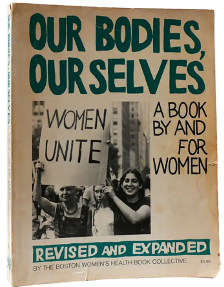
         <p>Health promotion as a concept entered the world stage from Canada, through a 1974 government report, A New Perspective on the Health of Canadians (Lalonde, 1974). Considered the first modern government document in the Western world to extend the field of health beyond the biomedical healthcare system, the Lalonde report aimed at equipping individuals and organizations with the information and support needed for the development of healthy lifestyles and community environments (Hancock, 1985). In Ottawa, November 1986, the <span class="glossary-term">World Health Organization</span> (WHO) held its First International Conference on Health Promotion, which led to the signing of the Ottawa Charter for Health Promotion (1986). The charter committed to a range of efforts by international organizations, governments, and local communities toward the improvement of health promotion with the goal of “health for all” by the year 2000 (WHO, 1986). The charter urged action in the following areas for building health promotion:</p>
         <ul>
              <li style="font-weight: 400">build healthy public policy</li>
              <li style="font-weight: 400">create supportive environments</li>
              <li style="font-weight: 400">strengthen community action</li>
              <li style="font-weight: 400">develop personal skills</li>
              <li style="font-weight: 400">reorient health services</li>
         </ul>
         <p>Access the charter here: <a href="https://www.canada.ca/content/dam/phac-aspc/documents/services/health-promotion/population-health/ottawa-charter-health-promotion-international-conference-on-health-promotion/charter.pdf" target="_blank" rel="noopener">Ottawa Charter for Health Promotion</a></p>
         <p><img src="https://pressbooks.library.torontomu.ca/accessiblehealthcare/wp-content/uploads/sites/422/2025/01/our-bodies.png" alt="A book cover titled &quot;Our Bodies, Ourselves: A Book By and For Women&quot;. The cover features a black-and-white photograph of women smiling and holding a sign that says &quot;Women Unite&quot;. The title is prominently displayed in bold green capital letters at the top. At the bottom, a green banner reads &quot;Revised and Expanded&quot;, with additional text indicating it is authored by The Boston Women's Health Book Collective. The design reflects themes of empowerment, unity, and women's health." width="283" height="363" class="wp-image-467 alignright" style="font-size: 1em" srcset="https://pressbooks.library.torontomu.ca/accessiblehealthcare/wp-content/uploads/sites/422/2025/01/our-bodies.png 224w, https://pressbooks.library.torontomu.ca/accessiblehealthcare/wp-content/uploads/sites/422/2025/01/our-bodies-65x83.png 65w" sizes="(max-width: 283px) 100vw, 283px" /></p>
         <p>This international commitment emerged from a shift in public consciousness that had been taking place in the Western world throughout the 1970s. More people were coming to understand health management as being governed by a broader sphere of day-to-day ch<img src="https://pressbooks.library.torontomu.ca/accessiblehealthcare/wp-content/uploads/sites/422/2025/01/on-your-own.png" alt="A book cover titled &quot;On Our Own: Patient-Controlled Alternatives to the Mental Health System&quot; by Judi Chamberlin. The cover has a textured blue background with a blurred, shadowy silhouette of a person's head and shoulders in dark tones. The title appears in bold white and beige text at the top, and the author's name, &quot;Judi Chamberlin,&quot; is displayed in smaller white text at the bottom. The overall design has a somber and abstract appearance." width="257" height="392" class="wp-image-466 alignleft" srcset="https://pressbooks.library.torontomu.ca/accessiblehealthcare/wp-content/uploads/sites/422/2025/01/on-your-own.png 192w, https://pressbooks.library.torontomu.ca/accessiblehealthcare/wp-content/uploads/sites/422/2025/01/on-your-own-65x99.png 65w" sizes="(max-width: 257px) 100vw, 257px" /><span style="font-size: 1em;text-align: initial">oices and conditions rather than something that happens only within doctors’ offices or other medical settings (Crawford, 1980). A “new health consciousness” was emerging at the time. It recognized heal</span>th as an outcome of a range of personal, social, cultural, environmental, and occupational factors that are a product of individual and broader civic choices, attitudes, and behaviours. This consciousness manifested in a number of health movements, such as the <span class="glossary-term">women’s health movement</span> and the <span class="glossary-term">psychiatric survivors movement</span>.</p>
         <p>These health movements expanded the jurisdiction of health to a widening array of functions governed by personal and public life, and pla<span style="text-align: initial;font-size: 1em">ced people at the centre of lifestyle choices and habits to manage their health. Individuals were tasked with making health choices in the face of broader cultural conditions and considerations, such as advertising, food availability, environmental factors, disease agents, and more.</span></p>
         <div class="textbox textbox--examples">
              <header class="textbox__header">
                   <img src="https://pressbooks.library.torontomu.ca/accessiblehealthcare/wp-content/uploads/sites/422/2025/01/noun-question-3407906-300x300.png" alt="" width="80" height="80" class="wp-image-240 alignright" srcset="https://pressbooks.library.torontomu.ca/accessiblehealthcare/wp-content/uploads/sites/422/2025/01/noun-question-3407906-300x300.png 300w, https://pressbooks.library.torontomu.ca/accessiblehealthcare/wp-content/uploads/sites/422/2025/01/noun-question-3407906-1024x1024.png 1024w, https://pressbooks.library.torontomu.ca/accessiblehealthcare/wp-content/uploads/sites/422/2025/01/noun-question-3407906-150x150.png 150w, https://pressbooks.library.torontomu.ca/accessiblehealthcare/wp-content/uploads/sites/422/2025/01/noun-question-3407906-768x768.png 768w, https://pressbooks.library.torontomu.ca/accessiblehealthcare/wp-content/uploads/sites/422/2025/01/noun-question-3407906-65x65.png 65w, https://pressbooks.library.torontomu.ca/accessiblehealthcare/wp-content/uploads/sites/422/2025/01/noun-question-3407906-225x225.png 225w, https://pressbooks.library.torontomu.ca/accessiblehealthcare/wp-content/uploads/sites/422/2025/01/noun-question-3407906-350x350.png 350w, https://pressbooks.library.torontomu.ca/accessiblehealthcare/wp-content/uploads/sites/422/2025/01/noun-question-3407906.png 1200w" sizes="(max-width: 80px) 100vw, 80px" />
                   <h3 class="textbox__title"><strong>Reflection Moment</strong></h3>
              </header>
              <div class="textbox__content">
                   <p>Take a moment to reflect on these developments in global health promotion. Consider the following questions:</p>
                   <ul>
                        <li style="font-weight: 400">How did the Ottawa Charter for Health Promotion understand or expand the concept of health? How does it situate the role of the public in administering health management?</li>
                        <li style="font-weight: 400">What do you see as some of the potential positive and negative impacts of the “new health consciousness”?</li>
                        <li style="font-weight: 400">What do you think were the impacts of these public health movements on people with disabilities?</li>
                   </ul>
              </div>
         </div>
    </section>
    <section data-type="chapter" class="chapter" id="chapter-defining-health-disability-and-the-aims-of-health-promotion" title="Defining Health, Disability, and the Aims of Health Promotion">
         <header>
              <h1 class="chapter-title">Defining Health, Disability, and the Aims of Health Promotion</h1>
              <p data-type="subtitle" class="chapter-number">19</p>
         </header>
         <p>How did this new understanding of health contribute to changing meanings of health? Unfortunately, despite advancing greater recognition of the public’s role and social and environmental factors in health outcomes, the changes left key elements in the dominant understanding of health unchallenged. For instance the women’s health movement contended that women should understand their bodies and that their perspectives should be respected within the healthcare encounter, but health was still understood as the absence of disease. In many cases these health movements served to reify and entrench &nbsp;biomedical approaches to understanding health into a broader ideology of <span class="glossary-term">medicalization</span> upheld by an ever-increasing range of social functions (Crawford, 1980). The prominent (biomedical) conception of health, seen as a sense of well-being achieved through the mitigation of disease, illness, injury, and social impairments, was coming to be understood as not only a medical diagnosis but also as a matter of individual responsibility (Berthelot-Raffard, 2018; Crawford, 1980). Robert Crawford (1980) describes the emergence of healthism as a new health consciousness that situated the “problem” of health as primarily an individual issue and product of personal actions, attitudes, and behaviours, achieved through modifications in lifestyle and sometimes with the help of therapeutic services. Health promotion entailed providing individuals with the necessary knowledge to make healthy choices that encourage healthy behaviour, resisting harmful influences, and reforming their mental responses to social stressors. In effect, the new health consciousness movements laid the groundwork for an “age of medicalization” in which the pursuit of health became a fundamental characteristic of popular culture and everyday life. As Crawford states, “while modifications of dominant medical practices [were] being adopted, some of the most fundamental and disabling medical and other dominant cultural conceptions have remained untouched” (p. 369).</p>
         <div class="textbox textbox--key-takeaways">
              <header class="textbox__header">
                   <img src="https://pressbooks.library.torontomu.ca/accessiblehealthcare/wp-content/uploads/sites/422/2025/01/noun-video-7467494-300x300.png" alt="Video icon." width="40" height="40" class="wp-image-182 alignright" srcset="https://pressbooks.library.torontomu.ca/accessiblehealthcare/wp-content/uploads/sites/422/2025/01/noun-video-7467494-300x300.png 300w, https://pressbooks.library.torontomu.ca/accessiblehealthcare/wp-content/uploads/sites/422/2025/01/noun-video-7467494-1024x1024.png 1024w, https://pressbooks.library.torontomu.ca/accessiblehealthcare/wp-content/uploads/sites/422/2025/01/noun-video-7467494-150x150.png 150w, https://pressbooks.library.torontomu.ca/accessiblehealthcare/wp-content/uploads/sites/422/2025/01/noun-video-7467494-768x768.png 768w, https://pressbooks.library.torontomu.ca/accessiblehealthcare/wp-content/uploads/sites/422/2025/01/noun-video-7467494-65x65.png 65w, https://pressbooks.library.torontomu.ca/accessiblehealthcare/wp-content/uploads/sites/422/2025/01/noun-video-7467494-225x225.png 225w, https://pressbooks.library.torontomu.ca/accessiblehealthcare/wp-content/uploads/sites/422/2025/01/noun-video-7467494-350x350.png 350w, https://pressbooks.library.torontomu.ca/accessiblehealthcare/wp-content/uploads/sites/422/2025/01/noun-video-7467494.png 1200w" sizes="(max-width: 40px) 100vw, 40px" /><span style="font-size: 1.602em;font-style: normal">Media Moment</span>
              </header>
              <div class="textbox__content">
                   <p>Watch the following video here, access it at the link below.</p>
                   <p><span style="color: #792082"><strong>Time: 31 seconds</strong></span></p>
                   <div class="textbox interactive-content interactive-content--oembed">
                        <span class="interactive-content__icon"></span>
                        <p>One or more interactive elements has been excluded from this version of the text. You can view them online here: <a href="#oembed-1" title="Fall in with an active crowd.">https://pressbooks.library.torontomu.ca/accessiblehealthcare/?p=476#oembed-1</a> </p>
                   </div>
                   <p><a href="https://www.youtube.com/watch?v=1OTVHUgnqcU" target="_blank" rel="noopener">Fall in with an active crowd</a><span style="background-color: #ffff99"></span></p>
                   <p><span></span></p>
                   <div class="textbox interactive-content">
                        <span class="interactive-content__icon"></span>
                        <p>An interactive H5P element has been excluded from this version of the text. You can view it online here:<br />
                         <a href="https://pressbooks.library.torontomu.ca/accessiblehealthcare/?p=476#h5p-45" title="Module 6: Transcript - Fall in with an active crowd">https://pressbooks.library.torontomu.ca/accessiblehealthcare/?p=476#h5p-45</a> </p>
                   </div>
                   <p></p>
                   <p>Watch the following video here, access it at the link below.</p>
                   <p><span style="color: #792082"><strong>Time: 4 minutes, 35&nbsp;seconds</strong></span></p>
                   <div class="textbox interactive-content interactive-content--oembed">
                        <span class="interactive-content__icon"></span>
                        <p>One or more interactive elements has been excluded from this version of the text. You can view them online here: <a href="#oembed-2" title="ParticipACTION Workout Videos | Break from Busy">https://pressbooks.library.torontomu.ca/accessiblehealthcare/?p=476#oembed-2</a> </p>
                   </div>
                   <p><a href="https://www.youtube.com/watch?v=MPAn-bvjllA" target="_blank" rel="noopener">ParticipACTION Workout Videos | Break from Busy</a></p>
                   <p><span></span></p>
                   <div class="textbox interactive-content">
                        <span class="interactive-content__icon"></span>
                        <p>An interactive H5P element has been excluded from this version of the text. You can view it online here:<br />
                         <a href="https://pressbooks.library.torontomu.ca/accessiblehealthcare/?p=476#h5p-46" title="Module 6: Transcript - ParticipACTION Workout Videos: Break from Busy">https://pressbooks.library.torontomu.ca/accessiblehealthcare/?p=476#h5p-46</a> </p>
                   </div>
                   <p></p>
              </div>
         </div>
         <p><span style="background-color: #ffff99">In the readings associated with this module</span>, Agnès Berthelot-Raffard (2018) discusses the gap between the public health profession on the one hand and disability rights activists and scholars on the other in terms of how they conceptualize health and disability, and how these concepts frame health promotion. While the disability community has advocated for the inclusion, de-stigmatization, and de-institutionalization of people with disabilities as central aims in health promotion, the definition of health that has persisted in the public health field is rooted in the absence and prevention of disease, illness, injury, or other impairments to “normal functioning” (Berthelot-Raffard, 2018; Crawford, 1980). In this definition, disability is seen as a form of deviance understood in contrast to the state of health, which is defined in terms of biostatistical markers of “normal functioning” based on the most common levels of functioning for people of a particular age and sex (Berthelot-Raffard, 2018; Foucault, 1961). Critical theorists such as Michel Foucault have illustrated how the administration of normalizing biomedical categories have served as a form of population control from which conceptions of “deviance,” “pathology,” and “madness” arose. These concepts have long characterized people with disabilities as social “problems” to be solved, treated, or extradited (Tremain, 2015; Foucault, 1961). In this framework, health is seen as the absence of impairment, and the role of public health is to minimize, prevent, and treat conditions that limit normal functioning to the greatest degree possible (Berthelot-Raffard, 2018).</p>
         <div class="textbox textbox--key-takeaways">
              <header class="textbox__header">
                   <img src="https://pressbooks.library.torontomu.ca/accessiblehealthcare/wp-content/uploads/sites/422/2025/01/noun-picture-7390883-300x300.png" alt="Photo icon." width="42" height="42" class="wp-image-480 alignright" srcset="https://pressbooks.library.torontomu.ca/accessiblehealthcare/wp-content/uploads/sites/422/2025/01/noun-picture-7390883-300x300.png 300w, https://pressbooks.library.torontomu.ca/accessiblehealthcare/wp-content/uploads/sites/422/2025/01/noun-picture-7390883-1024x1024.png 1024w, https://pressbooks.library.torontomu.ca/accessiblehealthcare/wp-content/uploads/sites/422/2025/01/noun-picture-7390883-150x150.png 150w, https://pressbooks.library.torontomu.ca/accessiblehealthcare/wp-content/uploads/sites/422/2025/01/noun-picture-7390883-768x768.png 768w, https://pressbooks.library.torontomu.ca/accessiblehealthcare/wp-content/uploads/sites/422/2025/01/noun-picture-7390883-65x65.png 65w, https://pressbooks.library.torontomu.ca/accessiblehealthcare/wp-content/uploads/sites/422/2025/01/noun-picture-7390883-225x225.png 225w, https://pressbooks.library.torontomu.ca/accessiblehealthcare/wp-content/uploads/sites/422/2025/01/noun-picture-7390883-350x350.png 350w, https://pressbooks.library.torontomu.ca/accessiblehealthcare/wp-content/uploads/sites/422/2025/01/noun-picture-7390883.png 1200w" sizes="(max-width: 42px) 100vw, 42px" /><span style="font-size: 1.602em;font-style: normal">Media Moment</span>
              </header>
              <div class="textbox__content">
                   <p>Read this infographic or access the PDF here: <a href="https://www.wsps.ca/resource-hub/chemicals-hazardous-materials-whmis/what-can-happen-to-your-hands-and-how-to-protect-them?utm_source=Resource_Hub&amp;utm_medium=website&amp;utm_campaign=top%20funnel&amp;utm_content=social%20media" target="_blank" rel="noopener">What Can Happen to Your Hands and How to Protect Them</a></p>
                   <p>Thinking about how the disability rights community conceives of the aims of health promotion, how does it differ to the public health field? What are their shared aims in health promotion, and how do they differ?</p>
                   <p><img src="https://pressbooks.library.torontomu.ca/accessiblehealthcare/wp-content/uploads/sites/422/2025/01/Screenshot-2025-01-30-at-5.28.36 AM-660x1024.png" alt="Infographic titled &quot;What Can Happen to Your Hands and How to Protect Them&quot; shows five types of hand risks: dermatitis, lacerations, burns, repetitive strain injuries, and impact/penetration. It highlights hazards, risks, and preventive measures, along with a list of controls for hand protection and the impact on the workplace. Access the PDF for more details." width="660" height="1024" class="alignnone wp-image-483 size-large" srcset="https://pressbooks.library.torontomu.ca/accessiblehealthcare/wp-content/uploads/sites/422/2025/01/Screenshot-2025-01-30-at-5.28.36 AM-660x1024.png 660w, https://pressbooks.library.torontomu.ca/accessiblehealthcare/wp-content/uploads/sites/422/2025/01/Screenshot-2025-01-30-at-5.28.36 AM-193x300.png 193w, https://pressbooks.library.torontomu.ca/accessiblehealthcare/wp-content/uploads/sites/422/2025/01/Screenshot-2025-01-30-at-5.28.36 AM-768x1192.png 768w, https://pressbooks.library.torontomu.ca/accessiblehealthcare/wp-content/uploads/sites/422/2025/01/Screenshot-2025-01-30-at-5.28.36 AM-990x1536.png 990w, https://pressbooks.library.torontomu.ca/accessiblehealthcare/wp-content/uploads/sites/422/2025/01/Screenshot-2025-01-30-at-5.28.36 AM-65x101.png 65w, https://pressbooks.library.torontomu.ca/accessiblehealthcare/wp-content/uploads/sites/422/2025/01/Screenshot-2025-01-30-at-5.28.36 AM-225x349.png 225w, https://pressbooks.library.torontomu.ca/accessiblehealthcare/wp-content/uploads/sites/422/2025/01/Screenshot-2025-01-30-at-5.28.36 AM-350x543.png 350w, https://pressbooks.library.torontomu.ca/accessiblehealthcare/wp-content/uploads/sites/422/2025/01/Screenshot-2025-01-30-at-5.28.36 AM.png 1228w" sizes="(max-width: 660px) 100vw, 660px" /></p>
              </div>
         </div>
         <h2><span style="color: #004c9b">Healthy Difference</span></h2>
         <p>But physical and mental variations are a natural part of the human condition, and these variations do not necessarily translate to poor health (although they may result in certain disadvantages and vulnerabilities in some settings) (Berthelot-Raffard, 2018). Indigenous knowledge frameworks have long understood variation and difference as common aspects of being that inform the interdependence of all things (Norris, 2014; Schelbert, 2003). Indigenous models of kinship offer understandings of health that are not based on statistical normalcy, binaries or individualism. Instead they conceive of a “‘spider web’ of relations” (Little Bear, 2000) in which all are equal, and all contribute to the continual give-and-take of all life (Schelbert, 2003). In Anishinaabe culture, for instance, people are recognized for the unique gifts they bring to the community, rather than focusing on what they lack or cannot do (Ineese-Nash, 2020). Leo Schelbert (2003) offers a description of how all life’s entities are valued with equal personhood and as sacred forces in the health of the collective:</p>
         <p>Four-legged people, as two-legged people, as crawling, swimming, or winged people; as people that are green, or stony, or soft. Trees are called standing people, and their bark or sap is collected for human use, are approached in a sense of ritually enhanced gratitude. (p. 67)</p>
         <p>The disability rights community have long echoed these relational understandings of health and well-being in their problematizations of the prevailing discourses on health and disability (Berthelot-Raffard, 2018; Sherwin, 1998). These relational frameworks conceive health as rooted in the interconnections between people and the supports they need to be well (e.g., people, resources, technologies). Through this framework, disability is understood as a social construct that arises from the relationship between people and the social environment which creates barriers that exclude and limit them from full participation in society (Schwartz et al., 2023; Oliver, 1996; Goodley et al., 2019). Oftentimes, these barriers create obstacles to accessing the social resources needed to be well, resulting in harms such as food insecurity (Berthelot-Raffard, 2018; Schwartz et al., 2023).</p>
         <p>However, there is nothing inherently unhealthy or pathological about being disabled or having an impairment. Berthelot-Raffard (2018) gives the example that someone who is deaf or blind may need additional supports to access information provided in a society that assumes a capacity to see or hear, but they do not necessarily require any treatment. Someone who is on the autism spectrum may be diagnosed as such because they are not easily understood by the biomedical field of rationality, but they can still be regarded as healthy.</p>
         <div class="textbox textbox--key-takeaways">
              <header class="textbox__header">
                   <img src="https://pressbooks.library.torontomu.ca/accessiblehealthcare/wp-content/uploads/sites/422/2025/01/noun-newspaper-7473030-300x300.png" alt="Article icon." width="74" height="74" class="wp-image-486 alignright" srcset="https://pressbooks.library.torontomu.ca/accessiblehealthcare/wp-content/uploads/sites/422/2025/01/noun-newspaper-7473030-300x300.png 300w, https://pressbooks.library.torontomu.ca/accessiblehealthcare/wp-content/uploads/sites/422/2025/01/noun-newspaper-7473030-1024x1024.png 1024w, https://pressbooks.library.torontomu.ca/accessiblehealthcare/wp-content/uploads/sites/422/2025/01/noun-newspaper-7473030-150x150.png 150w, https://pressbooks.library.torontomu.ca/accessiblehealthcare/wp-content/uploads/sites/422/2025/01/noun-newspaper-7473030-768x768.png 768w, https://pressbooks.library.torontomu.ca/accessiblehealthcare/wp-content/uploads/sites/422/2025/01/noun-newspaper-7473030-65x65.png 65w, https://pressbooks.library.torontomu.ca/accessiblehealthcare/wp-content/uploads/sites/422/2025/01/noun-newspaper-7473030-225x225.png 225w, https://pressbooks.library.torontomu.ca/accessiblehealthcare/wp-content/uploads/sites/422/2025/01/noun-newspaper-7473030-350x350.png 350w, https://pressbooks.library.torontomu.ca/accessiblehealthcare/wp-content/uploads/sites/422/2025/01/noun-newspaper-7473030.png 1200w" sizes="(max-width: 74px) 100vw, 74px" />
                   <h3 class="textbox__title" style="text-align: left">Media Moment</h3>
              </header>
              <div class="textbox__content">
                   <p>Access the following articles about ableism:</p>
                   <ul>
                        <li style="font-weight: 400"><a href="https://everydayfeminism.com/2018/05/a-cure-for-ableism/" target="_blank" rel="noopener">Disabled People Don’t Need To Be “Fixed” — We Need A Cure For Ableism by Wendy Lu</a></li>
                        <li style="font-weight: 400"><a href="https://www.usatoday.com/story/life/nation-now/2018/03/16/gal-gadot-slammed-tweeting-stephen-hawking-now-free-physical-constraints-ableist-stephen-hawking-tri/431133002/" target="_blank" rel="noopener">Gal Gadot slammed for tweeting Stephen Hawking is now ‘free from physical constraints’</a></li>
                   </ul>
                   <p>Wendy Lu makes the case that ableism is in need of a cure, not disability. These relational perspectives and frameworks thus offer a very different approach to health promotion.</p>
              </div>
         </div>
    </section>
    <section data-type="chapter" class="chapter" id="chapter-social-performance-and-health-promotion" title="Social Performance and Health Promotion">
         <header>
              <h1 class="chapter-title">Social Performance and Health Promotion</h1>
              <p data-type="subtitle" class="chapter-number">20</p>
         </header>
         <h2><span style="color: #004c9b">“Health for all”, but for whom?</span></h2>
         <p>So, why does the public health community continue to uphold the <span class="glossary-term">biomedical model of health</span>? And what are the impacts for people with disabilities?</p>
         <p>Let’s go back to the WHO’s concept of health promotion. The WHO defines it as “the process of enabling people to increase control over, and to improve, their health” (WHO, 2024). Berthelot-Raffard (2018) illustrates how conceptions of health promotion that are rooted in people taking “control” over their mental and physical well-being equate health with “normal functioning,” seen as the ability to operate at the level of social performance expected in modern society. In our world, that means the ability to live and work independently, to make a living, and to minimize vulnerabilities that may cause a “burden” on the health system. Indeed, the Ottawa Charter for Health Promotion (1986) begins its priority strategies with “Good health is a major resource for social, economic and personal development.” Health is positioned as being in service to societal advancement, rather than the other way around. What is really being safeguarded here, and what or who is at stake when health is seen as a “resource”?</p>
         <p>Jen Deerinwater (2021) provides a revealing account of the compounding health crises caused by colonial invasion, which have had devastating impacts on Indigenous people and particularly deaf, disabled, and ill Indigenous people. The global climate crisis, the poisoning of land and water, the forcible removal from land and severing of natural systems of care, the petrochemical and agricultural industries, the pillaging of resources, the imposition of European misogynist culture, and the permeation of ableist norms in Indigenous life, all have contributed to devastating health outcomes for disabled Indigenous people. These forces have eroded the critical roles disabled people have played in their communities and reinforced the idea that their lives are worthless. For Deerinwater and other disabled Indigenous people, health restoration needs to entail an end to colonial capitalism and a fight for disability and climate justice.</p>
         <div class="textbox textbox--key-takeaways">
              <header class="textbox__header">
                   <img src="https://pressbooks.library.torontomu.ca/accessiblehealthcare/wp-content/uploads/sites/422/2025/01/noun-video-7467494-300x300.png" alt="Video icon." width="40" height="40" class="wp-image-182 alignright" srcset="https://pressbooks.library.torontomu.ca/accessiblehealthcare/wp-content/uploads/sites/422/2025/01/noun-video-7467494-300x300.png 300w, https://pressbooks.library.torontomu.ca/accessiblehealthcare/wp-content/uploads/sites/422/2025/01/noun-video-7467494-1024x1024.png 1024w, https://pressbooks.library.torontomu.ca/accessiblehealthcare/wp-content/uploads/sites/422/2025/01/noun-video-7467494-150x150.png 150w, https://pressbooks.library.torontomu.ca/accessiblehealthcare/wp-content/uploads/sites/422/2025/01/noun-video-7467494-768x768.png 768w, https://pressbooks.library.torontomu.ca/accessiblehealthcare/wp-content/uploads/sites/422/2025/01/noun-video-7467494-65x65.png 65w, https://pressbooks.library.torontomu.ca/accessiblehealthcare/wp-content/uploads/sites/422/2025/01/noun-video-7467494-225x225.png 225w, https://pressbooks.library.torontomu.ca/accessiblehealthcare/wp-content/uploads/sites/422/2025/01/noun-video-7467494-350x350.png 350w, https://pressbooks.library.torontomu.ca/accessiblehealthcare/wp-content/uploads/sites/422/2025/01/noun-video-7467494.png 1200w" sizes="(max-width: 40px) 100vw, 40px" /><span style="font-size: 1.602em;font-style: normal">Media Moment<br />
                    </span><strong style="color: #792082;text-align: initial;font-size: 0.9em">Time: 18 minutes, 11&nbsp;seconds</strong>
              </header>
              <div class="textbox__content">
                   <p>Watch the following video here about climate change and Indigenous resistance, access it at the link below, or the transcript.</p>
                   <div class="textbox interactive-content interactive-content--oembed">
                        <span class="interactive-content__icon"></span>
                        <p>One or more interactive elements has been excluded from this version of the text. You can view them online here: <a href="#oembed-1" title="First Nations in Canada Leading Climate Change Resistance - Point of no return">https://pressbooks.library.torontomu.ca/accessiblehealthcare/?p=489#oembed-1</a> </p>
                   </div>
                   <p><a href="https://www.youtube.com/watch?v=N0P-COMCJ-w" target="_blank" rel="noopener">First Nations in Canada Leading Climate Change Resistance – Point of no return</a></p>
                   <p><span></span></p>
                   <div class="textbox interactive-content">
                        <span class="interactive-content__icon"></span>
                        <p>An interactive H5P element has been excluded from this version of the text. You can view it online here:<br />
                         <a href="https://pressbooks.library.torontomu.ca/accessiblehealthcare/?p=489#h5p-43" title="Module 6: Transcript - First Nations in Canada Leading Climate Change Resistance – Point of no return">https://pressbooks.library.torontomu.ca/accessiblehealthcare/?p=489#h5p-43</a> </p>
                   </div>
                   <p></p>
              </div>
         </div>
         <p><span style="background-color: #ffff99"><strong>Use this template for a podcast.</strong></span></p>
         <p><span style="background-color: #ffff99">Copying this whole part is helpful to maintain formatting.</span></p>
         <div class="textbox textbox--key-takeaways">
              <header class="textbox__header">
                   <img src="https://pressbooks.library.torontomu.ca/accessiblehealthcare/wp-content/uploads/sites/422/2025/01/noun-podcast-6781942-300x300.png" alt="" width="51" height="51" class="wp-image-183 alignright" srcset="https://pressbooks.library.torontomu.ca/accessiblehealthcare/wp-content/uploads/sites/422/2025/01/noun-podcast-6781942-300x300.png 300w, https://pressbooks.library.torontomu.ca/accessiblehealthcare/wp-content/uploads/sites/422/2025/01/noun-podcast-6781942-1024x1024.png 1024w, https://pressbooks.library.torontomu.ca/accessiblehealthcare/wp-content/uploads/sites/422/2025/01/noun-podcast-6781942-150x150.png 150w, https://pressbooks.library.torontomu.ca/accessiblehealthcare/wp-content/uploads/sites/422/2025/01/noun-podcast-6781942-768x768.png 768w, https://pressbooks.library.torontomu.ca/accessiblehealthcare/wp-content/uploads/sites/422/2025/01/noun-podcast-6781942-65x65.png 65w, https://pressbooks.library.torontomu.ca/accessiblehealthcare/wp-content/uploads/sites/422/2025/01/noun-podcast-6781942-225x225.png 225w, https://pressbooks.library.torontomu.ca/accessiblehealthcare/wp-content/uploads/sites/422/2025/01/noun-podcast-6781942-350x350.png 350w, https://pressbooks.library.torontomu.ca/accessiblehealthcare/wp-content/uploads/sites/422/2025/01/noun-podcast-6781942.png 1200w" sizes="(max-width: 51px) 100vw, 51px" /><span style="font-size: 1.602em;font-style: normal">Media Moment<br />
                    </span><strong style="color: #792082;text-align: initial;font-size: 0.9em">Time: 54 minutes, 1 second</strong>
              </header>
              <div class="textbox__content">
                   <p>Access the following podcast or transcript on how structural forces reshape Indigenous relationships to the land and health:</p>
                   <ul>
                        <li style="font-weight: 400"><a href="https://www.cbc.ca/listen/live-radio/1-429-what-on-earth/clip/15914083-why-flooding-indigenous-communities-climate-justice-issue" target="_blank" rel="noopener">What On Earth with Laura Lynch: Why flooding in Indigenous communities is a climate justice issue</a></li>
                        <li style="font-weight: 400"><span style="background-color: #ffff99">Podcast Transcript</span></li>
                   </ul>
              </div>
         </div>
         <div class="textbox textbox--key-takeaways">
              <header class="textbox__header">
                   <img src="https://pressbooks.library.torontomu.ca/accessiblehealthcare/wp-content/uploads/sites/422/2025/01/noun-video-7467494-300x300.png" alt="Video icon." width="40" height="40" class="wp-image-182 alignright" srcset="https://pressbooks.library.torontomu.ca/accessiblehealthcare/wp-content/uploads/sites/422/2025/01/noun-video-7467494-300x300.png 300w, https://pressbooks.library.torontomu.ca/accessiblehealthcare/wp-content/uploads/sites/422/2025/01/noun-video-7467494-1024x1024.png 1024w, https://pressbooks.library.torontomu.ca/accessiblehealthcare/wp-content/uploads/sites/422/2025/01/noun-video-7467494-150x150.png 150w, https://pressbooks.library.torontomu.ca/accessiblehealthcare/wp-content/uploads/sites/422/2025/01/noun-video-7467494-768x768.png 768w, https://pressbooks.library.torontomu.ca/accessiblehealthcare/wp-content/uploads/sites/422/2025/01/noun-video-7467494-65x65.png 65w, https://pressbooks.library.torontomu.ca/accessiblehealthcare/wp-content/uploads/sites/422/2025/01/noun-video-7467494-225x225.png 225w, https://pressbooks.library.torontomu.ca/accessiblehealthcare/wp-content/uploads/sites/422/2025/01/noun-video-7467494-350x350.png 350w, https://pressbooks.library.torontomu.ca/accessiblehealthcare/wp-content/uploads/sites/422/2025/01/noun-video-7467494.png 1200w" sizes="(max-width: 40px) 100vw, 40px" /><span style="font-size: 1.602em;font-style: normal">Media Moment<br />
                    </span><strong style="color: #792082;text-align: initial;font-size: 0.9em">Time: 21 minutes, 10 seconds</strong>
              </header>
              <div class="textbox__content">
                   <p>Watch the following video that discusses i<strong>ndigeneity and disabilit</strong>y here, access it at the link below, or the transcript.</p>
                   <div class="textbox interactive-content interactive-content--oembed">
                        <span class="interactive-content__icon"></span>
                        <p>One or more interactive elements has been excluded from this version of the text. You can view them online here: <a href="#oembed-2" title="Indigeneity and Disability">https://pressbooks.library.torontomu.ca/accessiblehealthcare/?p=489#oembed-2</a> </p>
                   </div>
                   <p><a href="https://www.youtube.com/watch?v=eKFYyd7AdfA" target="_blank" rel="noopener">In Focus Podcast: Indigeneity and Disability with Micheal Dumont&nbsp;</a></p>
                   <p><span></span></p>
                   <div class="textbox interactive-content">
                        <span class="interactive-content__icon"></span>
                        <p>An interactive H5P element has been excluded from this version of the text. You can view it online here:<br />
                         <a href="https://pressbooks.library.torontomu.ca/accessiblehealthcare/?p=489#h5p-44" title="Module 6: Transcript - Indigeneity and Disability">https://pressbooks.library.torontomu.ca/accessiblehealthcare/?p=489#h5p-44</a> </p>
                   </div>
                   <p></p>
                   <p><strong>After watching the video or reading the transcript, reflect on the following questions: </strong></p>
                   <p><span style="background-color: #ffff99"><img src="https://pressbooks.library.torontomu.ca/accessiblehealthcare/wp-content/uploads/sites/422/2025/01/noun-question-2597215-300x300.png" alt="Question icon." width="128" height="128" class="wp-image-206 alignright" srcset="https://pressbooks.library.torontomu.ca/accessiblehealthcare/wp-content/uploads/sites/422/2025/01/noun-question-2597215-300x300.png 300w, https://pressbooks.library.torontomu.ca/accessiblehealthcare/wp-content/uploads/sites/422/2025/01/noun-question-2597215-1024x1024.png 1024w, https://pressbooks.library.torontomu.ca/accessiblehealthcare/wp-content/uploads/sites/422/2025/01/noun-question-2597215-150x150.png 150w, https://pressbooks.library.torontomu.ca/accessiblehealthcare/wp-content/uploads/sites/422/2025/01/noun-question-2597215-768x768.png 768w, https://pressbooks.library.torontomu.ca/accessiblehealthcare/wp-content/uploads/sites/422/2025/01/noun-question-2597215-65x65.png 65w, https://pressbooks.library.torontomu.ca/accessiblehealthcare/wp-content/uploads/sites/422/2025/01/noun-question-2597215-225x225.png 225w, https://pressbooks.library.torontomu.ca/accessiblehealthcare/wp-content/uploads/sites/422/2025/01/noun-question-2597215-350x350.png 350w, https://pressbooks.library.torontomu.ca/accessiblehealthcare/wp-content/uploads/sites/422/2025/01/noun-question-2597215.png 1200w" sizes="(max-width: 128px) 100vw, 128px" /></span></p>
                   <ul>
                        <li style="font-weight: 400">
                        <p class="indent no-indent">What parts of Michel’s stories relate to health and well-being?</p>
                         </li>
                        <li style="font-weight: 400">
                        <p class="indent no-indent">How is his health influenced by the environment, colonialism, interdependency, and artistic practice?</p>
                         </li>
                   </ul>
                   <p class="indent no-indent"></p>
              </div>
         </div>
         <p>When health is associated with economic performance standards, the health of Indigenous populations as well as disabled populations (not to mention disabled Indigenous populations) are systematically impacted. When people experience barriers, require additional supports, or are simply not in a position to perform at the standards required by capitalism, they are more often denied the resources necessary to adequately support their health.</p>
         <p>Naomi Schwartz, Ron Buliung, and Kathi Wilson’s (2023) Toronto-based study of people who have mobility limitations and/or use mobility aids illuminates the compounding economic, physical, and social barriers to accessing food experienced. For the respondents in this research, it was not mobility limitations related to their disabilities that most restricted their ability to access suitable housing, transportation, care, and choice in how and where to access food but rather the limited economic resources available to them. The findings highlight how cities like Toronto and their associated health campaigns are designed for statistically “normal” (read: “healthy”) people who have control over their time and consumer choices without being restricted by functional or temporal limitations. State-level initiatives such as Ontario Disability Support Program (ODSP), AODA guidelines, and paratransit services serve as technical “box-checking” while being purposely inflexible and failing to meet real needs for access and livability (Schwartz et al., 2023). In effect, a healthy middle class is leveraged at the expense of disabled people, whose exclusionary treatment by civil society further compromises their health outcomes.</p>
         <div class="textbox textbox--examples">
              <header class="textbox__header">
                   <img src="https://pressbooks.library.torontomu.ca/accessiblehealthcare/wp-content/uploads/sites/422/2025/01/noun-question-3407906-300x300.png" alt="" width="80" height="80" class="wp-image-240 alignright" srcset="https://pressbooks.library.torontomu.ca/accessiblehealthcare/wp-content/uploads/sites/422/2025/01/noun-question-3407906-300x300.png 300w, https://pressbooks.library.torontomu.ca/accessiblehealthcare/wp-content/uploads/sites/422/2025/01/noun-question-3407906-1024x1024.png 1024w, https://pressbooks.library.torontomu.ca/accessiblehealthcare/wp-content/uploads/sites/422/2025/01/noun-question-3407906-150x150.png 150w, https://pressbooks.library.torontomu.ca/accessiblehealthcare/wp-content/uploads/sites/422/2025/01/noun-question-3407906-768x768.png 768w, https://pressbooks.library.torontomu.ca/accessiblehealthcare/wp-content/uploads/sites/422/2025/01/noun-question-3407906-65x65.png 65w, https://pressbooks.library.torontomu.ca/accessiblehealthcare/wp-content/uploads/sites/422/2025/01/noun-question-3407906-225x225.png 225w, https://pressbooks.library.torontomu.ca/accessiblehealthcare/wp-content/uploads/sites/422/2025/01/noun-question-3407906-350x350.png 350w, https://pressbooks.library.torontomu.ca/accessiblehealthcare/wp-content/uploads/sites/422/2025/01/noun-question-3407906.png 1200w" sizes="(max-width: 80px) 100vw, 80px" />
                   <h3 class="textbox__title"><strong>Reflection Moment</strong></h3>
              </header>
              <div class="textbox__content">
                   <p>Take a moment to reflect on <strong>the relationship between health and our economic systems</strong>. Consider the following questions:</p>
                   <ul>
                        <li style="font-weight: 400">Pick three of the following values of modernity (or come up with your own!) and explain how they may impact the health of people with disabilities, including Indigenous disabled people:
                        <ul>
                             <li style="font-weight: 400">Autonomy</li>
                             <li style="font-weight: 400">Individualism</li>
                             <li style="font-weight: 400">Productivity</li>
                             <li style="font-weight: 400">Consumerism</li>
                             <li style="font-weight: 400">Extractivism</li>
                             <li style="font-weight: 400">Privatization</li>
                             <li style="font-weight: 400">Treatment</li>
                        </ul>
                         </li>
                        <li style="font-weight: 400">How is “health for all” conceived of in a capitalist framework? Who or what is left out? What needs to change in order to prioritize true health for all?</li>
                        <li style="font-weight: 400">How do Indigenous ways of knowing help us understand the relationship between the health of people and the health of the land?</li>
                   </ul>
              </div>
         </div>
         <h2><span style="color: #004c9b">“Nothing About Us Without Us”</span></h2>
         <p>So, what does a more just vision of health promotion look like, one that honours, supports, and does justice to people with disabilities? How can we crip our understandings of health promotion to foreground a future in which variance in human ways of being are recognized and celebrated?</p>
         <p>“Crip” is a disability rights term that emerged as a reclamation of a once-derogatory label of otherness into a self-proclaimed source of pride, human expansiveness, and non-normative resistance (Hutcheon &amp; Wolbring, 2013; Thorneycroft, 2024). When used as a verb, “cripping” embodies a dynamic process that is “deployed and redeployed for political purposes as a way to re-imagine conceptual boundaries, relationships, communities, cultural representations, and power structures” (Hutcheon &amp; Wolbring, 2013). It seeks to transform dominant conceptions and practices from those that position disability as a “problem” to be solved, towards ones that foresee a world with disability as “possible and desirable” (McRuer, 2006, p. 71).</p>
         <p>Cripping health promotion begins with the recognition that “people with impairments have always been part of every human society” (Berthelot-Raffort, 2018, p. 364) and are critical voices in our communities. Disability rights activists have led the movement to expose how the prevailing mission of health promotion is based on capitalist, ableist standards of productivity that systematically devalue people with disabilities as well as caregivers and domestic workers (Berthelot-Raffort, 2018). If the public health community and disability rights community share interests in health promotion, access and participation in healthcare, and health equity for all people, then disabled people and their caregivers need to be included in supportive decision-making toward a transformed ethics of health promotion that protects people with disabilities and does not devalue certain community members.</p>
         <p>By including the disability rights community in decision-making, public health can be re-conceived to recognize the social context of oppression that has framed and limited our experiences and choices, and that health promotion can play a role in shifting public perceptions and structural realities that shape the health outcomes and autonomy of all people, including those who are disabled, those who experience temporary impairments, and those who may become disabled in the future. The principle, “nothing about us without us,” was popularized by disability rights activists as a way of centring disabled people in decision-making that affects their lives, and promoting participatory, inclusive approaches to healthcare that respect the expertise of disabled individuals (Charlton, 1998).</p>
         <p>What follows are some considerations that emerge in the building of a <span class="glossary-term">disability justice</span> framework for health promotion that benefits not only disabled people but all community members.</p>
         <h3><span style="direction: ltr" class="no-indent very-tight"><span class="indent loose"><span class="tight"><span style="color: #792082"><strong>Valuing Human Interdependency</strong></span></span></span></span></h3>
         <p>Following a feminist ethics of care as well as Indigenous principles, disability advocates point to human interdependency as an important aspect of the human condition that should be centred in conceptions of health promotion. Humans have always relied on one another to survive, care for, and protect each other in the face of human vulnerabilities (Berthelot-Rafford, 2018; Garland-Thompson, 2017). A more just vision of health promotion needs to look beyond the individualized model of treatment and recognize the inherent <span class="glossary-term">relationality</span> of health, which encompasses the role and health of caregivers, families, communities, and broader social and political conditions in which people exist (Crawford, 1980).</p>
         <h3><span style="direction: ltr" class="no-indent very-tight"><span class="indent loose"><span class="tight"><span style="color: #792082"><strong>Strengthening Disability Cultural Competence</strong></span></span></span></span></h3>
         <p>In order to bring about disability justice in health promotion, public education is needed to shift dominant perceptions of disability and better understand the role of the social and cultural environment in shaping health outcomes. Disability scholars such as Rosemarie Garland-Thompson (2017) argue for the importance of building “disability cultural competence” that equips people with the knowledge and skills to understand, support, and co-create an environment that improves the lives of people with disabilities. Since anyone may become disabled (or care for someone who is disabled) as a result of injury, illness, or ageing, people need to be provided with the necessary information to be able to live with a disability, including biomedical decision-making, accessible technology and design, disability rights and legislation, and more (Garland-Thompson, 2017). This involves moving past fears and perceptions that disabilities necessarily need to be rehabilitated or cured, and instead value human difference as a source of pride. It also involves looking to disabled people for guidance on what can be learned through such common aspects of the human experience as pain, suffering, and adaptive ways of being (Wendell, 2001).</p>
         <h3><span style="direction: ltr" class="no-indent very-tight"><span class="indent loose"><span class="tight"><span style="color: #792082"><strong>Enabling Critical Rest and Vulnerability</strong></span></span></span></span></h3>
         <p>As conceptions of health promotion are decoupled from capitalist expectations, attention can be placed on the health needs and limitations of people, independent from performance standards imposed by an external authority such as an employer. Susan Wendell (2001) discusses how people who are disabled may have a range of fluctuating energy capacities and limitations that are often unpredictable. Thus, having the ability to govern one’s own time and pace of work – including when rest is needed – is critical to meaningful participation of disabled people in social life. In fact, asserting the need to rest is a form of resistance to capitalist standards of productivity by acknowledging our natural human limitations and vulnerabilities and allowing people to manage their health as needed (Berthelot-Rafford, 2018).</p>
         <p>&nbsp;</p>
         <div class="textbox textbox--key-takeaways">
              <header class="textbox__header">
                   <img src="https://pressbooks.library.torontomu.ca/accessiblehealthcare/wp-content/uploads/sites/422/2025/01/noun-podcast-6781942-300x300.png" alt="" width="51" height="51" class="wp-image-183 alignright" srcset="https://pressbooks.library.torontomu.ca/accessiblehealthcare/wp-content/uploads/sites/422/2025/01/noun-podcast-6781942-300x300.png 300w, https://pressbooks.library.torontomu.ca/accessiblehealthcare/wp-content/uploads/sites/422/2025/01/noun-podcast-6781942-1024x1024.png 1024w, https://pressbooks.library.torontomu.ca/accessiblehealthcare/wp-content/uploads/sites/422/2025/01/noun-podcast-6781942-150x150.png 150w, https://pressbooks.library.torontomu.ca/accessiblehealthcare/wp-content/uploads/sites/422/2025/01/noun-podcast-6781942-768x768.png 768w, https://pressbooks.library.torontomu.ca/accessiblehealthcare/wp-content/uploads/sites/422/2025/01/noun-podcast-6781942-65x65.png 65w, https://pressbooks.library.torontomu.ca/accessiblehealthcare/wp-content/uploads/sites/422/2025/01/noun-podcast-6781942-225x225.png 225w, https://pressbooks.library.torontomu.ca/accessiblehealthcare/wp-content/uploads/sites/422/2025/01/noun-podcast-6781942-350x350.png 350w, https://pressbooks.library.torontomu.ca/accessiblehealthcare/wp-content/uploads/sites/422/2025/01/noun-podcast-6781942.png 1200w" sizes="(max-width: 51px) 100vw, 51px" /><span style="font-size: 1.602em;font-style: normal">Media Moment<br />
                    </span><strong style="color: #792082;text-align: initial;font-size: 0.9em">Time: 58 minutes, 45 seconds</strong>
              </header>
              <div class="textbox__content">
                   <p>Access the following podcast or transcript on how rest is a form of resistance:</p>
                   <ul>
                        <li style="font-weight: 400"><a href="https://www.youtube.com/watch?v=zUe5EAJkYfA" target="_blank" rel="noopener">The Become A Good Ancestor Podcast: Rest is Resistance with Tricia Hersey</a></li>
                        <li style="font-weight: 400"><a href="https://static1.squarespace.com/static/615dfef707433b2d4fdf56ff/t/6362db02afea9177faf7a3fd/1667422978384/Transcript_Episode+010_TriciaHersey.pdf" style="text-align: initial;font-size: 1em" target="_blank" rel="noopener">Podcast Transcript</a></li>
                   </ul>
              </div>
         </div>
         <h3><span style="direction: ltr" class="no-indent very-tight"><span class="indent loose"><span class="tight"><span style="color: #792082"><strong>Building Collective Capacity</strong></span></span></span></span></h3>
         <p>Despite what the dominant messaging would have us believe, real change towards a healthier life cannot happen on an individual scale but must be pursued collectively and target the social and political conditions that shape health outcomes. Crawford (1980) argues that the notion that individuals can control their own health serves as a distraction from the social effort to build collective resistance to a system of domination that leaves people with limited health options (particularly those who are disabled and others who are marginalized). Pursuing real health needs for all entails building social movements that strive to “enhance our social capacity to control the conditions of our existence” (Crawford, 1980, p. 385). This involves making cultural and operational changes in movement spaces to meaningfully include and centre people with disabilities as movement leaders. This includes, for example, honouring disabled lived experiences as part of movement struggles (Deerinwater, 2021), allowing people to set their own fluctuating limits and capacities to organize, and openly discussing and negotiating the relationships of time, energy, and power in movements (Wendell, 2001). Practicing internal ethics of care, mutual support, and health management within movement spaces supports the longevity and collective capacity of movement efforts. Moreover, these practices can help us to demonstrate social justice in the present and to eventually bring about the kinds of worlds that our movements are working towards.</p>
         <p>Take a moment to think about how racial and disability justice movements come together in the work of the Black fat activists Da’Shaun Harrison, author of Belly of the Beast: The Politics of Anti-Fatness as Anti-Blackness (2021) and Sabrina Strings, author of Fearing the Black Body: The Racial Origins of Fat Phobia (2019). They are both engaged in activist work that actively resists the individualizing tendencies of health promotion, focused on systems of racial injustice.</p>
         <div class="textbox textbox--key-takeaways">
              <header class="textbox__header">
                   <img src="https://pressbooks.library.torontomu.ca/accessiblehealthcare/wp-content/uploads/sites/422/2025/01/noun-podcast-6781942-300x300.png" alt="" width="51" height="51" class="wp-image-183 alignright" srcset="https://pressbooks.library.torontomu.ca/accessiblehealthcare/wp-content/uploads/sites/422/2025/01/noun-podcast-6781942-300x300.png 300w, https://pressbooks.library.torontomu.ca/accessiblehealthcare/wp-content/uploads/sites/422/2025/01/noun-podcast-6781942-1024x1024.png 1024w, https://pressbooks.library.torontomu.ca/accessiblehealthcare/wp-content/uploads/sites/422/2025/01/noun-podcast-6781942-150x150.png 150w, https://pressbooks.library.torontomu.ca/accessiblehealthcare/wp-content/uploads/sites/422/2025/01/noun-podcast-6781942-768x768.png 768w, https://pressbooks.library.torontomu.ca/accessiblehealthcare/wp-content/uploads/sites/422/2025/01/noun-podcast-6781942-65x65.png 65w, https://pressbooks.library.torontomu.ca/accessiblehealthcare/wp-content/uploads/sites/422/2025/01/noun-podcast-6781942-225x225.png 225w, https://pressbooks.library.torontomu.ca/accessiblehealthcare/wp-content/uploads/sites/422/2025/01/noun-podcast-6781942-350x350.png 350w, https://pressbooks.library.torontomu.ca/accessiblehealthcare/wp-content/uploads/sites/422/2025/01/noun-podcast-6781942.png 1200w" sizes="(max-width: 51px) 100vw, 51px" /><span style="font-size: 1.602em;font-style: normal">Media Moment<br />
                    </span><strong style="color: #792082;text-align: initial;font-size: 0.9em">Time: 51 minutes, 52 seconds</strong>
              </header>
              <div class="textbox__content">
                   <p>Access the following podcast or transcript:</p>
                   <ul>
                        <li style="font-weight: 400"><a href="https://sites.libsyn.com/435210/unlocked-anti-fatness-as-anti-blackness-w-dashaun-harrison" target="_blank" rel="noopener">Upstream Podcast: Anti-Fatness as Anti-Blackness with Da’Shaun Harrison</a></li>
                        <li style="font-weight: 400"><a href="https://podscripts.co/podcasts/upstream/unlocked-anti-fatness-as-anti-blackness-w-dashaun-harrison" target="_blank" rel="noopener">Podcast Transcript</a></li>
                   </ul>
              </div>
         </div>
         <div class="textbox textbox--key-takeaways">
              <header class="textbox__header">
                   <img src="https://pressbooks.library.torontomu.ca/accessiblehealthcare/wp-content/uploads/sites/422/2025/01/noun-podcast-6781942-300x300.png" alt="" width="51" height="51" class="wp-image-183 alignright" srcset="https://pressbooks.library.torontomu.ca/accessiblehealthcare/wp-content/uploads/sites/422/2025/01/noun-podcast-6781942-300x300.png 300w, https://pressbooks.library.torontomu.ca/accessiblehealthcare/wp-content/uploads/sites/422/2025/01/noun-podcast-6781942-1024x1024.png 1024w, https://pressbooks.library.torontomu.ca/accessiblehealthcare/wp-content/uploads/sites/422/2025/01/noun-podcast-6781942-150x150.png 150w, https://pressbooks.library.torontomu.ca/accessiblehealthcare/wp-content/uploads/sites/422/2025/01/noun-podcast-6781942-768x768.png 768w, https://pressbooks.library.torontomu.ca/accessiblehealthcare/wp-content/uploads/sites/422/2025/01/noun-podcast-6781942-65x65.png 65w, https://pressbooks.library.torontomu.ca/accessiblehealthcare/wp-content/uploads/sites/422/2025/01/noun-podcast-6781942-225x225.png 225w, https://pressbooks.library.torontomu.ca/accessiblehealthcare/wp-content/uploads/sites/422/2025/01/noun-podcast-6781942-350x350.png 350w, https://pressbooks.library.torontomu.ca/accessiblehealthcare/wp-content/uploads/sites/422/2025/01/noun-podcast-6781942.png 1200w" sizes="(max-width: 51px) 100vw, 51px" /><span style="font-size: 1.602em;font-style: normal">Media Moment<br />
                    </span><strong style="color: #792082;text-align: initial;font-size: 0.9em">Time: 15 minutes</strong>
              </header>
              <div class="textbox__content">
                   <p>Access the following podcast or transcript:</p>
                   <ul>
                        <li style="font-weight: 400"><a href="https://www.npr.org/transcripts/893006538" target="_blank" rel="noopener">Shortwave Podcast and Transcript: Fat Phobia And Its Racist Past And Present with Sabrina Strings</a></li>
                   </ul>
              </div>
         </div>
         <div class="textbox textbox--examples">
              <header class="textbox__header">
                   <img src="https://pressbooks.library.torontomu.ca/accessiblehealthcare/wp-content/uploads/sites/422/2025/01/noun-question-3407906-300x300.png" alt="" width="80" height="80" class="wp-image-240 alignright" srcset="https://pressbooks.library.torontomu.ca/accessiblehealthcare/wp-content/uploads/sites/422/2025/01/noun-question-3407906-300x300.png 300w, https://pressbooks.library.torontomu.ca/accessiblehealthcare/wp-content/uploads/sites/422/2025/01/noun-question-3407906-1024x1024.png 1024w, https://pressbooks.library.torontomu.ca/accessiblehealthcare/wp-content/uploads/sites/422/2025/01/noun-question-3407906-150x150.png 150w, https://pressbooks.library.torontomu.ca/accessiblehealthcare/wp-content/uploads/sites/422/2025/01/noun-question-3407906-768x768.png 768w, https://pressbooks.library.torontomu.ca/accessiblehealthcare/wp-content/uploads/sites/422/2025/01/noun-question-3407906-65x65.png 65w, https://pressbooks.library.torontomu.ca/accessiblehealthcare/wp-content/uploads/sites/422/2025/01/noun-question-3407906-225x225.png 225w, https://pressbooks.library.torontomu.ca/accessiblehealthcare/wp-content/uploads/sites/422/2025/01/noun-question-3407906-350x350.png 350w, https://pressbooks.library.torontomu.ca/accessiblehealthcare/wp-content/uploads/sites/422/2025/01/noun-question-3407906.png 1200w" sizes="(max-width: 80px) 100vw, 80px" />
                   <h3 class="textbox__title"><strong>Reflection Moment</strong></h3>
              </header>
              <div class="textbox__content">
                   <p>Take a moment to reflect on <strong>considerations that emerge in the building of a disability justice framework</strong>. Consider the following questions:</p>
                   <ul>
                        <li style="font-weight: 400">How would each of the above considerations serve to benefit all people and not only those with disabilities?</li>
                        <li style="font-weight: 400">What does cripping health promotion mean to you? What would cripping health promotion look like in your local context of healthcare, relationships, and/or community life? How might it lead to different approaches in designing healthcare systems, technologies, or policies that better accommodate diverse needs?</li>
                        <li style="font-weight: 400">Reflect on a time when you felt supported or unsupported in accessing health resources. How do you think an approach grounded in interdependency or disability justice might have changed that experience?</li>
                        <li style="font-weight: 400">How might cripping health promotion shift the guiding aims, priorities, and definitions of global health promotion?</li>
                        <li style="font-weight: 400">What personal responsibilities might you have in the work of cripping health promotion?</li>
                   </ul>
              </div>
         </div>
         <h3><span style="direction: ltr" class="no-indent very-tight"><span class="indent loose"><span class="tight"><span style="color: #792082"><strong>Concluding Thoughts</strong></span></span></span></span></h3>
         <p>We all play a role in cripping health promotion. Disability justice advocates urge us to rethink health management through the lens of disability justice, emphasizing inclusivity, autonomy, and respect for diverse ways of living and being. By embracing a “cripping” perspective, we begin to understand health as something that is co-created with, rather than imposed upon, communities, building on each person’s unique needs and strengths. People with disabilities serve as vital community leaders in paving the way for a healthier society and supportive healthcare system that is equitable and accessible to all. Meaningfully including disabled people in health promotion and decision-making may be key to tackling critical transformations in which the health of the entire planet is at stake.</p>
    </section>
    <section data-type="chapter" class="chapter" id="chapter-more-to-explore6" title="More to Explore">
         <header>
              <h1 class="chapter-title">More to Explore</h1>
              <p data-type="subtitle" class="chapter-number">21</p>
         </header>
         <h2><span style="color: #004c9b;background-color: #ffff99">Works Cited</span></h2>
         <div class="textbox">
              <p><img src="https://pressbooks.library.torontomu.ca/accessiblehealthcare/wp-content/uploads/sites/422/2025/01/noun-continue-111852-300x300.png" alt="" width="202" height="202" class="wp-image-225 alignright" srcset="https://pressbooks.library.torontomu.ca/accessiblehealthcare/wp-content/uploads/sites/422/2025/01/noun-continue-111852-300x300.png 300w, https://pressbooks.library.torontomu.ca/accessiblehealthcare/wp-content/uploads/sites/422/2025/01/noun-continue-111852-1024x1024.png 1024w, https://pressbooks.library.torontomu.ca/accessiblehealthcare/wp-content/uploads/sites/422/2025/01/noun-continue-111852-150x150.png 150w, https://pressbooks.library.torontomu.ca/accessiblehealthcare/wp-content/uploads/sites/422/2025/01/noun-continue-111852-768x768.png 768w, https://pressbooks.library.torontomu.ca/accessiblehealthcare/wp-content/uploads/sites/422/2025/01/noun-continue-111852-65x65.png 65w, https://pressbooks.library.torontomu.ca/accessiblehealthcare/wp-content/uploads/sites/422/2025/01/noun-continue-111852-225x225.png 225w, https://pressbooks.library.torontomu.ca/accessiblehealthcare/wp-content/uploads/sites/422/2025/01/noun-continue-111852-350x350.png 350w, https://pressbooks.library.torontomu.ca/accessiblehealthcare/wp-content/uploads/sites/422/2025/01/noun-continue-111852.png 1200w" sizes="(max-width: 202px) 100vw, 202px" /></p>
              <h2><span style="color: #eb0072">Next Time&#8230;</span></h2>
              <p><span style="background-color: #ffff99">In the next module, &#8230;</span></p>
         </div>
    </section>
</div>
<div data-type="part" class="part" id="part-module-7-cripping-health-promotion">
    <header>
         <h1 class="part-title">Module 7: Disability Justice and the Good Human Life</h1>
         <p data-type="subtitle" class="part-number">VII</p>
    </header>
    <section data-type="chapter" class="chapter" id="chapter-medical-community-and-disability" title="The Medical Community and Disability">
         <header>
              <h1 class="chapter-title">The Medical Community and Disability</h1>
              <p data-type="subtitle" class="chapter-number">22</p>
         </header>
         <p>On August 29, 2005, Hurricane Katrina hit the Gulf Coast of Louisiana. In the ensuing hours the city of New Orleans experienced power outages, affecting all of the hospitals in the area. City and state officials assured the public that everyone would be moved safely out of the facilities, although it quickly became evident that adequate emergency preparedness was not in place and there were no spaces immediately available for the city’s most vulnerable residents. By early September, conditions in some of the hospitals were unbearable; temperatures hovered around 110 F, clean running water was unavailable and staffing was skeletal. Later in September, 250 bodies would be recovered from New Orleans hospitals, with the largest concentration from the Memorial Medical Center, where 45 bodies were found. Only five of those deceased were assumed to have died before the hurricane.</p>
         <p>Memorial Medical Center was severely impacted by Katrina, losing electrical power and experiencing flood damage as the levees broke. Hospital staff quickly developed and ‘1, 2, 3’ protocol to manage the evacuation of the facilities’ 2002 patients, as well as staff and family members.</p>
         <p>‘1, 2, 3’ referred to a <span class="glossary-term">triage protocol</span> that prioritized which patients would be moved from the hospital first and last. ‘1’ were ambulatory patients who could leave the hospital independently or with minimal assistance. These patients were to be evacuated first. ‘2’ were patients who were semi-ambulatory or who required some support to leave the hospital. These patients could be easily moved, and were to be among the second group of patients to be removed from the hospital. ‘3’ were patients to be moved last. This group was composed of patients who required significant support to move. Given that the elevators were not working, these patients would need to be carried either to the roof or to the water below by stairs. Patients with ‘DNRs’ on their files were included in this group. Significantly, patients coming into the hospital for routine procedures may have a ‘DNR’ in their medical file, but were not considered to have a life limiting condition.</p>
         <p>The seventh floor of Memorial Medical Center was leased to an outside healthcare service that provided acute care for complex care patients who were expected to return home after their surgery. Many disabled patients, including those with paraplegia and using ventilators were among the occupants of the seventh floor. Most of these patients were designated ‘3’, given the lowest priority for evacuation.</p>
         <p>Almost immediately, reports circulated that some patients had been injected with morphine and sedatives, leading to their deaths. Over the months and investigations that followed, it was revealed that groups of Memorial Medical Center’s healthcare providers, including Dr. Anna Pou and several nurses, decided together to ‘euthanize’ disabled, non-ambulatory patients. At least 18 of the 45 bodies contained lethal doses of medications they had not been prescribed. Medical records for the remaining bodies were unable to be accessed by prosecutors or health officials.</p>
         <p>Opinions about the deaths varied. Some thought the deaths were criminal acts of homicide. Others labeled the deaths the result of euthanasia. Others still claimed the deaths were not the result of healthcare provider action.</p>
         <p>No one was convicted, fined or otherwise held to account for the deaths of the disabled, ill, fat and or Black patients at Memorial Medical Center. This outcome was surprising given the admission of many healthcare providers to having taken part in some of the planning and execution of the injections.</p>
         <p>The events of Memorial Medical Centre in the immediate aftermath of Hurricane Katrina have provided important lessons to the medical and healthcare community.</p>
         <ol>
              <li style="font-weight: 400">It is important to have a clear plan for patient and staff safety in the face of major emergencies. Check out the Ontario provincial government&#8217;s webpage on <a href="https://www.ontario.ca/page/emergency-preparedness" target="_blank" rel="noopener">Emergency preparedness</a>  and the specific <a href="https://www.ontario.ca/page/emergency-preparedness-guide-people-disabilities" target="_blank" rel="noopener">Emergency preparedness guide for people with disabilities</a>.</li>
              <li style="font-weight: 400">When we do not have a plan, our actions may be guided by dominant understandings of the way the world works. Unfortunately, this means our decisions around supporting vulnerable patients may be shaped by racism, classism, and/or ableism. Consider Heidi Janz’s discussion of the COVID 19 Triage Protocols in many Canadian provinces and internationally. Although fifteen years after the lessons of Katrina, disabled, chronically ill and fat patients were relegated to the lowest priority for ventilator and other life saving interventions during the early days of the pandemic. Similarly, residents of long-term care and nursing homes were effectively abandoned as staff feared for their own safety. Janz suggests the failure to account for the safety of disabled people, to benignly neglect our needs, and actively deny life-saving intervention belies a eugenic ableism. Eugenic ableism holds that disability is excludable, undesirable and must disappear to make the world a better place (Janz, 2023; Janz, 2022; Titchkosky, 2010).</li>
              <li style="font-weight: 400">The events demonstrate that strong laws prohibiting euthanasia are crucial for safeguarding the lives of vulnerable groups. Evidence indicates that healthcare providers have great difficulty witnessing a person they perceive to be suffering. The person themself may not feel as if they are suffering, or they may feel as if they can easily handle their pain and discomfort. Yet, health providers will do anything, including ending a life, to end the perceived suffering. For Janz (2021), this response on the part of healthcare providers is a form of eugenic ableism. Pain and suffering, wrapped up with disability in this instance, must be eliminated.</li>
         </ol>
    </section>
</div>
<div data-type="part" class="part" id="part-module-8-crip-futures">
    <header>
         <h1 class="part-title">Module 8: Documentary</h1>
         <p data-type="subtitle" class="part-number">VIII</p>
    </header>
    <section data-type="chapter" class="chapter" id="chapter-documentary" title="Documentary [OUTLINE]">
         <header>
              <h1 class="chapter-title">Documentary [OUTLINE]</h1>
              <p data-type="subtitle" class="chapter-number">23</p>
         </header>
         <p><span style="background-color: #ffff99">Insert your text here about the documentary. Lorem ipsum dolor sit amet, consectetur adipiscing elit, sed do eiusmod tempor incididunt ut labore et dolore magna aliqua. Ut enim ad minim veniam, quis nostrud exercitation ullamco laboris nisi ut aliquip ex ea commodo consequat. Duis aute irure dolor in reprehenderit in voluptate velit esse cillum dolore eu fugiat nulla pariatur. Excepteur sint occaecat cupidatat non proident, sunt in culpa qui officia deserunt mollit anim id est laborum.</span></p>
         <p><span style="background-color: #ffff99">Copying this whole part is helpful to maintain formatting.</span></p>
         <div class="textbox textbox--key-takeaways">
              <header class="textbox__header">
                   <img src="https://pressbooks.library.torontomu.ca/accessiblehealthcare/wp-content/uploads/sites/422/2025/01/noun-video-7467494-300x300.png" alt="Video icon." width="40" height="40" class="wp-image-182 alignright" srcset="https://pressbooks.library.torontomu.ca/accessiblehealthcare/wp-content/uploads/sites/422/2025/01/noun-video-7467494-300x300.png 300w, https://pressbooks.library.torontomu.ca/accessiblehealthcare/wp-content/uploads/sites/422/2025/01/noun-video-7467494-1024x1024.png 1024w, https://pressbooks.library.torontomu.ca/accessiblehealthcare/wp-content/uploads/sites/422/2025/01/noun-video-7467494-150x150.png 150w, https://pressbooks.library.torontomu.ca/accessiblehealthcare/wp-content/uploads/sites/422/2025/01/noun-video-7467494-768x768.png 768w, https://pressbooks.library.torontomu.ca/accessiblehealthcare/wp-content/uploads/sites/422/2025/01/noun-video-7467494-65x65.png 65w, https://pressbooks.library.torontomu.ca/accessiblehealthcare/wp-content/uploads/sites/422/2025/01/noun-video-7467494-225x225.png 225w, https://pressbooks.library.torontomu.ca/accessiblehealthcare/wp-content/uploads/sites/422/2025/01/noun-video-7467494-350x350.png 350w, https://pressbooks.library.torontomu.ca/accessiblehealthcare/wp-content/uploads/sites/422/2025/01/noun-video-7467494.png 1200w" sizes="(max-width: 40px) 100vw, 40px" />
                   <h3 class="textbox__title"><span style="background-color: #ffff99">Documentary</span></h3>
                   <p><span style="color: #792082"><strong>Time: <span style="background-color: #ffff99">X</span> minutes, <span style="background-color: #ffff99">X</span> seconds</strong></span></p>
              </header>
              <div class="textbox__content">
                   <p>Watch the documentary here, access it at the link below, or the transcript.</p>
                   <div class="textbox interactive-content interactive-content--oembed">
                        <span class="interactive-content__icon"></span>
                        <p>One or more interactive elements has been excluded from this version of the text. You can view them online here: <a href="#oembed-1" title="Primary Healthcare Nurse Practitioner Certificate (PHCNP) program at TMU">https://pressbooks.library.torontomu.ca/accessiblehealthcare/?p=301#oembed-1</a> </p>
                   </div>
                   <p><span style="background-color: #ffff99"><a href="https://youtu.be/6HIQnM0n76U?si=hgS0Q1LgOB-SMejP" style="background-color: #ffff99">Documentary Title</a></span></p>
                   <p><span style="background-color: #ffff99"><strong><a href="#chapter-module-2-transcripts" style="background-color: #ffff99">Video Transcript</a></strong></span></p>
              </div>
         </div>
         <div class="textbox textbox--examples">
              <header class="textbox__header">
                   <img src="https://pressbooks.library.torontomu.ca/accessiblehealthcare/wp-content/uploads/sites/422/2025/01/noun-question-3407906-300x300.png" alt="" width="80" height="80" class="wp-image-240 alignright" srcset="https://pressbooks.library.torontomu.ca/accessiblehealthcare/wp-content/uploads/sites/422/2025/01/noun-question-3407906-300x300.png 300w, https://pressbooks.library.torontomu.ca/accessiblehealthcare/wp-content/uploads/sites/422/2025/01/noun-question-3407906-1024x1024.png 1024w, https://pressbooks.library.torontomu.ca/accessiblehealthcare/wp-content/uploads/sites/422/2025/01/noun-question-3407906-150x150.png 150w, https://pressbooks.library.torontomu.ca/accessiblehealthcare/wp-content/uploads/sites/422/2025/01/noun-question-3407906-768x768.png 768w, https://pressbooks.library.torontomu.ca/accessiblehealthcare/wp-content/uploads/sites/422/2025/01/noun-question-3407906-65x65.png 65w, https://pressbooks.library.torontomu.ca/accessiblehealthcare/wp-content/uploads/sites/422/2025/01/noun-question-3407906-225x225.png 225w, https://pressbooks.library.torontomu.ca/accessiblehealthcare/wp-content/uploads/sites/422/2025/01/noun-question-3407906-350x350.png 350w, https://pressbooks.library.torontomu.ca/accessiblehealthcare/wp-content/uploads/sites/422/2025/01/noun-question-3407906.png 1200w" sizes="(max-width: 80px) 100vw, 80px" />
                   <h3 class="textbox__title"><strong>Reflection Moment</strong></h3>
              </header>
              <div class="textbox__content">
                   <p>Take a moment to reflect on the documentary. Consider the following questions:</p>
                   <ul>
                        <li style="font-weight: 400"><span style="background-color: #ffff99">Insert your questions here as bullets.</span></li>
                        <li style="font-weight: 400"><span style="background-color: #ffff99">Lorem ipsum dolor sit amet, consectetur adipiscing elit, sed do eiusmod tempor incididunt ut labore et dolore magna aliqua. </span></li>
                        <li style="font-weight: 400"><span style="background-color: #ffff99">Ut enim ad minim veniam, quis nostrud exercitation ullamco laboris nisi ut aliquip ex ea commodo consequat.</span></li>
                        <li style="font-weight: 400"><span style="background-color: #ffff99">Duis aute irure dolor in reprehenderit in voluptate velit esse cillum dolore eu fugiat nulla pariatur.</span></li>
                        <li style="font-weight: 400"><span style="background-color: #ffff99">Excepteur sint occaecat cupidatat non proident, sunt in culpa qui officia deserunt mollit anim id est laborum.</span></li>
                   </ul>
              </div>
         </div>
    </section>
    <section data-type="chapter" class="chapter" id="chapter-podcast" title="Podcast [OUTLINE]">
         <header>
              <h1 class="chapter-title">Podcast [OUTLINE]</h1>
              <p data-type="subtitle" class="chapter-number">24</p>
         </header>
         <p><span style="background-color: #ffff99">Insert your text here about the podcast. Lorem ipsum dolor sit amet, consectetur adipiscing elit, sed do eiusmod tempor incididunt ut labore et dolore magna aliqua. Ut enim ad minim veniam, quis nostrud exercitation ullamco laboris nisi ut aliquip ex ea commodo consequat. Duis aute irure dolor in reprehenderit in voluptate velit esse cillum dolore eu fugiat nulla pariatur. Excepteur sint occaecat cupidatat non proident, sunt in culpa qui officia deserunt mollit anim id est laborum.</span></p>
         <p><span style="background-color: #ffff99"><strong>Use this template for a podcast clip. Replace all highlighted text and the audio file. Feel free to use a youtube link instead of an audio file.</strong></span></p>
         <p><span style="background-color: #ffff99">Copying this whole part is helpful to maintain formatting.</span></p>
         <div class="textbox textbox--key-takeaways">
              <header class="textbox__header">
                   <img src="https://pressbooks.library.torontomu.ca/accessiblehealthcare/wp-content/uploads/sites/422/2025/01/noun-podcast-6781942-300x300.png" alt="" width="51" height="51" class="wp-image-183 alignright" srcset="https://pressbooks.library.torontomu.ca/accessiblehealthcare/wp-content/uploads/sites/422/2025/01/noun-podcast-6781942-300x300.png 300w, https://pressbooks.library.torontomu.ca/accessiblehealthcare/wp-content/uploads/sites/422/2025/01/noun-podcast-6781942-1024x1024.png 1024w, https://pressbooks.library.torontomu.ca/accessiblehealthcare/wp-content/uploads/sites/422/2025/01/noun-podcast-6781942-150x150.png 150w, https://pressbooks.library.torontomu.ca/accessiblehealthcare/wp-content/uploads/sites/422/2025/01/noun-podcast-6781942-768x768.png 768w, https://pressbooks.library.torontomu.ca/accessiblehealthcare/wp-content/uploads/sites/422/2025/01/noun-podcast-6781942-65x65.png 65w, https://pressbooks.library.torontomu.ca/accessiblehealthcare/wp-content/uploads/sites/422/2025/01/noun-podcast-6781942-225x225.png 225w, https://pressbooks.library.torontomu.ca/accessiblehealthcare/wp-content/uploads/sites/422/2025/01/noun-podcast-6781942-350x350.png 350w, https://pressbooks.library.torontomu.ca/accessiblehealthcare/wp-content/uploads/sites/422/2025/01/noun-podcast-6781942.png 1200w" sizes="(max-width: 51px) 100vw, 51px" />
                   <h3 class="textbox__title" style="text-align: left">Podcast</h3>
                   <p><span style="color: #792082"><strong>Time: <span style="background-color: #ffff99">X</span> minutes, <span style="background-color: #ffff99">48</span> seconds</strong></span></p>
              </header>
              <div class="textbox__content">
                   <p>Access the following podcast or transcript for <strong>an example of <span style="background-color: #ffff99">[your topic]</span></strong>:</p>
                   <p></p>
                   <div class="textbox interactive-content interactive-content--audio">
                        <span class="interactive-content__icon"></span>
                        <p>One or more interactive elements has been excluded from this version of the text. You can view them online here: <a href="https://pressbooks.library.torontomu.ca/accessiblehealthcare/?p=361#audio-361-1" title="Podcast [OUTLINE]">https://pressbooks.library.torontomu.ca/accessiblehealthcare/?p=361#audio-361-1</a> </p>
                   </div>
                   <p><span style="background-color: #ffff99">[REMEMBER TO CREATE INDIVIDUAL H5Ps FOR EVERY TRANSCRIPT AND ADD THE CODE HERE]</span></p>
                   <p><span style="background-color: #ffff99"></span></p>
                   <div class="textbox interactive-content">
                        <span class="interactive-content__icon"></span>
                        <p>An interactive H5P element has been excluded from this version of the text. You can view it online here:<br />
                         <a href="https://pressbooks.library.torontomu.ca/accessiblehealthcare/?p=361#h5p-27" title="Podcast Transcript 1">https://pressbooks.library.torontomu.ca/accessiblehealthcare/?p=361#h5p-27</a> </p>
                   </div>
                   <p>&nbsp;</p>
                   <ul>
                        <li><span style="background-color: #ffff99"><a href="https://www.youtube.com/watch?v=xv3YF5QhTio" style="background-color: #ffff99">Dismantling a Diagnosis: Episode 2: The Cure</a></span></li>
                        <li><span style="background-color: #ffff99"><a href="https://makinggayhistory.org/podcast/dismantling-a-diagnosis-episode-two-the-cure/" style="background-color: #ffff99">Podcast Transcript [if not using accordion]</a></span></li>
                   </ul>
              </div>
         </div>
         <div class="textbox textbox--examples">
              <header class="textbox__header">
                   <img src="https://pressbooks.library.torontomu.ca/accessiblehealthcare/wp-content/uploads/sites/422/2025/01/noun-question-3407906-300x300.png" alt="" width="80" height="80" class="wp-image-240 alignright" srcset="https://pressbooks.library.torontomu.ca/accessiblehealthcare/wp-content/uploads/sites/422/2025/01/noun-question-3407906-300x300.png 300w, https://pressbooks.library.torontomu.ca/accessiblehealthcare/wp-content/uploads/sites/422/2025/01/noun-question-3407906-1024x1024.png 1024w, https://pressbooks.library.torontomu.ca/accessiblehealthcare/wp-content/uploads/sites/422/2025/01/noun-question-3407906-150x150.png 150w, https://pressbooks.library.torontomu.ca/accessiblehealthcare/wp-content/uploads/sites/422/2025/01/noun-question-3407906-768x768.png 768w, https://pressbooks.library.torontomu.ca/accessiblehealthcare/wp-content/uploads/sites/422/2025/01/noun-question-3407906-65x65.png 65w, https://pressbooks.library.torontomu.ca/accessiblehealthcare/wp-content/uploads/sites/422/2025/01/noun-question-3407906-225x225.png 225w, https://pressbooks.library.torontomu.ca/accessiblehealthcare/wp-content/uploads/sites/422/2025/01/noun-question-3407906-350x350.png 350w, https://pressbooks.library.torontomu.ca/accessiblehealthcare/wp-content/uploads/sites/422/2025/01/noun-question-3407906.png 1200w" sizes="(max-width: 80px) 100vw, 80px" />
                   <h3 class="textbox__title"><strong>Reflection Moment</strong></h3>
              </header>
              <div class="textbox__content">
                   <p>Take a moment to reflect on the documentary. Consider the following questions:</p>
                   <ul>
                        <li style="font-weight: 400"><span style="background-color: #ffff99">Insert your questions here as bullets.</span></li>
                        <li style="font-weight: 400"><span style="background-color: #ffff99">Lorem ipsum dolor sit amet, consectetur adipiscing elit, sed do eiusmod tempor incididunt ut labore et dolore magna aliqua. </span></li>
                        <li style="font-weight: 400"><span style="background-color: #ffff99">Ut enim ad minim veniam, quis nostrud exercitation ullamco laboris nisi ut aliquip ex ea commodo consequat.</span></li>
                        <li style="font-weight: 400"><span style="background-color: #ffff99">Duis aute irure dolor in reprehenderit in voluptate velit esse cillum dolore eu fugiat nulla pariatur.</span></li>
                        <li style="font-weight: 400"><span style="background-color: #ffff99">Excepteur sint occaecat cupidatat non proident, sunt in culpa qui officia deserunt mollit anim id est laborum.</span></li>
                   </ul>
              </div>
         </div>
    </section>
    <section data-type="chapter" class="chapter" id="chapter-more-to-explore8" title="More to Explore">
         <header>
              <h1 class="chapter-title">More to Explore</h1>
              <p data-type="subtitle" class="chapter-number">25</p>
         </header>
         <p><span style="background-color: #ffff99">Replace highlighted text.</span></p>
         <p>Access these resources if you’d like to explore more:</p>
         <ul>
              <li style="font-weight: 400"><span style="background-color: #ffff99"><a href="https://www.caut.ca/latest/publications/books/let-them-eat-prozac" style="background-color: #ffff99">Let Them Eat Prozac (Book Review)</a></span></li>
              <li style="font-weight: 400"><span style="background-color: #ffff99"><a href="https://www.cbc.ca/listen/live-radio/1-63-the-current/clip/16081468-has-ozempic-sparked-insulin-pen-shortage-south-africa" style="background-color: #ffff99">The Current with Matt Galloway Podcast, Episode: Has Ozempic sparked an insulin pen shortage in South Africa?</a></span></li>
         </ul>
         <h2><span style="color: #004c9b">Works Cited</span></h2>
         <p><span style="background-color: #ffff99">Clare, E. (2017). <em>Brilliant imperfection: Grappling with cure</em>. Duke University Press.</span></p>
         <p><span style="background-color: #ffff99">Bailey, M., &amp; Peoples, W. (2017). Articulating Black feminist health science studies. <em>Catalyst: Feminism, Theory, Technoscience, 3</em>(2).</span></p>
         <p><span style="background-color: #ffff99">Oliver, M. (1990, July 23). <em>The individual and social models of disability</em> [Workshop presentation]. Joint Workshop of the Living Options Group and the Research Unit of the Royal College of Physicians on People with Established Locomotor Disabilities in Hospitals. <a href="https://disability-studies.leeds.ac.uk/wp-content/uploads/sites/40/library/Oliver-in-soc-dis.pdf" style="background-color: #ffff99">https://disability-studies.leeds.ac.uk/wp-content/uploads/sites/40/library/Oliver-in-soc-dis.pdf</a></span></p>
    </section>
</div>
<div data-type="part" class="part" id="part-ephemera">
    <header>
         <h1 class="part-title">Activities</h1>
         <p data-type="subtitle" class="part-number">IX</p>
    </header>
    <section data-type="chapter" class="chapter" id="chapter-activity-1-ephemera" title="Activity 1: Ephemera">
         <header>
              <h1 class="chapter-title">Activity 1: Ephemera</h1>
              <p data-type="subtitle" class="chapter-number">26</p>
         </header>
         <div class="textbox textbox--examples">
              <header class="textbox__header">
                   <h2 class="textbox__title"><strong>Activity Learning Objectives</strong></h2>
              </header>
              <div class="textbox__content">
                   <ul>
                        <li style="font-weight: 400">Explore the historical and contemporary forces shaping disability experience.</li>
                        <li style="font-weight: 400">Introduce strategies disabled, Mad and Deaf people create to access their environments.</li>
                   </ul>
              </div>
         </div>
         <h2><span style="color: #004c9b"><strong>Activity Instructions</strong></span></h2>
         <div class="textbox__content">
              <p>Below you will find an array of images. Each image has significance for the understandings and experiences of disability, primarily in a global north context.</p>
              <p>Your task is to consider and explore the connection to the items and terms reflected in these images. Before selecting the icon on each item to learn more, consider the item and the following reflection questions:</p>
              <ul>
                   <li dir="ltr" role="presentation">
                   <p class="no-indent"><span style="direction: ltr" class="loose">What do you know about this object or term? What was its original purpose and for whom?</span></p>
                    </li>
                   <li dir="ltr" role="presentation">
                   <p class="no-indent">What do you think the significance of this object or term has for disability experience? In your response consider how the object relates to access, individual agency, autonomy, well-being, legacies of health inequities, equity and/or justice. Keep in mind the complexity of disability experience &#8211; the ways in which it relates to social relationships of race, colonization, class, gender, sexuality, migration, age.</p>
                    </li>
              </ul>
              <p dir="ltr" role="presentation">After reflecting on these questions, select the icons on each image to access resources and learn more about each item. Select the button in the top right corner to expand the image to your full screen.</p>
              <table class="no-lines" style="border-collapse: collapse;width: 100%;height: 90px">
                   <tbody>
                        <tr style="height: 15px">
                             <td style="width: 33.3333%;height: 15px"><span><span class="interactive-content__icon"></span> An interactive H5P element has been excluded from this version of the text. You can view it online here:<br />
                              <a href="https://pressbooks.library.torontomu.ca/accessiblehealthcare/?p=103#h5p-8" title="Tongs">https://pressbooks.library.torontomu.ca/accessiblehealthcare/?p=103#h5p-8</a> </span></td>
                        </tr>
                   </tbody>
              </table>
         </div>
         <p></p>
          <span><span class="interactive-content__icon"></span> An interactive H5P element has been excluded from this version of the text. You can view it online here:<br />
          <a href="https://pressbooks.library.torontomu.ca/accessiblehealthcare/?p=103#h5p-10" title="L-Shaped Door Handle">https://pressbooks.library.torontomu.ca/accessiblehealthcare/?p=103#h5p-10</a> </span> <span><span class="interactive-content__icon"></span> An interactive H5P element has been excluded from this version of the text. You can view it online here:<br />
          <a href="https://pressbooks.library.torontomu.ca/accessiblehealthcare/?p=103#h5p-11" title="Healthiest Babies Possible">https://pressbooks.library.torontomu.ca/accessiblehealthcare/?p=103#h5p-11</a> </span> <span><span class="interactive-content__icon"></span> An interactive H5P element has been excluded from this version of the text. You can view it online here:<br />
          <a href="https://pressbooks.library.torontomu.ca/accessiblehealthcare/?p=103#h5p-13" title="Cell Phone">https://pressbooks.library.torontomu.ca/accessiblehealthcare/?p=103#h5p-13</a> </span> <span><span class="interactive-content__icon"></span> An interactive H5P element has been excluded from this version of the text. You can view it online here:<br />
          <a href="https://pressbooks.library.torontomu.ca/accessiblehealthcare/?p=103#h5p-12" title="Drinking Straws">https://pressbooks.library.torontomu.ca/accessiblehealthcare/?p=103#h5p-12</a> </span> <span><span class="interactive-content__icon"></span> An interactive H5P element has been excluded from this version of the text. You can view it online here:<br />
          <a href="https://pressbooks.library.torontomu.ca/accessiblehealthcare/?p=103#h5p-14" title="Weather Alert">https://pressbooks.library.torontomu.ca/accessiblehealthcare/?p=103#h5p-14</a> </span> <span><span class="interactive-content__icon"></span> An interactive H5P element has been excluded from this version of the text. You can view it online here:<br />
          <a href="https://pressbooks.library.torontomu.ca/accessiblehealthcare/?p=103#h5p-15" title="Mammogram Machine">https://pressbooks.library.torontomu.ca/accessiblehealthcare/?p=103#h5p-15</a> </span> <span><span class="interactive-content__icon"></span> An interactive H5P element has been excluded from this version of the text. You can view it online here:<br />
          <a href="https://pressbooks.library.torontomu.ca/accessiblehealthcare/?p=103#h5p-16" title="Dental Chair">https://pressbooks.library.torontomu.ca/accessiblehealthcare/?p=103#h5p-16</a> </span> <span><span class="interactive-content__icon"></span> An interactive H5P element has been excluded from this version of the text. You can view it online here:<br />
          <a href="https://pressbooks.library.torontomu.ca/accessiblehealthcare/?p=103#h5p-17" title="Bed Push">https://pressbooks.library.torontomu.ca/accessiblehealthcare/?p=103#h5p-17</a> </span> <span><span class="interactive-content__icon"></span> An interactive H5P element has been excluded from this version of the text. You can view it online here:<br />
          <a href="https://pressbooks.library.torontomu.ca/accessiblehealthcare/?p=103#h5p-18" title="Immigration Document">https://pressbooks.library.torontomu.ca/accessiblehealthcare/?p=103#h5p-18</a> </span> <span><span class="interactive-content__icon"></span> An interactive H5P element has been excluded from this version of the text. You can view it online here:<br />
          <a href="https://pressbooks.library.torontomu.ca/accessiblehealthcare/?p=103#h5p-19" title="Figures Sculpture">https://pressbooks.library.torontomu.ca/accessiblehealthcare/?p=103#h5p-19</a> </span> <span><span class="interactive-content__icon"></span> An interactive H5P element has been excluded from this version of the text. You can view it online here:<br />
          <a href="https://pressbooks.library.torontomu.ca/accessiblehealthcare/?p=103#h5p-20" title="Ramp">https://pressbooks.library.torontomu.ca/accessiblehealthcare/?p=103#h5p-20</a> </span> <span><span class="interactive-content__icon"></span> An interactive H5P element has been excluded from this version of the text. You can view it online here:<br />
          <a href="https://pressbooks.library.torontomu.ca/accessiblehealthcare/?p=103#h5p-21" title="Velcro">https://pressbooks.library.torontomu.ca/accessiblehealthcare/?p=103#h5p-21</a> </span> <span><span class="interactive-content__icon"></span> An interactive H5P element has been excluded from this version of the text. You can view it online here:<br />
          <a href="https://pressbooks.library.torontomu.ca/accessiblehealthcare/?p=103#h5p-22" title="Crock-Pot">https://pressbooks.library.torontomu.ca/accessiblehealthcare/?p=103#h5p-22</a> </span> <span><span class="interactive-content__icon"></span> An interactive H5P element has been excluded from this version of the text. You can view it online here:<br />
          <a href="https://pressbooks.library.torontomu.ca/accessiblehealthcare/?p=103#h5p-24" title="OSDP Cheque">https://pressbooks.library.torontomu.ca/accessiblehealthcare/?p=103#h5p-24</a> </span> <span><span class="interactive-content__icon"></span> An interactive H5P element has been excluded from this version of the text. You can view it online here:<br />
          <a href="https://pressbooks.library.torontomu.ca/accessiblehealthcare/?p=103#h5p-23" title="Nike Flyease Slip-On Shoes">https://pressbooks.library.torontomu.ca/accessiblehealthcare/?p=103#h5p-23</a> </span> <span><span class="interactive-content__icon"></span> An interactive H5P element has been excluded from this version of the text. You can view it online here:<br />
          <a href="https://pressbooks.library.torontomu.ca/accessiblehealthcare/?p=103#h5p-25" title="Luminous Veil">https://pressbooks.library.torontomu.ca/accessiblehealthcare/?p=103#h5p-25</a> </span> <span><span class="interactive-content__icon"></span> An interactive H5P element has been excluded from this version of the text. You can view it online here:<br />
          <a href="https://pressbooks.library.torontomu.ca/accessiblehealthcare/?p=103#h5p-26" title="Thermometer">https://pressbooks.library.torontomu.ca/accessiblehealthcare/?p=103#h5p-26</a> </span>
         <div class="textbox shaded">
              <p dir="ltr" role="presentation">After exploring, consider the following question:</p>
              <ul>
                   <li dir="ltr" role="presentation"><strong>How do you imagine using this knowledge in future practice?</strong></li>
              </ul>
         </div>
    </section>
    <section data-type="chapter" class="chapter" id="chapter-exercise-2-mapping-health-access" title="Activity 2: Mapping Health Access">
         <header>
              <h1 class="chapter-title">Activity 2: Mapping Health Access</h1>
              <p data-type="subtitle" class="chapter-number">27</p>
         </header>
         <div class="textbox textbox--examples">
              <header class="textbox__header">
                   <h2 class="textbox__title"><strong>Activity Learning Objectives</strong></h2>
              </header>
              <div class="textbox__content">
                   <ul>
                        <li style="font-weight: 400"><span class="loose"><span class="tight">Survey resources according to their compliance with legislated accessibility standards.</span></span></li>
                        <li style="font-weight: 400"><span class="loose"><span class="tight">Identify and critically reflect upon cross-disability and intersectional access in healthcare resources/recommendations.</span></span></li>
                        <li style="font-weight: 400"><span class="loose"><span class="tight">Develop multi-modal and other ‘<span class="glossary-term">access gestures</span>’ to support the creation of a collective digital map of healthcare resources.</span></span></li>
                        <li style="font-weight: 400"><span class="loose"><span class="tight">Critically reflect on the process of producing collective access.</span></span></li>
                   </ul>
              </div>
         </div>
         <h2><span style="color: #004c9b"><strong>Activity Preparation</strong></span></h2>
         <p>Before you begin this activity:</p>
         <ul>
              <li style="font-weight: 400"><span style="color: #004c9b"><strong>Read:</strong> </span>Hamraie, A. (2018). Mapping Access: Digital Humanities, Disability Justice, and Sociospatial Practice. American quarterly 70 (3), 455-482. Retrieved from: <a href="http://ezproxy.lib.torontomu.ca/login?url=https://www.proquest.com/scholarly-journals/mapping-access-digital-humanities-disability/docview/2184228899/se-2?accountid=13631">http://ezproxy.lib.torontomu.ca/login?url=https://www.proquest.com/scholarly-journals/mapping-access-digital-humanities-disability/docview/2184228899/se-2?accountid=13631</a></li>
              <li style="font-weight: 400"><span style="color: #004c9b"><strong>Watch:</strong> </span><a href="https://www.youtube.com/watch?v=ZKlVxn57LkY">Mapping Access documentary (captioned)</a></li>
         </ul>
         <div class="textbox__content">
              <h3 dir="ltr" role="presentation"><span style="color: #792082">Background</span></h3>
              <p>Over the past few years, the critical design lab has established participatory mapping projects, drawing on collective knowledge to uncover accessible spaces that disabled people may be able to visit and occupy.</p>
              <p><img src="https://pressbooks.library.torontomu.ca/accessiblehealthcare/wp-content/uploads/sites/422/2024/09/noun-map-7400857-300x300.png" alt="" width="300" height="300" class="size-medium wp-image-231 alignright" srcset="https://pressbooks.library.torontomu.ca/accessiblehealthcare/wp-content/uploads/sites/422/2024/09/noun-map-7400857-300x300.png 300w, https://pressbooks.library.torontomu.ca/accessiblehealthcare/wp-content/uploads/sites/422/2024/09/noun-map-7400857-1024x1024.png 1024w, https://pressbooks.library.torontomu.ca/accessiblehealthcare/wp-content/uploads/sites/422/2024/09/noun-map-7400857-150x150.png 150w, https://pressbooks.library.torontomu.ca/accessiblehealthcare/wp-content/uploads/sites/422/2024/09/noun-map-7400857-768x768.png 768w, https://pressbooks.library.torontomu.ca/accessiblehealthcare/wp-content/uploads/sites/422/2024/09/noun-map-7400857-65x65.png 65w, https://pressbooks.library.torontomu.ca/accessiblehealthcare/wp-content/uploads/sites/422/2024/09/noun-map-7400857-225x225.png 225w, https://pressbooks.library.torontomu.ca/accessiblehealthcare/wp-content/uploads/sites/422/2024/09/noun-map-7400857-350x350.png 350w, https://pressbooks.library.torontomu.ca/accessiblehealthcare/wp-content/uploads/sites/422/2024/09/noun-map-7400857.png 1200w" sizes="(max-width: 300px) 100vw, 300px" />In the mapping access project, geographical information systems and crowdsourcing come together to document sites of inclusion and exclusion while critically redefining how we think about accessibility. Key to this work is centering the knowledges of those who are doing the mapping (disabled, sick, mad, Deaf, neurodiverse, trans, Black, Indigenous, and racialized people).</p>
              <p>In their paper, Hamraie (2018) acknowledges that these disability surveys can provide useful information. Yet this compliance-based approach does little to reveal the fullness of disability inclusion and its disruptive potential to the normative able-bodied expectations built into our physical and social organization.<br />
               Mapping Access starts with a survey of the physical space around us to document its compliance with accessibility legislation, as a way to tangibly demarcate disability exclusion and inclusion.</p>
              <p>The next step in mapping is to share stories and histories of surveyed places and spaces to reveal the social relationships and cultural assumptions therein. Through these stories, the limits of codified compliance are surfaced. A sense of cross-disability access is developed as well as the tensions produced in moments of access friction &#8211; where access requirements and experiences of inclusion and exclusion come into conflict. Stories also allow us to explore the intersectional complexity of access: how does physical access via a ramp, an automatic door or great audio-description inadvertently lead us to other forms of exclusion such as racism, Islamophobia, sexism, transphobia, ageism…<br />
               Hamraie notes that critical mapping allows us to “treat access as an open-ended process, a negotiation, and an intersectional and multimodal issue, rather than an easily achievable end point…it recognizes marginalized experts; redefines data, crowdsourcing, and public participation; offers new stories about disability and public belonging; and materializes the principles of disability justice” (456).</p>
              <h2><span style="color: #004c9b">Activity Instructions</span></h2>
              <p>In this exercise, students will identify and map health resources in their communities, critically reflecting on the meanings of access, health and care.</p>
              <p>You will be contributing to a disability survey of health resources in your area. Start by assembling the the following information on this <a href="https://docs.google.com/forms/d/e/1FAIpQLSfEApwmfp37KL3r8ZXfWik2BrQOgVqTsVfg0yObJ3SmYiwK9A/viewform">Google Form</a> for two health resources:</p>
              <ul>
                   <li style="font-weight: 400">Name</li>
                   <li style="font-weight: 400">Address</li>
                   <li style="font-weight: 400">Compliance with the AODA (students will be given a checklist of accessibility features to consider)</li>
              </ul>
              <p>Consider the following questions about these health resources:</p>
              <ol>
                   <li style="font-weight: 400">How is the resource attentive to cross-disability access?</li>
                   <li style="font-weight: 400">Develop a thick description of access. If the space appears to meet the legislative guidelines, look more closely and consider the following:
                   <ul>
                        <li style="font-weight: 400">Is it accessible to all disabled people?</li>
                        <li style="font-weight: 400">What languages are spoken?</li>
                        <li style="font-weight: 400">Are there gestures toward welcoming newcomers (e.g. info addressing newcomer groups, resource group contacts on bulletin boards, ESL supports)?</li>
                        <li style="font-weight: 400">Are there spaces that allow disabled people of different faiths and religions to observe religious practices? Would a parent of an infant find a space to nurse?</li>
                   </ul>
                    </li>
                   <li style="font-weight: 400">If possible, upload photos, weblinks, videos, or audio clips so that others can learn about this space? Please make sure that you are attending to universal design and include access gestures.</li>
                   <li style="font-weight: 400">What access frictions do you observe, and what do these tell us about the disability relations/experience produced in this place?</li>
                   <li style="font-weight: 400">How does this space construct the patient &#8211; or who is considered to deserve health care? How does it complicate (or oversimplify) the ideal patient?</li>
                   <li style="font-weight: 400">How does mapping access help us reimagine access, health and care?</li>
              </ol>
         </div>
    </section>
</div>
<div data-type="part" class="part" id="part-transcripts">
    <header>
         <h1 class="part-title">Transcripts</h1>
         <p data-type="subtitle" class="part-number">X</p>
    </header>
</div>
<section data-type="colophon" class="back-matter glossary" id="back-matter-glossary" title="Glossary">
    <header>
         <h1 class="back-matter-title">Glossary</h1>
         <p data-type="subtitle" class="back-matter-number">1</p>
    </header>
    <dl data-type="glossary">
         <dt data-type="glossterm"><dfn id="dfn-able-body">able body</dfn></dt>
         <dd data-type="glossdef">
         <p>A body that adheres to specific standards of functioning, fitness, appearance, strength, energy, capacity, reason, and competence, among other factors.</p>
          </dd>
         <dt data-type="glossterm"><dfn id="dfn-ableism">ableism</dfn></dt>
         <dd data-type="glossdef">
         <p>A network of beliefs, processes and practices that produce a particular kind of self and body that becomes the normative standard, or the "species typical." (Kumari-Campbell, 2021). Can also refer to discrimination or prejudice against disabled people (see also: "disableism").</p>
          </dd>
         <dt data-type="glossterm"><dfn id="dfn-access-gestures">access gestures</dfn></dt>
         <dd data-type="glossdef">
         <p>Digital features that enhance accessibility such as open captions, image description, plain language etc.</p>
          </dd>
         <dt data-type="glossterm"><dfn id="dfn-accessibility-for-ontarians-with-disabilities-act-aoda">Accessibility for Ontarians with Disabilities Act (AODA)</dfn></dt>
         <dd data-type="glossdef">
         <p>An Ontario law aimed at setting the standards for accessibility and making public spaces more accessible. The AODA was enacted in 2005 with the goal of improving accessibility standards in all public establishments by 2025.</p>
          </dd>
         <dt data-type="glossterm"><dfn id="dfn-biomedical-model-of-health">biomedical model of health</dfn></dt>
         <dd data-type="glossdef">
         <p>A traditional Western model of health that equates health with the absence of disease, often focusing on individual physical or mental conditions that require medical intervention.</p>
          </dd>
         <dt data-type="glossterm"><dfn id="dfn-black-feminist-health-science-studies">Black feminist health science studies</dfn></dt>
         <dd data-type="glossdef">
         <p>An interdisciplinary field of study that examines the health and well-being of marginalized groups, particularly around the intersection of race, gender, and health.</p>
          </dd>
         <dt data-type="glossterm"><dfn id="dfn-bodymind-or-body-mind">bodymind or body-mind</dfn></dt>
         <dd data-type="glossdef">
         <p>A way of describing the human body and mind as a single, inseparable unit. This approach rejects the traditional Western dualism between body and mind.</p>
          </dd>
         <dt data-type="glossterm"><dfn id="dfn-canada-health-act">Canada Health Act</dfn></dt>
         <dd data-type="glossdef">
         <p>Federal legislation that ensures that publicly funded health care services are available to residents of Canada, focusing on reasonable access without financial or other barriers.</p>
          </dd>
         <dt data-type="glossterm"><dfn id="dfn-canada-health-transfer">Canada Health Transfer</dfn></dt>
         <dd data-type="glossdef">
         <p>Federal funding provided to provincial healthcare systems. This funding is meant to be conditional on provinces meeting the criteria and conditions of the Canada Health Act.</p>
          </dd>
         <dt data-type="glossterm"><dfn id="dfn-canadian-institute-for-health-information">Canadian Institute for Health Information</dfn></dt>
         <dd data-type="glossdef">
         <p>A national organization that provides standardized data and analyses on healthcare systems in Canada, including access to services and health outcomes.</p>
          </dd>
         <dt data-type="glossterm"><dfn id="dfn-capitalism">capitalism</dfn></dt>
         <dd data-type="glossdef">
         <p>An economic system where private individuals and organizations own property and businesses, and make decisions based on profit.</p>
          </dd>
         <dt data-type="glossterm"><dfn id="dfn-charity-model">charity model</dfn></dt>
         <dd data-type="glossdef">
         <p>An perspective on disability where disabled people are seen as objects of tragic misfortunate, focusing on charity rather than empowerment or inclusion.</p>
          </dd>
         <dt data-type="glossterm"><dfn id="dfn-colonialism">colonialism</dfn></dt>
         <dd data-type="glossdef">
         <p>A system in which a population establishes control over a foreign territory, exploiting its resources, people, and land, often leading to long-lasting social, economic, and cultural impacts.</p>
          </dd>
         <dt data-type="glossterm"><dfn id="dfn-crip">Crip</dfn></dt>
         <dd data-type="glossdef">
         <p>A disability rights term that emerged as a reclamation of a once-derogatory label of otherness into a self-proclaimed source of pride, human expansiveness, and non-normative resistance. (Hutcheon &amp; Wolbring, 2013; Thorneycroft, 2024)</p>
          </dd>
         <dt data-type="glossterm"><dfn id="dfn-cripping">cripping</dfn></dt>
         <dd data-type="glossdef">
         <p>A dynamic process that seeks to transform dominant conceptions and practices from those that position disability as a “problem” to be solved, towards ones that foresee a world with disability as “possible and desirable”. (McRuer, 2006)</p>
          </dd>
         <dt data-type="glossterm"><dfn id="dfn-critical-race-theory">critical race theory</dfn></dt>
         <dd data-type="glossdef">
         <p>A framework that explores how racial inequalities are embedded in social, political, and legal systems.</p>
          </dd>
         <dt data-type="glossterm"><dfn id="dfn-curative-imaginary">curative imaginary</dfn></dt>
         <dd data-type="glossdef">
         <p>An understanding of disability that expects and assumes intervention as the sole response to disability without considering any other perspectives or possibilities. (Kafer, 2012)</p>
          </dd>
         <dt data-type="glossterm"><dfn id="dfn-decolonization">decolonization</dfn></dt>
         <dd data-type="glossdef">
         <p>The process of undoing the colonization of Indigenous peoples and their land, culture, and practices. Decolonization is a process of unlearning, relearning, and rebuilding.</p>
          </dd>
         <dt data-type="glossterm"><dfn id="dfn-depoliticize">depoliticize</dfn></dt>
         <dd data-type="glossdef">
         <p>The process of removing political and social context and complexity from an issue.</p>
          </dd>
         <dt data-type="glossterm"><dfn id="dfn-disability-cultural-competence">disability cultural competence</dfn></dt>
         <dd data-type="glossdef">
         <p>The ability to understand, support, and co-create an environment that improves the lives of people with disabilities, maintaining the understanding that anyone may become disabled and should therefore be provided with the necessary information to be able to live with a disability, including biomedical decision-making, accessible technology and design, disability rights and legislation, and more (Garland-Thompson, 2017).</p>
          </dd>
         <dt data-type="glossterm"><dfn id="dfn-disability-justice">disability justice</dfn></dt>
         <dd data-type="glossdef">
         <p>A grassroots movement that advocates for the rights, dignity, and inclusion of disabled people, focusing on intersectionality and collective justice.</p>
          </dd>
         <dt data-type="glossterm"><dfn id="dfn-disableism">disableism</dfn></dt>
         <dd data-type="glossdef">
         <p>Discrimination or negative treatment directed towards disabled people (e.g., stereotypes, infantilizing policies, or professional or occupational regulations barring the employment of disabled people)</p>
          </dd>
         <dt data-type="glossterm"><dfn id="dfn-disablement">disablement</dfn></dt>
         <dd data-type="glossdef">
         <p>Literal or figurative barriers in the world that prevent people living with impairments from enacting their desires, participating fully in and taking ownership of their lives.</p>
          </dd>
         <dt data-type="glossterm"><dfn id="dfn-duty-to-accommodate">duty to accommodate</dfn></dt>
         <dd data-type="glossdef">
         <p>A legal obligation under human rights laws to modify or adjust policies, practices, or physical environments so that people who are adversely affected by a requirement, rule or standard have access to equal opportunities and benefits.</p>
          </dd>
         <dt data-type="glossterm"><dfn id="dfn-eugenic-ableism">eugenic ableism</dfn></dt>
         <dd data-type="glossdef">
         <p>The belief that disabled people are excludable or undesirable, and should be removed from society.</p>
          </dd>
         <dt data-type="glossterm"><dfn id="dfn-eurocentric">Eurocentric</dfn></dt>
         <dd data-type="glossdef">
         <p>A tendency to interpret the world in terms of European values and experiences. Rooted in settler colonialism.</p>
          </dd>
         <dt data-type="glossterm"><dfn id="dfn-feminist-ethics-of-care">feminist ethics of care</dfn></dt>
         <dd data-type="glossdef">
         <p>A feminist framework that emphasizes the importance of relationships, empathy, and caregiving.</p>
          </dd>
         <dt data-type="glossterm"><dfn id="dfn-grassroots-practice">grassroots practice</dfn></dt>
         <dd data-type="glossdef">
         <p>A movement that is community-driven, often emerging from the needs and experiences of people with direct lived experience. </p>
          </dd>
         <dt data-type="glossterm"><dfn id="dfn-health-promotion">health promotion</dfn></dt>
         <dd data-type="glossdef">
         <p>The effort of public health agencies to improve well-being by supporting governments, communities, and individuals to address health challenges. It focuses on creating healthy environments and promoting healthy behaviors through policies and resources. (Public Health Ontario, 2024)</p>
          </dd>
         <dt data-type="glossterm"><dfn id="dfn-healthism">healthism</dfn></dt>
         <dd data-type="glossdef">
         <p>A concept in which health is framed as a personal responsibility, defined by individual actions, attitudes, and behaviors. (Crawford, 1980)</p>
          </dd>
         <dt data-type="glossterm"><dfn id="dfn-heteropatriarchy">heteropatriarchy</dfn></dt>
         <dd data-type="glossdef">
         <p>a social system where heterosexual men have power and authority over others.</p>
          </dd>
         <dt data-type="glossterm"><dfn id="dfn-human-rights-tribunal-of-ontario-hrto">Human Rights Tribunal of Ontario (HRTO)</dfn></dt>
         <dd data-type="glossdef">
         <p>A tribunal that hears and rules on complaints relating to the Ontario Human Rights Code. Anyone who believes they have been discriminated against under the Code can bring an application to the Tribunal.</p>
          </dd>
         <dt data-type="glossterm"><dfn id="dfn-impairment">impairment</dfn></dt>
         <dd data-type="glossdef">
         <p>Functional differences, such as sensory or physical differences, for example seeing differently or moving differently.</p>
          </dd>
         <dt data-type="glossterm"><dfn id="dfn-institutionalization">institutionalization</dfn></dt>
         <dd data-type="glossdef">
         <p>The process of confining disabled people to institutions, often as a result of medicalized views of disability.</p>
          </dd>
         <dt data-type="glossterm"><dfn id="dfn-intersectionality">intersectionality</dfn></dt>
         <dd data-type="glossdef">
         <p>The idea that people’s unique lived experiences are influenced by multiple intersecting factors and identities, including race, gender, class, and disability.</p>
          </dd>
         <dt data-type="glossterm"><dfn id="dfn-kinship">kinship</dfn></dt>
         <dd data-type="glossdef">
         <p>An Indigenous health model that is grounded in the idea of interconnectedness and equality between all forms of life.</p>
          </dd>
         <dt data-type="glossterm"><dfn id="dfn-mad-or-mad">Mad or mad</dfn></dt>
         <dd data-type="glossdef">
         <p>A self-identity held by some people who have accessed psychiatric services or have been told that they have a mental illness. This identity is a way to reclaim a word that was once a slur.</p>
          </dd>
         <dt data-type="glossterm"><dfn id="dfn-marxism">Marxism</dfn></dt>
         <dd data-type="glossdef">
         <p>A critical theory that focuses on the role of class and economic systems in perpetuating inequality.</p>
          </dd>
         <dt data-type="glossterm"><dfn id="dfn-medical-discourse">medical discourse</dfn></dt>
         <dd data-type="glossdef">
         <p>The use of medical knowledge and language to guide societal norms, values, and behaviors, as well as morality.</p>
          </dd>
         <dt data-type="glossterm"><dfn id="dfn-medical-model">medical model</dfn></dt>
         <dd data-type="glossdef">
         <p>A perspective on disability that views disability as an individual problem that needs to be diagnosed, treated, or cured in order to return to the able-bodied norm.</p>
          </dd>
         <dt data-type="glossterm"><dfn id="dfn-medical-philanthropy">medical philanthropy</dfn></dt>
         <dd data-type="glossdef">
         <p>Charitable efforts focused on raising funds for medical research aimed at curing or treating disabilities.</p>
          </dd>
         <dt data-type="glossterm"><dfn id="dfn-medicalization">medicalization</dfn></dt>
         <dd data-type="glossdef">
         <p>The process of assigning medical meaning to behaviors and conditions, and positioning medical practices as the primary method of treatment or resolution. It often results in the lives of disabled people being imbued in medical meaning.</p>
          </dd>
         <dt data-type="glossterm"><dfn id="dfn-medicalized-racism">medicalized racism</dfn></dt>
         <dd data-type="glossdef">
         <p>The historical and contemporary forms of structural violence directed towards Indigenous, Black and other racialized people through the institution, policy and practice of medicine.</p>
          </dd>
         <dt data-type="glossterm"><dfn id="dfn-neoliberalism">neoliberalism</dfn></dt>
         <dd data-type="glossdef">
         <p>A political and economic philosophy that prioritizes minimal government intervention, reduced public spending, and more individual responsibility.</p>
          </dd>
         <dt data-type="glossterm"><dfn id="dfn-normative">normative</dfn></dt>
         <dd data-type="glossdef">
         <p>Societal standards or ideals of what is considered "normal," particularly in relation to bodies and minds, often used in contrast to "disabled" bodies.</p>
          </dd>
         <dt data-type="glossterm"><dfn id="dfn-ontario-disability-support-program-odsp">Ontario Disability Support Program (ODSP)</dfn></dt>
         <dd data-type="glossdef">
         <p>A program in Ontario that aims to provides financial assistance and other supports to disabled people.</p>
          </dd>
         <dt data-type="glossterm"><dfn id="dfn-ontario-works">Ontario Works</dfn></dt>
         <dd data-type="glossdef">
         <p>A financial assistance program in Ontario that provides support to people in financial need by providing income, employment assistance, and health-related benefits.</p>
          </dd>
         <dt data-type="glossterm"><dfn id="dfn-ontarios-assistive-devices-program-adp">Ontario’s Assistive Devices Program (ADP)</dfn></dt>
         <dd data-type="glossdef">
         <p>A program that provides publicly funded health-related goods, such as wheelchairs and hearing aids through the Ministry of Health and Long-Term Care.</p>
          </dd>
         <dt data-type="glossterm"><dfn id="dfn-ontarios-human-rights-code">Ontario's Human Rights Code</dfn></dt>
         <dd data-type="glossdef">
         <p>A provincial law in Ontario that protects people from discrimination in access to commonly used services, housing, and employment within the province on the basis of disability, citizenship, race, place of origin, ethnic origin, colour, ancestry, age, creed, sex/pregnancy, family status, marital status, sexual orientation, gender identity, gender expression, receipt of public assistance (in housing) and record of offences (in employment).</p>
          </dd>
         <dt data-type="glossterm"><dfn id="dfn-paratransit-services">paratransit services</dfn></dt>
         <dd data-type="glossdef">
         <p>Public transportation services designed specifically for disabled people, including those who have mobility limitations.</p>
          </dd>
         <dt data-type="glossterm"><dfn id="dfn-power-relations">power relations</dfn></dt>
         <dd data-type="glossdef">
         <p>Relationships of dominance and subordination between different groups<br />
          - Oxford Dictionary</p>
          </dd>
         <dt data-type="glossterm"><dfn id="dfn-psychiatric-survivors-movement">psychiatric survivors movement</dfn></dt>
         <dd data-type="glossdef">
         <p>A social movement that advocates for the rights of individuals who have experienced psychiatric treatment and challenges the stigma of mental illness</p>
          </dd>
         <dt data-type="glossterm"><dfn id="dfn-psychiatrized">psychiatrized</dfn></dt>
         <dd data-type="glossdef">
         <p>A complex process that involves the growing influence of psychiatry on society, often leads to attributing psychiatric meaning to social and psychological phenomena.</p>
          </dd>
         <dt data-type="glossterm"><dfn id="dfn-public-health-agencies">public health agencies</dfn></dt>
         <dd data-type="glossdef">
         <p>Organizations responsible for promoting and protecting public health through policies, programs, and services aimed at improving the overall health of the community.</p>
          </dd>
         <dt data-type="glossterm"><dfn id="dfn-queer-theory">queer theory</dfn></dt>
         <dd data-type="glossdef">
         <p>A theory that challenges traditional understandings of gender, sexuality, and identity, and explores how these norms impact diverse communities.</p>
          </dd>
         <dt data-type="glossterm"><dfn id="dfn-relationality">relationality</dfn></dt>
         <dd data-type="glossdef">
         <p>A state of connectedness or being in "relationship" with other things.</p>
          </dd>
         <dt data-type="glossterm"><dfn id="dfn-social-model">social model</dfn></dt>
         <dd data-type="glossdef">
         <p>A perspective that sees disability as a result of barriers in society, not an individual deficit, and focuses on removing those barriers.</p>
          </dd>
         <dt data-type="glossterm"><dfn id="dfn-social-performance">social performance</dfn></dt>
         <dd data-type="glossdef">
         <p>Societal expectations which include the ability to live independently, work, and minimize vulnerabilities. These expectations are often tied to concepts of "normal functioning" and can marginalize those who are unable to meet these standards.</p>
          </dd>
         <dt data-type="glossterm"><dfn id="dfn-socially-constructed">socially constructed</dfn></dt>
         <dd data-type="glossdef">
         <p>When something is made real because humans agree that it is real. For example, the value of money is a social construct. Money has no inherent value (e.g. it can't be eaten), but it has value in our society due to human consensus.</p>
          </dd>
         <dt data-type="glossterm"><dfn id="dfn-structural-violence">structural violence</dfn></dt>
         <dd data-type="glossdef">
         <p>When a social structure or institution causes harm by preventing people from meeting their basic needs.</p>
          </dd>
         <dt data-type="glossterm"><dfn id="dfn-systemic">systemic</dfn></dt>
         <dd data-type="glossdef">
         <p>Relating to or affecting an entire system, organization, etc. rather than just some parts of it (Cambridge Dictionary).</p>
          </dd>
         <dt data-type="glossterm"><dfn id="dfn-the-medical-industrial-complex">the medical industrial complex</dfn></dt>
         <dd data-type="glossdef">
         <p>A system where the healthcare industry prioritizes profit over health, care, and well-being.</p>
          </dd>
         <dt data-type="glossterm"><dfn id="dfn-transnational-disability-theories">transnational disability theories</dfn></dt>
         <dd data-type="glossdef">
         <p>A research body that explores how disability is experienced and understood across different cultures and countries.</p>
          </dd>
         <dt data-type="glossterm"><dfn id="dfn-triage-protocol">triage protocol</dfn></dt>
         <dd data-type="glossdef">
         <p>A system for prioritizing patients in emergencies based on the severity of their conditions and their ability to be evacuated.</p>
          </dd>
         <dt data-type="glossterm"><dfn id="dfn-undue-hardship">undue hardship</dfn></dt>
         <dd data-type="glossdef">
         <p>A situation where accommodations for a person with a disability would result in significant difficulty or expense for an organization, considering factors like cost, resources, and impact on operations.</p>
          </dd>
         <dt data-type="glossterm"><dfn id="dfn-union-of-the-physically-impaired-against-segregation">Union of the Physically Impaired Against Segregation</dfn></dt>
         <dd data-type="glossdef">
         <p>An early UK-based disability rights organization which established the principles of the social model of disability</p>
          </dd>
         <dt data-type="glossterm"><dfn id="dfn-united-nations-un">United Nations (UN)</dfn></dt>
         <dd data-type="glossdef">
         <p>An intergovernmental organization established after World War II with the goal of preventing future wars. The UN's objectives include protecting human rights, upholding international law, and maintaining peace and security around the world.</p>
          </dd>
         <dt data-type="glossterm"><dfn id="dfn-white-supremacy">white supremacy</dfn></dt>
         <dd data-type="glossdef">
         <p>A belief system that promotes the superiority of white people over others, often leading to systemic inequality</p>
          </dd>
         <dt data-type="glossterm"><dfn id="dfn-womens-health-movement">women’s health movement</dfn></dt>
         <dd data-type="glossdef">
         <p>A social movement that aims to improve the health and well-being of women through advocacy for healthcare reforms and awareness of gender-specific health issues</p>
          </dd>
         <dt data-type="glossterm"><dfn id="dfn-world-health-organization">World Health Organization</dfn></dt>
         <dd data-type="glossdef">
         <p>The United Nations agency that connects nations, partners and people to promote health so that everybody can attain the highest level of health. </p>
          </dd>
    </dl>
</section>
<section data-type="colophon" class="back-matter miscellaneous" id="back-matter-sample-syllabus" title="Sample Syllabus">
    <header>
         <h1 class="back-matter-title">Sample Syllabus</h1>
         <p data-type="subtitle" class="back-matter-number">2</p>
    </header>
    <h2 data-pm-slice="1 1 []"><span style="color: #004c9b">Instructor Information</span></h2>
    <p><span><em>Instructors should add their own contact details here.</em></span></p>
    <p><span><strong>Email and Communication Policy</strong></span></p>
    <p><em>Instructors should add their own policies here.</em></p>
    <h2 data-pm-slice="1 1 []"><span style="color: #004c9b">Course Description</span></h2>
    <p>This course foregrounds the expertise of disabled, Deaf, and mad people themselves in educating future professionals about delivering accessible, inclusive healthcare. Through visits with Community Hosts, students will directly engage with the day-to-day realities of these communities. Class lectures will provide introductory information on disability justice, decolonizing healthcare theories and practices, critical access theories and practice, upcoming AODA Standards for Healthcare legislation, and offer space for further collaborative reflection and guidance. The curriculum emphasizes the intersectionality of healthcare experiences with disability, madness, and Deafhood, and their interrelationships with Indigeneity, Blackness, race, gender, 2SLGBTQ+ identities, class, age, and other power dynamics.</p>
    <h3 data-start="180" data-end="206"><span style="color: #004c9b"><strong data-start="184" data-end="204">Teaching Methods</strong></span></h3>
    <p data-start="207" data-end="449">This course follows a blended delivery model, combining asynchronous online modules with community-based engagement. It consists of seven (7) core modules, followed by a final module featuring a documentary and podcasts.</p>
    <p data-start="451" data-end="716">Students will also participate in small group discussions, facilitated by community leaders and faculty, to prepare for real-time visits with community hosts. Special arrangements can be made for students who are unable to participate in in-person visits.</p>
    <p data-start="718" data-end="818">Further details on course activities and expectations will be provided at the start of the course.</p>
    <h3 data-start="269" data-end="295"><span style="color: #004c9b"><strong data-start="273" data-end="293">Course Materials</strong></span></h3>
    <p data-start="297" data-end="492">This Open Educational Resource (OER) provides open-access readings within this Pressbook, ensuring that all learners can engage with core course concepts regardless of institutional access.</p>
    <p data-start="494" data-end="722">For those with institutional access to academic databases and libraries, additional readings are listed below. These materials can be accessed through university libraries, research portals, or other academic repositories.</p>
    <h2 data-pm-slice="1 1 []"><span style="color: #004c9b">Course Learning Outcomes</span></h2>
    <header class="textbox__header">
         <strong>Upon completion of this course, learners will be able to:</strong>
    </header>
    <div class="textbox__content">
         <ul>
              <li data-start="1378" data-end="1553">Identify Ableism, Saneism, and Audism, explore their relationship with other forms of power, and identify some ways they manifest in healthcare education and delivery.</li>
              <li data-start="1554" data-end="1681">Practice critical self-reflection as well as positioning oneself with respect to disability, madness, and Deafhood.</li>
              <li data-start="1682" data-end="1817">Navigate tools to support centering disability experience and expertise in a variety of healthcare environments and encounters.</li>
              <li data-start="1818" data-end="1931">Define and distinguish among accommodation, accessibility, and critical access as relevant to healthcare.</li>
              <li data-start="1932" data-end="2174">Identify different frameworks for understanding disability, including disability rights and justice, attending to how rights and justice in healthcare are responsive to one another while holding space for tensions and specificity.</li>
         </ul>
         <h2 data-pm-slice="1 1 []"><span style="color: #004c9b">Accessibility</span></h2>
         <p data-pm-slice="1 1 []">This course takes place in a world shaped by ongoing uncertainty and systemic barriers to access. Access is not one-size-fits-all, as everyone experiences learning in different physical, intellectual, sensory, and emotional ways. This course aims to foster an accessible and inclusive learning environment grounded in Universal Design for Learning (UDL) and anti-oppressive space-making (i.e., respecting people’s choice of personal pronoun,providing flexibility with deadlines, supporting students in finding food security or student care resources and other strategies).</p>
         <p>However, access is also a collective and evolving process. We encourage open dialogue about how we can make this course more accessible. Our shared commitment to accessibility should reflect the broader goals of equity and disability justice that frame this course. Please keep this in mind in all interactions with fellow students, instructors, and community members.</p>
         <p>This course is organized in such a way that anticipates and welcomes disabled, mad, and Deaf students. This classroom will be a disability, mad, and Deaf positive space. As your instructors, we commit to making all of the course material, lectures, activities, and assignments fully accessible. If there are ways that we could make this course more accessible to you, please bring them up with us. If you are a student who registers with the Academic Accommodation Support, please feel free to contact us at any time before or during the course. Below is their information if you wish to register.</p>
    </div>
    <div class="textbox__content">
         <p><em>Instructors may wish to add Academic Accommodation Support contact information and policies here, in addition to other institutional policies.</em></p>
         <h2 data-pm-slice="1 3 []"><span style="color: #004c9b">Topics and Course Schedule</span></h2>
         <div class="overflow-x-auto contain-inline-size">
              <table class="grid alignleft" style="height: 562px" data-start="96" data-end="4978">
                   <thead data-start="96" data-end="148">
                        <tr style="height: 15px" data-start="96" data-end="148">
                             <th style="height: 15px;width: 57.9167px" data-start="96" data-end="109"><strong data-start="98" data-end="108">Module</strong></th>
                             <th style="height: 15px;width: 45.05px" data-start="109" data-end="120"><strong data-start="111" data-end="119">Week</strong></th>
                             <th style="height: 15px;width: 219.717px" data-start="120" data-end="132"><strong data-start="122" data-end="131">Topic</strong></th>
                             <th style="height: 15px;width: 1217.53px" data-start="132" data-end="148"><strong data-start="134" data-end="146">Readings</strong></th>
                        </tr>
                   </thead>
                   <tbody data-start="199" data-end="4978">
                        <tr style="height: 47px" data-start="199" data-end="811">
                             <td style="height: 47px;width: 57.9167px"><strong data-start="201" data-end="213">Module 1</strong></td>
                             <td style="height: 47px;width: 45.05px">Week 1</td>
                             <td style="height: 47px;width: 219.717px">Acknowledging How We&#8217;re Starting</td>
                             <td style="height: 47px;width: 1217.53px">Burghardt, M., Edelist, T., Schormans, A. F., &amp; Yoshida, K. (2021). <em data-start="328" data-end="442">Coming to critical disability studies: Critical reflections on disability in health and social work professions.</em> <em data-start="443" data-end="491">Canadian Journal of Disability Studies, 10(1),</em> 23–53. <a href="https://doi.org/10.15353/cjds.v10i1.743">https://doi.org/10.15353/cjds.v10i1.743</a><a rel="noopener" target="_new" data-start="499" data-end="581" href="https://doi.org/10.15353/cjds.v10i1.673"></a><br />
                              Lovern, L. (2021). <em data-start="604" data-end="687">Indigenous concepts of disability: An alternative to Western disability labeling.</em> <em data-start="688" data-end="726">Disability Studies Quarterly, 41(4).</em> <a href="https://doi.org/10.18061/dsq.v41i4.8468">https://doi.org/10.18061/dsq.v41i4.8468</a></td>
                        </tr>
                        <tr style="height: 63px" data-start="812" data-end="1663">
                             <td style="height: 63px;width: 57.9167px"><strong data-start="814" data-end="826">Module 2</strong></td>
                             <td style="height: 63px;width: 45.05px">Week 2</td>
                             <td style="height: 63px;width: 219.717px">Medicalization and Reframing Expertise</td>
                             <td style="height: 63px;width: 1217.53px">Clare, E. (2017). <em data-start="897" data-end="943">Brilliant imperfection: Grappling with cure.</em> Duke University Press.<br />
                              Bailey, M., &amp; Peoples, W. (2017). <em data-start="1004" data-end="1057">Articulating Black feminist health science studies.</em> <em data-start="1058" data-end="1108">Catalyst: Feminism, Theory, Technoscience, 3(2). </em><a href="https://doi.org/10.28968/cftt.v3i2.28844">https://doi.org/10.28968/cftt.v3i2.28844</a><br />
                              Oliver, M. (1990, July 23). <em data-start="1225" data-end="1273">The individual and social models of disability</em> [Workshop presentation]. <em data-start="1299" data-end="1464">Joint Workshop of the Living Options Group and the Research Unit of the Royal College of Physicians on People with Established Locomotor Disabilities in Hospitals.</em> <a rel="noopener" target="_new" data-start="1465" data-end="1661" href="https://disability-studies.leeds.ac.uk/wp-content/uploads/sites/40/library/Oliver-in-soc-dis.pdf">https://disability-studies.leeds.ac.uk/wp-content/uploads/sites/40/library/Oliver-in-soc-dis.pdf</a></td>
                        </tr>
                        <tr style="height: 31px" data-start="1664" data-end="1892">
                             <td style="height: 31px;width: 57.9167px"><strong data-start="1666" data-end="1678">Module 3</strong></td>
                             <td style="height: 31px;width: 45.05px">Week 3</td>
                             <td style="height: 31px;width: 219.717px">Reframing Disability</td>
                             <td style="height: 31px;width: 1217.53px">Eisenmenger, A. (2019). <em data-start="1737" data-end="1816">Ableism 101: What it is, what it looks like, and how to become a better ally.</em> <a data-start="1817" data-end="1889" rel="noopener" target="_new" href="https://www.accessliving.org/newsroom/blog/ableism-101/">Access Living</a>.</td>
                        </tr>
                        <tr style="height: 142px" data-start="1893" data-end="3576">
                             <td style="height: 142px;width: 57.9167px"><strong data-start="1895" data-end="1907">Module 4</strong></td>
                             <td style="height: 142px;width: 45.05px">Week 4</td>
                             <td style="height: 142px;width: 219.717px">Access, Accommodation, Rights, and Justice</td>
                             <td style="height: 142px;width: 1217.53px">Chadha, E., &amp; Rogers, E. (2023). <em data-start="1997" data-end="2120">Does the Supreme Court of Canada give a “freak” about disability dignity?: The inclusion fallacy 25 years after Eldridge.</em> <em data-start="2121" data-end="2207">The Supreme Court Law Review: Osgoode’s Annual Constitutional Cases Conference, 108.</em> <a href="https://digitalcommons.osgoode.yorku.ca/sclr/vol108/iss1/5/">https://digitalcommons.osgoode.yorku.ca/sclr/vol108/iss1/5/</a><br />
                              Tarasoff, L. A., et al. (2023). <em data-start="2366" data-end="2454">Prenatal care experiences of childbearing people with disabilities in Ontario, Canada.</em> <em data-start="2455" data-end="2517">Journal of Obstetric, Gynecologic &amp; Neonatal Nursing, 52(3),</em> 235–247. <a href="https://doi.org/10.1016/j.jogn.2023.02.001">https://doi.org/10.1016/j.jogn.2023.02.001</a><br />
                              Jodoin, S., et al. (2023). <em data-start="2646" data-end="2735">Nothing about us without us: The urgent need for disability-inclusive climate research.</em> <em data-start="2736" data-end="2757">PLOS Climate, 2(3),</em> 1–3. <a rel="noopener" target="_new" data-start="2763" data-end="2855" href="https://doi.org/10.1371/journal.pclm.0000153">https://doi.org/10.1371/journal.pclm.0000153</a><br />
                              McIvor, A. (2024, Sep. 19). <em data-start="2887" data-end="3016">Halifax woman asks for MAID after long fight for out-of-province care; one woman’s war secrets; and Iraq on the cusp of change.</em> <em data-start="3017" data-end="3036">CBC, The Current.</em> <a rel="noopener" target="_new" data-start="3037" data-end="3287" href="https://www.cbc.ca/listen/live-radio/1-63-the-current/clip/16095632-halifax-woman-asks-maid-long-fight-out-of-province-care">https://www.cbc.ca/listen/live-radio/1-63-the-current/clip/16095632-halifax-woman-asks-maid-long-fight-out-of-province-care</a><br />
                              Simon, R. (2024, May 31). <em data-start="3317" data-end="3370">First Person: A disabled person in the age of MAiD.</em> <em data-start="3371" data-end="3387">The Big Story.</em> <a rel="noopener" target="_new" data-start="3388" data-end="3574" href="https://thebigstorypodcast.ca/2024/05/31/first-person-a-disabled-person-in-the-age-of-maid/">https://thebigstorypodcast.ca/2024/05/31/first-person-a-disabled-person-in-the-age-of-maid/</a></td>
                        </tr>
                        <tr style="height: 31px" data-start="3577" data-end="3672">
                             <td style="height: 31px;width: 57.9167px"></td>
                             <td style="height: 31px;width: 45.05px">Week 5</td>
                             <td style="height: 31px;width: 219.717px">Facilitation Session: Preparing for Community Visits</td>
                             <td style="height: 31px;width: 1217.53px">No assigned readings.</td>
                        </tr>
                        <tr style="height: 31px" data-start="3673" data-end="3753">
                             <td style="height: 31px;width: 57.9167px"></td>
                             <td style="height: 31px;width: 45.05px">Week 6</td>
                             <td style="height: 31px;width: 219.717px">Community Visits with Community Hosts</td>
                             <td style="height: 31px;width: 1217.53px">No assigned readings.</td>
                        </tr>
                        <tr style="height: 31px" data-start="3754" data-end="3834">
                             <td style="height: 31px;width: 57.9167px"></td>
                             <td style="height: 31px;width: 45.05px">Week 7</td>
                             <td style="height: 31px;width: 219.717px">Community Visits with Community Hosts</td>
                             <td style="height: 31px;width: 1217.53px">No assigned readings.</td>
                        </tr>
                        <tr style="height: 31px" data-start="3835" data-end="3901">
                             <td style="height: 31px;width: 57.9167px"></td>
                             <td style="height: 31px;width: 45.05px">Week 8</td>
                             <td style="height: 31px;width: 219.717px">Community Visit Debrief</td>
                             <td style="height: 31px;width: 1217.53px">No assigned readings.</td>
                        </tr>
                        <tr style="height: 31px" data-start="3902" data-end="4184">
                             <td style="height: 31px;width: 57.9167px"><strong data-start="3904" data-end="3916">Module 5</strong></td>
                             <td style="height: 31px;width: 45.05px">Week 9</td>
                             <td style="height: 31px;width: 219.717px">Accessing Care</td>
                             <td style="height: 31px;width: 1217.53px">Kittay, E. F. (2011). <em data-start="3967" data-end="4016">The Ethics of Care, Dependence, and Disability.</em> <em data-start="4017" data-end="4038">Ratio Juris, 24(1),</em> 49–58. <a rel="noopener" target="_new" data-start="4046" data-end="4146" href="https://doi.org/10.1111/j.1467-9337.2010.00473.x">https://doi.org/10.1111/j.1467-9337.2010.00473.x</a><br />
                              Additional readings as assigned.</td>
                        </tr>
                        <tr style="height: 47px" data-start="4185" data-end="4619">
                             <td style="height: 47px;width: 57.9167px"><strong data-start="4187" data-end="4199">Module 6</strong></td>
                             <td style="height: 47px;width: 45.05px">Week 10</td>
                             <td style="height: 47px;width: 219.717px">Cripping Health Promotion</td>
                             <td style="height: 47px;width: 1217.53px">Watch: <em data-start="4247" data-end="4301">Fixed: The Science and Fiction of Human Enhancement.</em><br />
                              Janz, H. (2023). <em data-start="4322" data-end="4496" data-is-only-node="">Plagued to Death by Ableism: What the COVID-19 Pandemic and the Expansion of Eligibility for MAID Reveal About the Lethal Dangers of Medical and Systemic Ableism in Canada.</em> <em data-start="4497" data-end="4537">Canadian Journal of Bioethics, 6(3–4),</em> 137–141. <a rel="noopener" target="_new" data-start="4547" data-end="4617" href="https://doi.org/10.7202/1108012ar">https://doi.org/10.7202/1108012ar</a></td>
                        </tr>
                        <tr style="height: 31px" data-start="4620" data-end="4964">
                             <td style="height: 31px;width: 57.9167px"><strong data-start="4622" data-end="4634">Module 7</strong></td>
                             <td style="height: 31px;width: 45.05px">Week 11</td>
                             <td style="height: 31px;width: 219.717px">Disability Justice and the Good Human Life</td>
                             <td style="height: 31px;width: 1217.53px">Berthelot-Raffard, A. (2022). <em data-start="4722" data-end="4761">Disability justice and public health.</em> In A. Dawson &amp; M. Verweij (Eds.), <em data-start="4796" data-end="4851">The Routledge Handbook of Philosophy of Public Health</em> (pp. 362–375). Routledge. <a href="https://doi.org/10.4324/9781315675411">https://doi.org/10.4324/9781315675411 </a></td>
                        </tr>
                        <tr style="height: 31px" data-start="4965" data-end="4978">
                             <td style="height: 31px;width: 57.9167px"></td>
                             <td style="height: 31px;width: 45.05px">Week 12</td>
                             <td style="height: 31px;width: 219.717px"></td>
                             <td style="height: 31px;width: 1217.53px"></td>
                        </tr>
                   </tbody>
              </table>
         </div>
    </div>
    <h2 data-pm-slice="1 3 []"><span style="color: #004c9b">Evaluation</span></h2>
    <table class="grid">
         <tbody>
              <tr>
                   <td><span><strong>Assessment</strong></span></td>
                   <td><span><strong>Weight</strong></span></td>
                   <td><span><strong>Due Date</strong></span></td>
              </tr>
              <tr>
                   <td><span><strong>Assignment 1</strong></span><span>: Ephemera Exercise</span></td>
                   <td><span>25%</span></td>
                   <td><span>Instructor to specify</span></td>
              </tr>
              <tr>
                   <td><span><strong>Assignment 2</strong></span><span>: Mapping Health Access (can be completed with a partner)</span></td>
                   <td><span>30%</span></td>
                   <td><span>Instructor to specify</span></td>
              </tr>
              <tr>
                   <td><span><strong>Assignment 3</strong></span><span>: Community Visit Reflection</span></td>
                   <td><span>25%</span></td>
                   <td><span>Instructor to specify</span></td>
              </tr>
              <tr>
                   <td><span><strong>Participation</strong></span><span>: Instructor to Specify</span></td>
                   <td><span>20%</span></td>
                   <td><span>Throughout course</span></td>
              </tr>
              <tr>
                   <td><span><strong>Total</strong></span></td>
                   <td><span>100%</span></td>
                   <td></td>
              </tr>
         </tbody>
    </table>
</section>
<section data-type="colophon" class="back-matter acknowledgements" id="back-matter-acknowledgements" title="Acknowledgements">
    <header>
         <h1 class="back-matter-title">Acknowledgements</h1>
         <p data-type="subtitle" class="back-matter-number">3</p>
    </header>
    <p data-start="1026" data-end="1428"><img src="https://pressbooks.library.torontomu.ca/accessiblehealthcare/wp-content/uploads/sites/422/2024/07/ON_POS_LOGO_RGB-300x120.png" alt="Government of Ontario logo" width="300" height="120" class="alignnone size-medium wp-image-557" srcset="https://pressbooks.library.torontomu.ca/accessiblehealthcare/wp-content/uploads/sites/422/2024/07/ON_POS_LOGO_RGB-300x120.png 300w, https://pressbooks.library.torontomu.ca/accessiblehealthcare/wp-content/uploads/sites/422/2024/07/ON_POS_LOGO_RGB-1024x410.png 1024w, https://pressbooks.library.torontomu.ca/accessiblehealthcare/wp-content/uploads/sites/422/2024/07/ON_POS_LOGO_RGB-768x307.png 768w, https://pressbooks.library.torontomu.ca/accessiblehealthcare/wp-content/uploads/sites/422/2024/07/ON_POS_LOGO_RGB-1536x614.png 1536w, https://pressbooks.library.torontomu.ca/accessiblehealthcare/wp-content/uploads/sites/422/2024/07/ON_POS_LOGO_RGB-2048x819.png 2048w, https://pressbooks.library.torontomu.ca/accessiblehealthcare/wp-content/uploads/sites/422/2024/07/ON_POS_LOGO_RGB-65x26.png 65w, https://pressbooks.library.torontomu.ca/accessiblehealthcare/wp-content/uploads/sites/422/2024/07/ON_POS_LOGO_RGB-225x90.png 225w, https://pressbooks.library.torontomu.ca/accessiblehealthcare/wp-content/uploads/sites/422/2024/07/ON_POS_LOGO_RGB-350x140.png 350w" sizes="(max-width: 300px) 100vw, 300px" /></p>
    <p data-start="1026" data-end="1428">This project is funded by the Government of Ontario through the <a href="https://www.ontario.ca/page/enabling-change-program">EnAbling Change Program</a>, administered by the Ministry for Seniors and Accessibility. The EnAbling Change Program supports projects that promote accessibility and inclusion in Ontario by increasing awareness and compliance with the Accessibility for Ontarians with Disabilities Act (AODA).</p>
    <p data-start="1434" data-end="1562">The views expressed in this resource are those of the authors and do not necessarily reflect those of the Government of Ontario.</p>
    <p data-start="1434" data-end="1562">This project builds on the work of Dr. Karen Yoshida at the University of Toronto, whose community-based teaching model engaged physiotherapy students in disability-led learning experiences (Yoshida, Willis, &amp; Self, 2017).</p>
    <h2><span style="color: #004c9b">Pilot Students</span></h2>
    <p>We extend our gratitude to the students of <strong data-start="197" data-end="261">DST 503: Enabling Accessible Healthcare Delivery (Fall 2024)</strong> for their participation and feedback, which helped shape this resource.</p>
    <h2><span style="color: #004c9b">Advisory Committee Members</span></h2>
    <p>We thank the Advisory Committee for their invaluable guidance and contributions:<br data-start="458" data-end="461" />
    <strong data-start="461" data-end="600">Karen Yoshida, Sabina Chatterjee, Pat Seed, Raihanna Khalfan, Melanie Marsden, Fran Odette, Marie Francis, Tracy Odell, and Linda Hunt.</strong></p>
    <h2 data-start="102" data-end="342"><span style="color: #004c9b">Community Hosts</span></h2>
    <p data-start="102" data-end="342">We are deeply grateful to the Community Hosts who generously shared their experiences and expertise:<br data-start="206" data-end="209" />
    <strong data-start="209" data-end="340">Adam Cohoon, Alessia Di Virgilio, Kirk Ashman, Kate Welsh, Kayleigh Kennedy, Crystal Chin, Danielle Ferreira, and Rebecca Wood.</strong></p>
    <h3 data-start="81" data-end="113"><span style="color: #004c9b"><strong data-start="85" data-end="111">Community Facilitators</strong></span></h3>
    <p data-start="114" data-end="376">We extend our sincere appreciation to the Community Facilitators who supported student learning and engagement throughout the community visit process:<br data-start="268" data-end="271" />
    <strong data-start="271" data-end="374">Yvonne Simpson, Sydney Elaine Butler, Bernard (Ben) Akuoko, Elizabeth Mohler, and Elizabeth Straus.</strong></p>
    <h2><span style="color: #004c9b">Interview Subjects</span></h2>
    <p>We acknowledge and thank the disabled, Deaf, and mad individuals who shared their experiences through interviews for the multimedia resources. Their insights and perspectives have been invaluable in shaping this resource.</p>
    <p data-start="1191" data-end="1660"></p>
</section>
</body>
</html>