Module 1: Acknowledging How We’re Starting
Beginning with Land Acknowledgments
We acknowledge that the School of Disability Studies, Faculty of Community Services, is on Treaty 13 Territory. This treaty was established between the Mississauga of the Credit River and the British Crown. We are surrounded by Treaty 13A, Treaty 20 (also known as the Williams Treaty), and Treaty 19. We come to you today from Toronto Metropolitan University in the city currently called Toronto, which is in the Dish With One Spoon Treaty Territory. The Dish With One Spoon is a treaty between the Haudenosaunee Confederacy and the Anishinaabek, including allied nations, to peacefully share and protect the resources around the Great Lakes. We acknowledge that we are also on Treaty 13 Territory.
While those of us who are not Indigenous have arrived as settlers on Indigenous territory in different ways—and we acknowledge that some of our ancestors and elders were forcibly settled on this land, particularly those brought here as a result of the transatlantic slave trade—we recognize that we are all treaty people, and we are grateful to be living and working on this land.
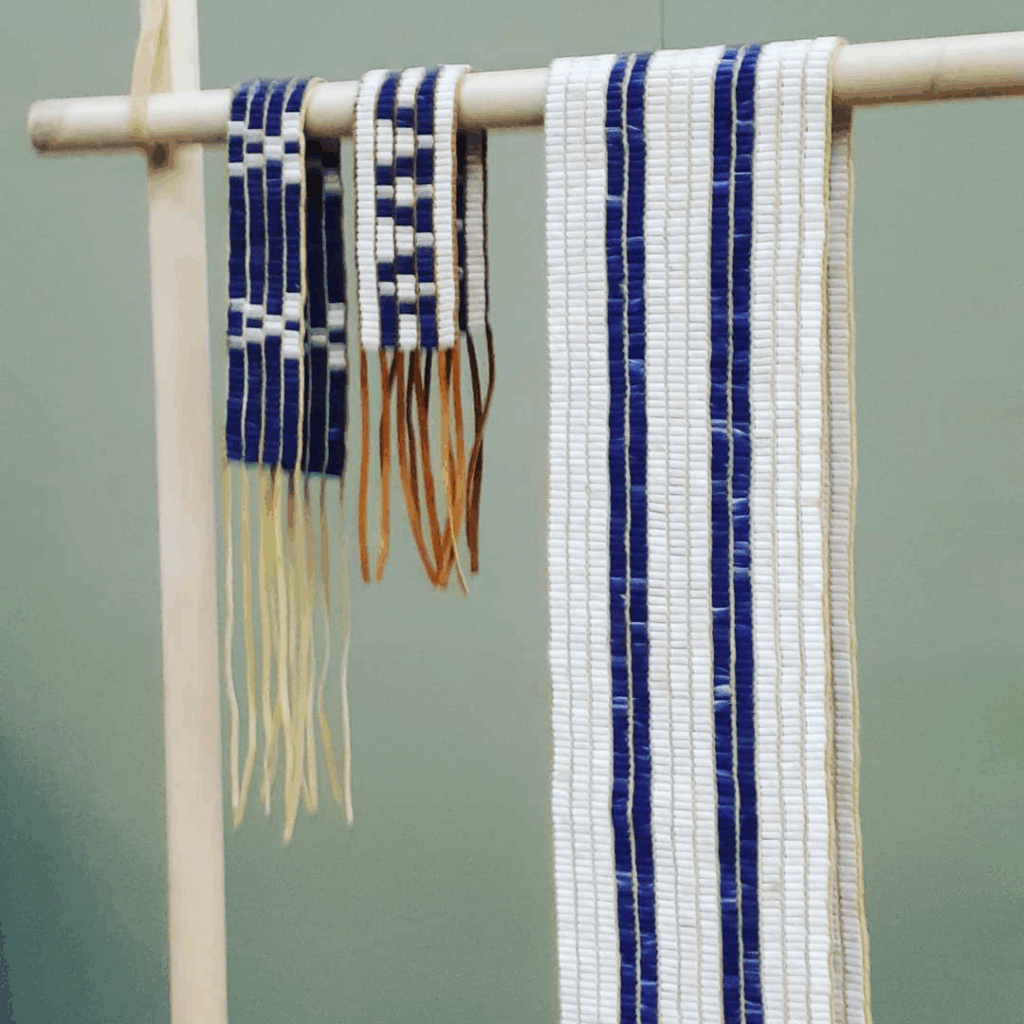
To learn more about land and treaties, visit A Treaty Guide for Torontonians.
Land acknowledgments are Indigenous protocols to express gratitude and appreciation to those whose territory you are on. They are also an imperfect way for settlers to recognize and respect Indigenous people who have been living, loving, and working on and with the land for generations. If you find yourself somewhere other than Toronto right now, we hope you are able to acknowledge both the history and the present of the Indigenous community in the place you call home.
It is important to keep this practice active. We need to understand the longstanding history of this territory and our roles within it. Land acknowledgements also offer a moment to reflect on what has brought you to this land and your relationship to it. They are not merely reflections on the past. is an ongoing process, and thus we must approach as an ongoing process, one led by Indigenous peoples.
The ancestral caretakers of this land (Tkaronto) are the Wendat, Anishinaabe, Seneca, Haudenosaunee Confederacy, Métis, and Mississaugas of the Credit. Land acknowledgments should also amplify the voices of Indigenous people whose territory we are on.

Media Moment
Time: 3 minutes, 41 seconds
Watch the following video here, access it at the link below, or the transcript.
This is a land acknowledgment for Tkaronto, illustrated by Chief Lady Bird, narrated by Sara Roque, and directed by Selena Mills. If you are engaging from another territory, we invite you to engage with Native Land to begin or continue learning about the land you are living on.
TRC Calls to Action
In the Faculty of Community Services, we also work to be responsive to the calls for action of the Truth and Reconciliation Commission (TRC). Call to Action 10 most directly informs our teaching and learning practices as it relates to education in the context of white settler colonialism. Call to Action 10 begins:
“We call on the federal government to draft new Aboriginal education legislation with the full participation and informed consent of Aboriginal peoples,” and outlines seven principles to enact this call.
Take a moment to read Calls to Action 9 and 10 regarding education as well as 18 to 24, which are specifically related to health: Truth and Reconciliation Commission of Canada – NCTR.
Starting with Our Stories
We invite you to begin your learning journey by being attentive to this relational decolonizing framework as we carry out the work of learning and unlearning. Take time to gain wisdom from the land as well as human and nonhuman life. Question how white settler colonialism has taught us to see only a narrow range of knowledge holders as experts and how it has marginalized and silenced other voices. This course asks us to centre the decentred. This includes the land, nonhuman life, BIPOC (Black, Indigenous, People of Colour) communities, disabled communities (sick/chronically ill, mad, Deaf and disabled people), queer and trans communities, and people without status.

Reflection Moment
Reflect on the following questions:
- What stories have you been told about disability experience?
- Whose perspectives were centred in these stories?
- Whose stories are missing? Whose perspectives are subsumed or hidden?
Community Perspectives
Nicole Ineese-Nash, in a paper linked in the ‘Works Cited’ section of this module and available here, urges a re-storying of our relationship to land, humans, non-humans and more than humans who are part of the land, from one of ownership and subjugation to one of care, reciprocity, and interdependence. She extends the call to re-story our experience of our place in the world imagining expertise beyond its narrow colonial constraints. The re-framing of disability experience offered in the subsequent modules share Ineese-Nash’s commitments to re-storying and expanding expertise.
Throughout the modules, readers will find video and audio clips ‘From the Community’. The community members listed below came forward to share their encounters with the Canadian health care system, offering a glimpse into their impact and suggestions for the future. Please engage with these and consider how these stories from the community may influence your present and future practice.
A system in which a population establishes control over a foreign territory, exploiting its resources, people, and land, often leading to long-lasting social, economic, and cultural impacts.
The process of undoing the colonization of Indigenous peoples and their land, culture, and practices. Decolonization is a process of unlearning, relearning, and rebuilding.