Module 3: Reframing Disability
Unpacking Intersectionality
Intersectionality, like other frameworks, is also informed by people’s lived experiences. This analytic framework emerges from the frustrations experienced by Black, working class women, who did not feel that the complexity of their material and social life conditions were adequately reflected in the civil rights and other social justice movements of the day (Hill-Collins & Bilge, 2016).
Intersectionality in Healthcare
Intersectionality attempts to account for how people’s experiences are shaped by multiple axes of power relationships that afford both privilege and disadvantage. Disability experience within the healthcare system is not only characterized by disability, but also by race, class, gender and other . The treatment of and subsequent responses by disabled people within health care always involve a complex interplay of intersecting forms of power that inform and hold one another in place and are difficult to consider separately (Hill-Collins & Bilge, 2016; Hancock, 2016; Valentine, 2022).
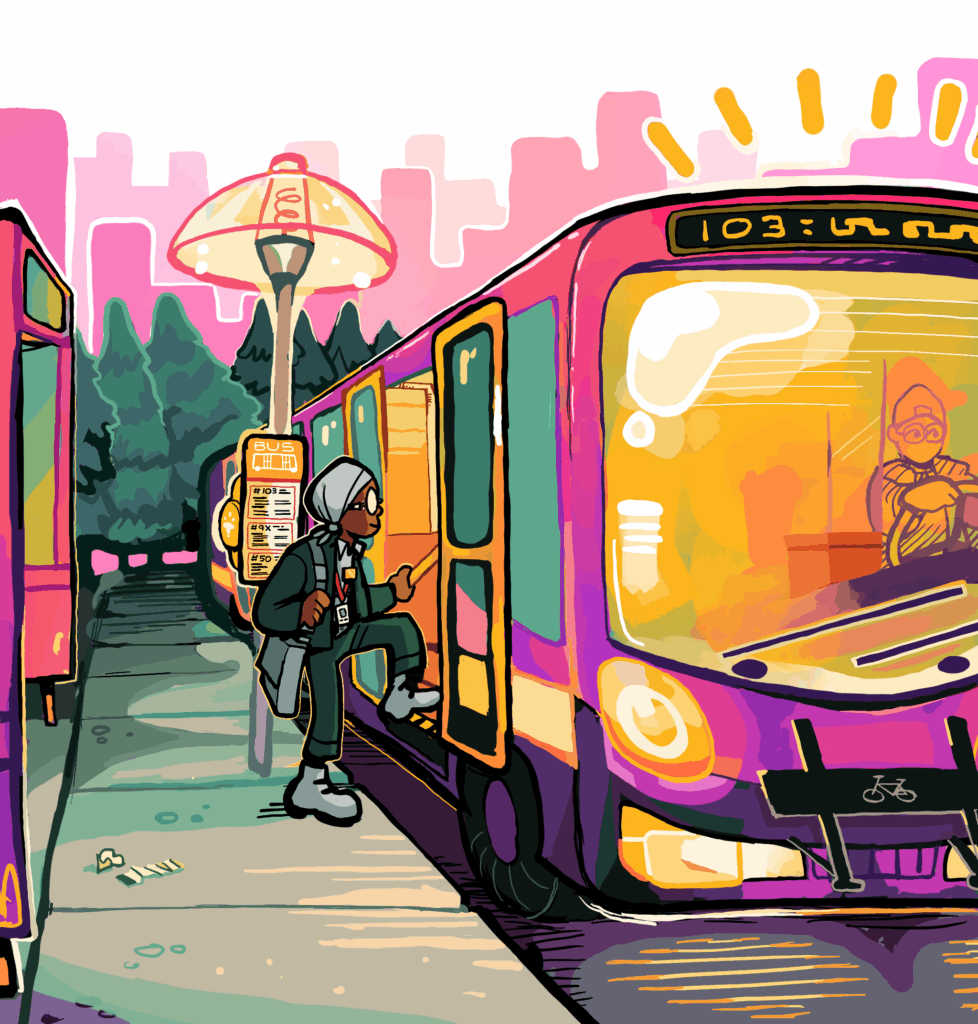
To demonstrate how intersectionality involves the interplay of power, privilege, and disadvantage, we can look to Parin Dossa’s narrative research on the experience of racialized disabled women in Canada (Dossa, 2005; 2009). Dossa introduces a participant’s narrative, Mehrun, a disabled South Asian Muslim woman who grew up in Uganda before moving to Canada as a refugee when she was nineteen. Growing up in Uganda the 1950s and 60s, the intersection of disability, gender, ethnicity, and economic privilege afforded Mehrun both disadvantage and unanticipated opportunity. As a disabled young girl she was not understood by her parents and her wider social circle as having a future as a wife and mother (Dossa 2005, p. 2535). Her family leveraged their economic privilege to ensure she had an education, not typically available to other girls. As a young migrant woman in Toronto in the 1970s, Mehrun was able to access university education, employment opportunities as a social worker, and eligibility for direct funding and independent living. While these are all opportunities associated with the privilege and material resources of class, Mehrun continued to experience both and newfound racism in housing, education and employment. Intersectionality as a lens allows us to see how social positions come together in different contexts of lived experiences.
Intersectionality is not additive. It’s not as simple as saying that a greater number of marginalized identities leads to greater oppression. As for Mehrun, there are times when different systems of oppression can come together to create opportunity. In other instances, ableism can fuel forms of oppression like racialized disablement. Desiree Valentine defines racialized disablement as an intersectional lens for understanding and taking account of how racism and ableism interact to produce health inequities (Valentine, 2022, p. 342).
Medicalized Racism

From the Community
Racialized disablement affects Canadians in their everyday healthcare encounters.
In the following clip, Sydney talks about their experiences navigating the Canadian healthcare system as a Black person with chronic pain.
Sydney’s treatment could be understood as a form of everyday medicalized racism.
Medicalized racism refers to the historical and contemporary forms of directed towards Indigenous, Black and other racialized people through the institution, policy and practice of medicine. Medicalized racism contributes to the extractive use of racialized bodies to generate medical science, the inequitable distribution of social determinants of health including housing, income and employment; lack of access to the healthcare system and discriminatory treatment by healthcare providers.
For more on this, listen to the Black Pain podcast.

Reflection Moment
Review the following two CBC news reports for recent Canadian examples of medical racism.
- Ignored to death: Brian Sinclair’s death caused by racism, inquest inadequate, group says
- ‘Why did they do that to me?’: Métis man says ponytail was cut off without consent at Saskatoon hospital
How do these news stories demonstrate facets of medicalized racism? Consider the interpersonal, procedural, and structural contributors within the healthcare system itself.
How did apparently neutral practices enact and reinforce racism and colonialism?
For a deeper exploration, review this article about medical racism in the US context.

Key Takeaways: Reframing Disability
-
Ableism “references a powerful form of social oppression based on the assumption that there is a socially desired, ideal body and mind, and this assumed ideal is set as the standard against which all bodies and minds are compared and evaluated” (Kumari-Campbell, 2021).
-
In the social model of disability, “disability is not an impairment in need of repair, but rather is the byproduct of a collection of disadvantages manufactured by social norms and regulations, policies and practices, and economic and political actors” (Chadha & Rogers, 2023).
-
A disability rights framework strives to uphold the equal humanity and dignity of all persons by addressing discrimination through legal and policy interventions.
-
Disability justice is a grassroots practice led by those most impacted by injustice and provides principles for living, thinking, and being.
-
Intersectionality, like other frameworks, is informed by people’s lived experiences. Disability experience within the healthcare system is not only shaped by disability, but also by race, class, gender, and other power relations.
Relationships of dominance and subordination between different groups
- Oxford Dictionary
A network of beliefs, processes and practices that produce a particular kind of self and body that becomes the normative standard, or the "species typical." (Kumari-Campbell, 2021). Can also refer to discrimination or prejudice against disabled people (see also: "disableism").
When a social structure or institution causes harm by preventing people from meeting their basic needs.