Module 6: Cripping Health Promotion
“Nothing About Us Without Us”
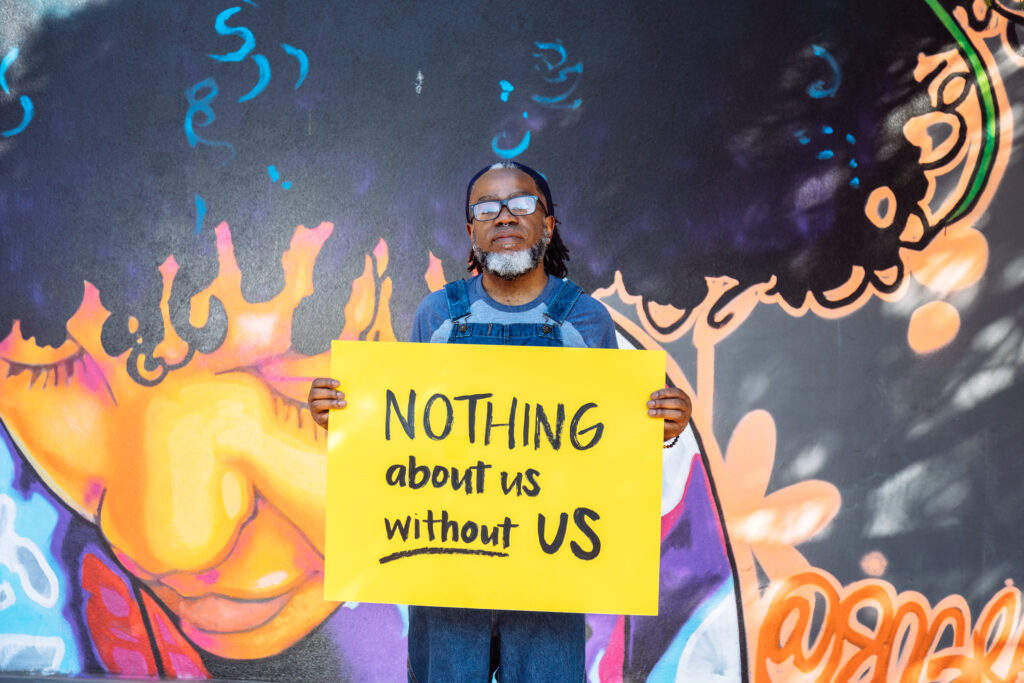
So, what does a more just vision of health promotion look like, one that honours, supports, and does justice to people with disabilities? How can we crip our understandings of health promotion to foreground a future in which variance in human ways of being are recognized and celebrated?
“Crip” is a disability rights term that emerged as a reclamation of a once-derogatory label of otherness into a self-proclaimed source of pride, human expansiveness, and non-normative resistance (Hutcheon & Wolbring, 2013; Thorneycroft, 2024). When used as a verb, “cripping” embodies a dynamic process that is “deployed and redeployed for political purposes as a way to re-imagine conceptual boundaries, relationships, communities, cultural representations, and power structures” (Hutcheon & Wolbring, 2013). It seeks to transform dominant conceptions and practices from those that position disability as a “problem” to be solved, towards ones that foresee a world with disability as “possible and desirable” (McRuer, 2006, p. 71).
Cripping health promotion begins with the recognition that “people with impairments have always been part of every human society” (Berthelot-Raffort, 2022, p. 364) and are critical voices in our communities. Disability rights activists have led the movement to expose how the prevailing mission of health promotion is based on capitalist, ableist standards of productivity that systematically devalue people with disabilities as well as caregivers and domestic workers (Berthelot-Raffort, 2022). If the public health community and disability rights community share interests in health promotion, access and participation in healthcare, and health equity for all people, then disabled people and their caregivers need to be included in supportive decision-making toward a transformed ethics of health promotion that protects people with disabilities and does not devalue certain community members.
By including the disability rights community in decision-making, public health can be re-conceived to recognize the social context of oppression that has framed and limited our experiences and choices, and that health promotion can play a role in shifting public perceptions and structural realities that shape the health outcomes and autonomy of all people, including those who are disabled, those who experience temporary impairments, and those who may become disabled in the future. The principle, “nothing about us without us,” was popularized by disability rights activists as a way of centring disabled people in decision-making that affects their lives, and promoting participatory, inclusive approaches to healthcare that respect the expertise of disabled individuals (Charlton, 1998).
What follows are some considerations that emerge in the building of a framework for health promotion that benefits not only disabled people but all community members.
To hear and engage more with perspectives from the community, check out the Enabling Accessible Healthcare mini-documentary.
Valuing Human Interdependency
Following a feminist ethics of care as well as Indigenous principles, disability advocates point to human interdependency as an important aspect of the human condition that should be centred in conceptions of health promotion. Humans have always relied on one another to survive, care for, and protect each other in the face of human vulnerabilities (Berthelot-Rafford, 2022; Garland-Thomson, 2017). A more just vision of health promotion needs to look beyond the individualized model of treatment and recognize the inherent of health, which encompasses the role and health of caregivers, families, communities, and broader social and political conditions in which people exist (Crawford, 1980).
Strengthening Disability Cultural Competence
In order to bring about disability justice in health promotion, public education is needed to shift dominant perceptions of disability and better understand the role of the social and cultural environment in shaping health outcomes. Disability scholars such as Rosemarie Garland-Thompson (2017) argue for the importance of building “disability cultural competence” that equips people with the knowledge and skills to understand, support, and co-create an environment that improves the lives of people with disabilities. Since anyone may become disabled (or care for someone who is disabled) as a result of injury, illness, or ageing, people need to be provided with the necessary information to be able to live with a disability, including biomedical decision-making, accessible technology and design, disability rights and legislation, and more (Garland-Thompson, 2017). This involves moving past fears and perceptions that disabilities necessarily need to be rehabilitated or cured, and instead value human difference as a source of pride. It also involves looking to disabled people for guidance on what can be learned through such common aspects of the human experience as pain, suffering, and adaptive ways of being (Wendell, 2001).
Enabling Critical Rest and Vulnerability
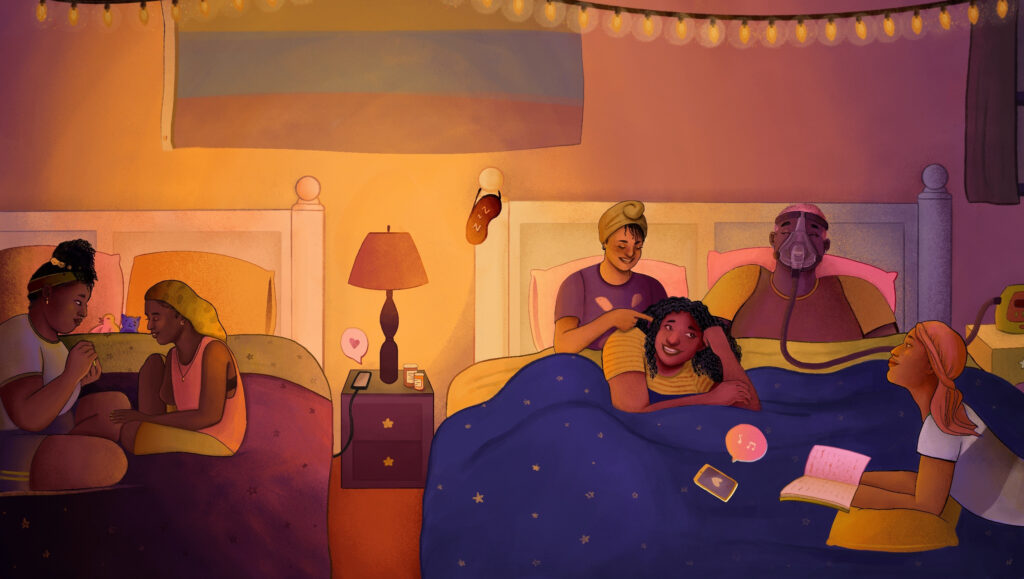
As conceptions of health promotion are decoupled from capitalist expectations, attention can be placed on the health needs and limitations of people, independent from performance standards imposed by an external authority such as an employer. Susan Wendell (2001) discusses how people who are disabled may have a range of fluctuating energy capacities and limitations that are often unpredictable. Thus, having the ability to govern one’s own time and pace of work – including when rest is needed – is critical to meaningful participation of disabled people in social life. In fact, asserting the need to rest is a form of resistance to capitalist standards of productivity by acknowledging our natural human limitations and vulnerabilities and allowing people to manage their health as needed (Berthelot-Rafford, 2022).

Media Moment
Time: 58 minutes, 45 seconds
Consider the following podcast or transcript on how rest is a form of resistance:
After engaging with Tricia Hersey’s ideas, reflect on these questions:

- How do you build rest into your life?
- How do your strategies for rest help you support the health of others and your own?
Building Collective Capacity
Despite what the dominant messaging would have us believe, real change towards a healthier life cannot happen on an individual scale but must be pursued collectively and target the social and political conditions that shape health outcomes. Crawford (1980) argues that the notion that individuals can control their own health serves as a distraction from the social effort to build collective resistance to a system of power differences that leaves people with limited health options (particularly those who are disabled and others who are marginalized). Pursuing real health needs for all entails building social movements that strive to “enhance our social capacity to control the conditions of our existence” (Crawford, 1980, p. 385). This involves making cultural and operational changes in movement spaces to meaningfully include and centre people with disabilities as movement leaders. This includes, for example, honouring disabled lived experiences as part of movement struggles (Deerinwater, 2021), allowing people to set their own fluctuating limits and capacities to organize, and openly discussing and negotiating the relationships of time, energy, and power in movements (Wendell, 2001). Practicing internal ethics of care, mutual support, and health management within movement spaces supports the longevity and collective capacity of movement efforts. Moreover, these practices can help us to demonstrate social justice in the present and to eventually bring about the kinds of worlds that our movements are working towards.
Media Moment
Take a moment to think about how racial and disability justice movements come together in the work of the Black fat activists Da’Shaun Harrison, author of Belly of the Beast: The Politics of Anti-Fatness as Anti-Blackness (2021), and Sabrina Strings, author of Fearing the Black Body: The Racial Origins of Fat Phobia (2019). They are both engaged in activist work that actively resists the individualizing tendencies of health promotion, instead focusing on systems of racial injustice.
Da’Shaun Harrison – Time: 51 minutes, 52 seconds
Sabrina Strings – Time: 15 minutes

Reflection Moment
Take a moment to reflect on considerations that emerge in the building of a disability justice framework. Consider the following questions:
- When have conventional notions of health not worked for you?
- What does cripping health promotion mean to you? What would cripping health promotion look like in your local context of healthcare, relationships, and/or community life? How might it lead to different approaches in designing healthcare systems, technologies, or policies that better accommodate diverse needs?
- Reflect on a time when you felt supported or unsupported in accessing health resources. How do you think an approach grounded in interdependency or disability justice might have changed that experience?
- How might cripping health promotion shift the guiding aims, priorities, and definitions of global health promotion?
- What personal responsibilities might you have in the work of cripping health promotion?
Concluding Thoughts
We all play a role in cripping health promotion. Disability justice advocates urge us to rethink health management through the lens of disability justice, emphasizing inclusivity, autonomy, and respect for diverse ways of living and being. By embracing a “cripping” perspective, we begin to understand health as something that is co-created with, rather than imposed upon, communities, building on each person’s unique needs and strengths. People with disabilities serve as vital community leaders in paving the way for a healthier society and supportive healthcare system that is equitable and accessible to all. Meaningfully including disabled people in health promotion and decision-making may be key to tackling critical transformations in which the health of the entire planet is at stake.
A grassroots movement that advocates for the rights, dignity, and inclusion of disabled people, focusing on intersectionality and collective justice.
A state of connectedness or being in "relationship" with other things.