Module 6: Cripping Health Promotion
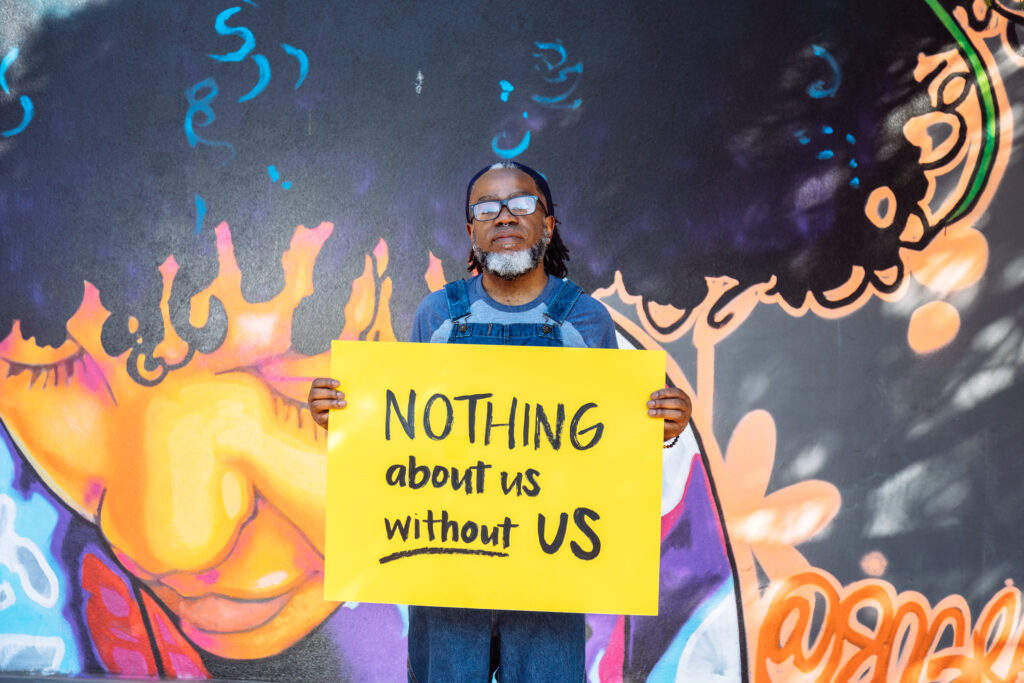
“Nothing About Us Without Us”
So, what does a more just vision of health promotion look like, one that honours, supports, and does justice to people with disabilities? How can we crip our understandings of health promotion to foreground a future in which variance in human ways of being are recognized and celebrated?
“Crip” is a disability rights term that emerged as a reclamation of a once-derogatory label of otherness into a self-proclaimed source of pride, human expansiveness, and non-normative resistance (Hutcheon & Wolbring, 2013; Thorneycroft, 2024). When used as a verb, “cripping” embodies a dynamic process that is “deployed and redeployed for political purposes as a way to re-imagine conceptual boundaries, relationships, communities, cultural representations, and power structures” (Hutcheon & Wolbring, 2013). It seeks to transform dominant conceptions and practices from those that position disability as a “problem” to be solved, towards ones that foresee a world with disability as “possible and desirable” (McRuer, 2006, p. 71).
Cripping health promotion begins with the recognition that “people with impairments have always been part of every human society” (Berthelot-Raffort, 2022, p. 364) and are critical voices in our communities. Disability rights activists have led the movement to expose how the prevailing mission of health promotion is based on capitalist, ableist standards of productivity that systematically devalue people with disabilities as well as caregivers and domestic workers (Berthelot-Raffort, 2022). If the public health community and disability rights community share interests in health promotion, access and participation in healthcare, and health equity for all people, then disabled people and their caregivers need to be included in supportive decision-making toward a transformed ethics of health promotion that protects people with disabilities and does not devalue certain community members.
By including the disability rights community in decision-making, public health can be re-conceived to recognize the social context of oppression that has framed and limited our experiences and choices, and that health promotion can play a role in shifting public perceptions and structural realities that shape the health outcomes and autonomy of all people, including those who are disabled, those who experience temporary impairments, and those who may become disabled in the future. The principle, “nothing about us without us,” was popularized by disability rights activists as a way of centring disabled people in decision-making that affects their lives, and promoting participatory, inclusive approaches to healthcare that respect the expertise of disabled individuals (Charlton, 1998).
What does this look like in practice? The following section explores key considerations for building a approach to health promotion that benefits not only disabled people but all community members.
A grassroots movement that advocates for the rights, dignity, and inclusion of disabled people, focusing on intersectionality and collective justice.