Module 4: Access, Accommodation, Rights, and Justice
Gaps in Service
Basic Situation
According to the (CIHI), most Ontarians have a regular health care provider (90.6% compared with 85.6% nationally). However, in 2019-2020, only four in ten people in Canada (41%) were able to see their doctor on the same day they needed service (compared with 76% in Germany, 71% in the Netherlands, and 52% in the United States). In Canada, poorer women are considerably less likely to have a family doctor than wealthy women (82% vs 92%, respectively), as are poorer versus wealthier men (73% vs 86%) (Canadian Institute for Health Information, 2024). Unfortunately, similar details are not available by Indigeneity, racialization, or disability. However, it is well established that people with disabilities are more likely than people without disabilities to be living below the poverty line. See, for example, Wall (2017) and details on working-aged people (15 to 64 years) from Statistics Canada.
The Canadian Senate (e.g., 2002), Parliamentary Standing Committee (e.g., 2018), private members of the Canadian Parliament, and individual court cases have pointed out many gaps between what the CHA covers and the health-related items and services people need. Tiedemann (2019) provides a helpful overview of some of the more recent controversies. The criticisms of the CHA tend to boil down to a range of system features that result in barriers to timely, equal access to insured health care services.
Billing
It was recently reported that a general practitioner in Ontario is typically paid $37.95 for the most commonly billed patient visit (Crawley, 2024). McColl et al. (2010) have identified that the basis of payment for physicians tends to result in them according less financial value to people with disabilities than others. For example, a patient with a complex health profile may require more time on average than others from a family physician. It may seem to make more financial sense to a doctor to attend to more patients who require relatively little time than fewer people who require more time.

From the Community
These community clips explore how financial costs and systemic barriers shape access to healthcare. As you listen, consider: What are the hidden or unacknowledged costs disabled people take on to receive care?
Danielle
What are the costs incurred by Danielle in getting a prescription filled?
Alessia
What are the time and financial costs assumed by Alessia in pursuing a line of treatment?
Adam
In the following audio clip, Adam describes how he and his partner meet additional and unanticipated costs of healthcare.
Crystal
Crystal describes the experience of trying to get accountability for a wheelchair error, and the barriers she encountered in appealing the decision.
Other Delivery Arrangements
Many disabled people have a heightened need for healthcare services because of the nature of their condition (e.g., a person who requires regular kidney dialysis). Other people, however, need goods or services from the health care system mainly because these are delivered through that system rather than through social services or some other system. For example, publicly funded wheelchairs and hearing aids are delivered through Ontario’s Assistive Devices Program (ADP), which is operated by the Ministry of Health and Long-Term Care. In contrast, publicly funded wheelchairs in New Brunswick are provided through that province’s Disability Supports Program, which operates under the department of Social Development.
Some people experience needs for health-related goods or services that are not covered by the publicly funded health system. For instance, the CHA provides federal funds to help cover provincial costs for hospital services, physician services, and surgical-dental services provided to insured persons. The CHA, however, does not cover costs for community-based chiropractors, physiotherapists, psychologists, or speech therapists, to list only a few of the exclusions (e.g., Canada Life, 2022). Similarly, decisions were taken in Ontario for the ADP not to cover the costs of many disability-related items that include, among others, several types of mobility devices and several types of orthotic braces, compression garments, and lymphedema pumps (Ontario. Assistive Devices Program, 2024).
Sometimes provincial health care systems only partially cover costs. The ADP, for instance, fully covers the cost of eligible items for people who receive financial support from , the , and the Assistance for Children with Severe Disabilities program. For other Ontarians, the ADP will cover 75% of eligible costs and the user is expected to cover the other 25%. If a person has only a part-time or low-paying job, the 25% may be difficult to afford.

Despite public coverage of some costs under the ADP, many people with disabilities face significant costs. These include, for instance, costs of various items and services not covered by the ADP, such as chair lifts, ramps, home renovations for greater accessibility, and repairs to aids and devices. Overall, four in ten (40.7%) adults with disabilities (15 years and older) in Canada have one or more unmet need for assistive aids, devices, or technologies, prescription medication, or health care therapies and services. High cost is the leading reason why so many have unmet needs. Those in greatest need tend to have more complex/severe levels of disability, to be women, and to live in poverty (Hebert et al., 2024). While Statistics Canada has not developed recent estimates, average unreimbursed costs for disability-related health and related services ranged between $550 and $760 in 2010 for people with less severe and more severe levels of disability, respectively, or from about $760 to $1,060 in 2024 dollars (Human Resources and Skills Development Canada, 2011: Chart 2.3). Costs of some services, however, such as assistance with everyday activities for wheelchair users, can be considerably higher (Giesbrecht et al., 2017: Figure 2).
For more on this, check out the mini-documentary as part of this Pressbook.
Healthcare as a Gateway to Other Services
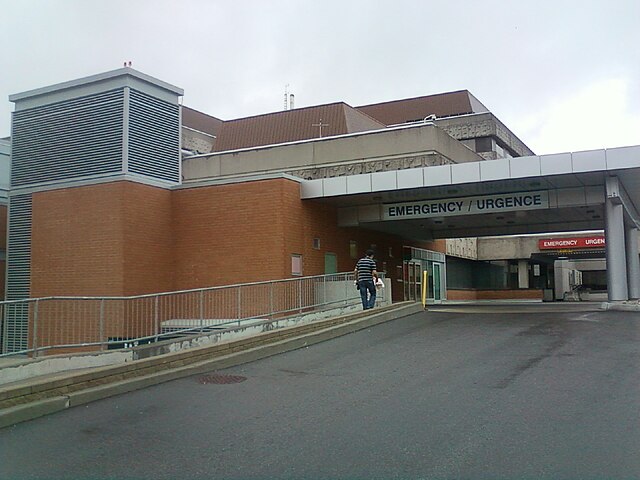
Health and health-related professionals are in a real sense gatekeepers to many other systems, programs, and benefits. This is because many systems are still based on a medical model of disability. For instance, physician referral is usually required to access publicly insured non-emergency health care services. Access to the ADP requires a valid Ontario Health Card. Medical assessment is required to access the Canada Pension Plan Disability benefit (Service Canada, 2024) and medical assessment of disability for the Disability Tax Credit will be required to access the Canada Disability Benefit (Canada, 2024: Section 2). Education programs often require a formal assessment of learning disability by a licensed psychologist for a student to obtain learning-related support services.
Not everyone can obtain the medical or other assessment they need so they can qualify for disability-related services. For instance, smaller communities may lack general practitioners who are able or willing to provide the assessments, and the practitioners who are available and willing do not always provide well-informed service (Crawford et al., 2022). The cost of psychological assessment is not covered under Ontario’s insured health care system, and obtaining a no-charge assessment through the education system often involves a long wait list (Learning Disabilities Association of Ontario, 2024). All such assessment fees can be difficult for people on low fixed incomes to afford, who often stand in comparatively greater need of health-related services for disability (Hébert et al., 2024). Historically, high cost and the lack of insurance coverage are the leading reasons why people with disabilities lack the health-related services they require (e.g., Canada, 2010). People with disabilities are considerably more likely than others to live in poverty and are more likely than those not living in poverty to experience affordability issues (e.g., Hébert et al., 2024; Wall, 2017). Regardless of income, half of Canadians lack any insurance coverage for disability from employer-based or private plans (Investment Executive, 2019).
Standards of Practice
In addition to the issues discussed above, health care professionals have been criticized for disrespectful and inappropriate treatment of people with disabilities, and even for outright refusal to provide service. These are global problems (Gréaux et al., 2023; Hashemi et al., 2022; World Health Organization, 2022). They play out in affluent countries such as the United States (e.g., Lagu et al., 2022; Mulcahy et al., 2022) and have been longstanding problems in Canada (e.g., McColl et al., 2010) – especially across lines of Indigeneity and racialization, although the issue as it affects newcomers with disabilities to Canada is under-researched (e.g., Chadha, 2020; Chowdhury et al., 2021). Wealthy provinces such as Ontario are not exempt (e.g., Baiden et al., 2014; Brown et al., 2024), and neither are poorer provinces (e.g., Saint John Human Development Council, 2021).
Access the Easy Read Version, Executive Summary and Full Report: Equity and inclusion in pregnancy care: report on the pregnancy outcomes and health care experiences of people with disabilities in Ontario.
A national organization that provides standardized data and analyses on healthcare systems in Canada, including access to services and health outcomes.
A financial assistance program in Ontario that provides support to people in financial need by providing income, employment assistance, and health-related benefits.
A program in Ontario that aims to provides financial assistance and other supports to disabled people.