Module 7: Disability Justice and the Good Human Life
Disability, Vulnerability, and Climate-Related and Other Disasters
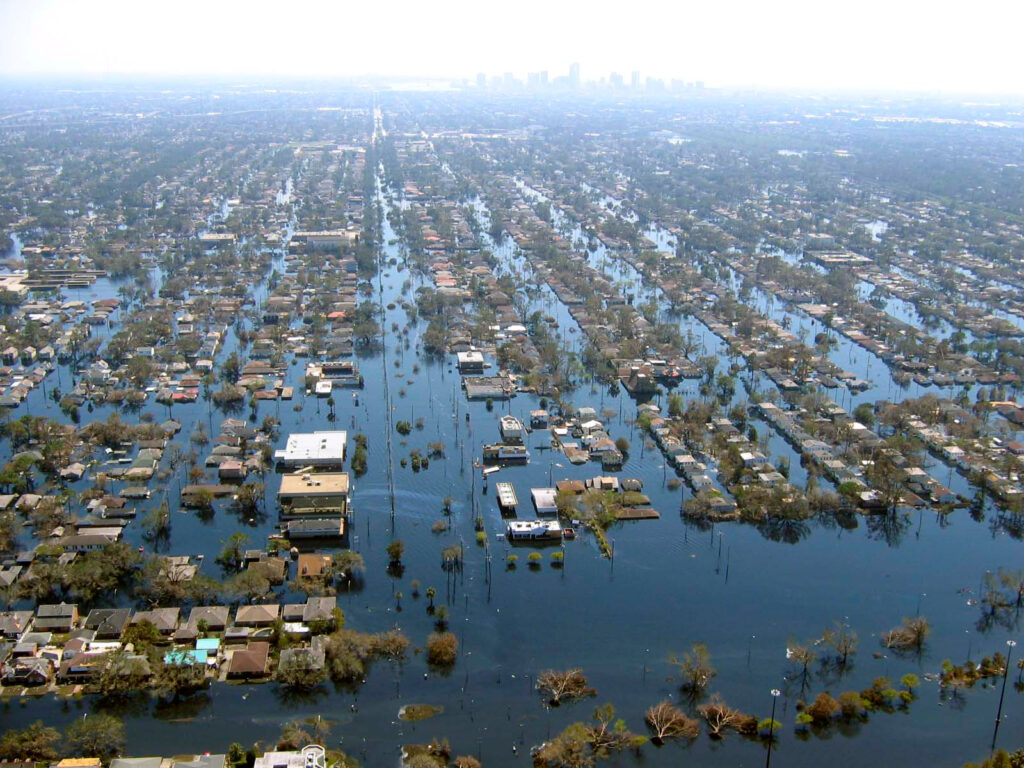
On August 29, 2005, Hurricane Katrina hit the Gulf Coast of Louisiana. In the ensuing hours, the city of New Orleans experienced power outages, affecting all hospitals in the area. City and state officials assured the public that everyone would be moved safely out of the facilities. However, it quickly became evident that adequate emergency preparedness was not in place, and there were no spaces immediately available for the city’s most vulnerable residents. By early September, conditions in some hospitals were unbearable: temperatures hovered around 110°F, clean running water was unavailable, and staffing was skeletal. Later in September, 250 bodies would be recovered from New Orleans hospitals, with the most coming from Memorial Medical Center, where 45 bodies were found. Only five of those deceased were assumed to have died before the hurricane.
Memorial Medical Center was severely impacted by Katrina, losing electrical power and experiencing flood damage as the levees broke. Hospital staff quickly developed a “1, 2, 3” protocol to manage the evacuation of the facility’s 2002 patients, as well as staff and family members.
“1, 2, 3” referred to a that prioritized which patients would be moved from the hospital first and last. “1” were ambulatory patients who could leave the hospital independently or with minimal assistance. These patients were to be evacuated first. “2” were patients who were semi-ambulatory or who required some support to leave the hospital. These patients could be moved more easily and were to be among the second group evacuated. “3” were patients to be moved last. This group was composed of patients who required significant support to move. Given that the elevators were not working, these patients would need to be carried either to the roof or to the water below via the stairs. Patients with DNRs (Do Not Resuscitate orders) on their files were included in this group. Significantly, patients coming into the hospital for routine procedures may have had a DNR in their medical file but were not considered to have a life-limiting condition.
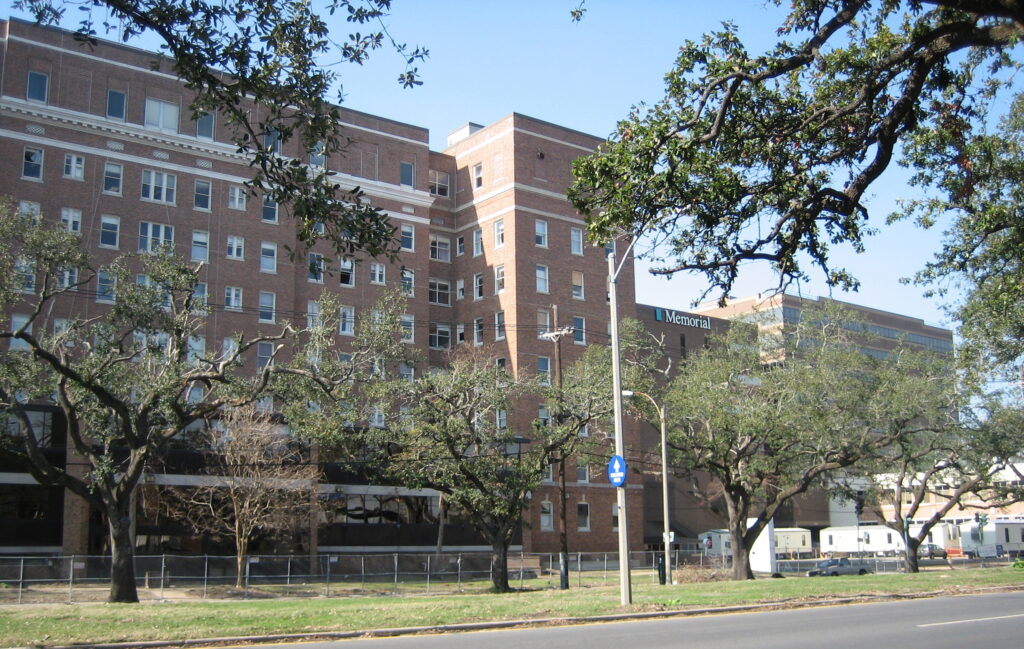
The seventh floor of Memorial Medical Center was leased to an outside healthcare service that provided acute care for complex-care patients who were expected to return home after their surgery. Many disabled patients, including those with paraplegia and those using ventilators, were among the occupants of the seventh floor. Most of these patients were designated “3,” given the lowest priority for evacuation.
Almost immediately, reports circulated that some patients had been injected with morphine and sedatives, leading to their deaths. Over the months and investigations that followed, it was revealed that groups of Memorial Medical Center healthcare providers, including Dr. Anna Pou and several nurses, decided together to “euthanize” disabled, non-ambulatory patients. Upon autopsy, it was found that at least 18 of the 45 bodies contained lethal doses of medications they had not been prescribed. Medical records for the remaining bodies were inaccessible to prosecutors and health officials.
Opinions about the deaths varied. Some considered them criminal acts of homicide. Others labeled them as euthanasia. Still others claimed the deaths were not related to healthcare provider actions.
No one was convicted, fined, or otherwise held to account for the deaths of the disabled, ill, fat, and/or Black patients at Memorial Medical Center. This outcome was surprising, given the admission of many healthcare providers to having taken part in some of the planning and execution of the injections.
The events at Memorial Medical Center in the immediate aftermath of Hurricane Katrina have provided important lessons to the medical and healthcare community:
Key Takeaways
- Planning for safety matters: It is important to have a clear plan for patient and staff safety in the face of major emergencies. Check out the Ontario provincial government’s webpage on Emergency preparedness and the specific Emergency preparedness guide for people with disabilities.
- Bias shapes decisions: When we do not have a plan, our actions may be guided by dominant understandings of the way the world works. Unfortunately, this means our decisions around supporting vulnerable patients may be shaped by racism, classism, and/or ableism. Consider Heidi Janz’s discussion of the COVID-19 triage protocols in many Canadian provinces and internationally. Although fifteen years after the lessons of Katrina, disabled, chronically ill, and fat patients were relegated to the lowest priority for ventilators and other life-saving interventions during the early days of the pandemic. Similarly, residents of long-term care and nursing homes were effectively abandoned as staff feared for their own safety. Janz suggests that the failure to account for the safety of disabled people, to benignly neglect their needs, and to actively deny life-saving intervention, belies a eugenic ableism. Eugenic ableism holds that disability is excludable, undesirable, and must disappear to make the world a better place (Janz, 2023; Janz, 2022; Titchkosky, 2010).
- Strong safeguards are needed: The events demonstrate that strong laws prohibiting euthanasia are crucial for safeguarding the lives of vulnerable groups. Evidence indicates that healthcare providers have great difficulty witnessing a person they perceive to be suffering. The person themself may not feel as if they are suffering—or they may feel as if they can easily handle their pain and discomfort. Yet, health providers may do anything, including ending a life, to end that perceived suffering. For Janz (2021), this response on the part of healthcare providers is a form of eugenic ableism. Pain and suffering—wrapped up with disability in this instance—must be eliminated.
Multimedia Moment
Time: 28 minutes, 52 seconds
Engage with this video that discusses disability and emergency preparedness in the Canadian context.
https://youtu.be/ozrff0CnU-w?si=j21Qd1w6m1xk3JlB
Multimedia Moment
Time: 5 minutes, 52 seconds
Take a few minutes to engage with the following CDC video on emergency preparedness for disabled people.
Reflection Moment
- Lack of accessibility contributes to disabled peoples’ vulnerabilities in emergencies. Take note of the access features built into the emergency preparedness video, produced by the Centres for Disease Control and Prevention (CDC). Jot them down in the space provided below.
- Check out coverage of the Palisades and Altadena fires in Los Angeles, January 2025. Note accounts of those who passed away in their homes, and how many were older and disabled people. What does this tell us about the lessons learned throughout recent climate-related and other emergencies?
A system for prioritizing patients in emergencies based on the severity of their conditions and their ability to be evacuated.