Part 1 – Public Policies and Participation: Institutionalizing Agency for Food Security
Chapter 1 – Moving Forward in Guaranteeing the Right to Food: Timeline of Food Security Policy in Brazil
Cecilia Rocha*, Mariana S Bezerra, Nila Patrícia F Pequeno, Ana Beatriz R Pinheiro, Severina Carla V. C. Lima, Clélia de Oliveira Lyra.
*Corresponding author: crocha@torontomu.ca
1. Introduction
A definition of Food Security first emerged after World War I, when Europe began to show concerns about food production capacity and possible threats to food sovereignty. Over the years, the concept of Food Security has gained different connotations, incorporating economic, social, cultural, and environmental dimensions (Koc, 2026). In Brazil, the term has included nutritional aspects, becoming Food and Nutrition Security (FNS), established in legislation as:
“… the right of everyone to regular, permanent and quality access to food in sufficient quantity, without compromising access to other essential needs, based on health-promoting food practices that respect cultural diversity and are environmentally, culturally, economically and socially sustainable” (Brasil, 2006, translation by the authors).
This definition has guided the broad set of bold and innovative government policies to combat food insecurity in the country (Burlandy et al., 2013; Rocha, 2009 and 2016), leading to Brazil’s success in leaving the United Nations Food and Agriculture Organization (FAO) Hunger Map in 2014 (and again in 2024, after some setbacks during the years in between).
In this chapter, we look at the historical trajectory of the fight against hunger and food insecurity, highlighting some of the main policies and programs, which have elevated Brazil as an example or inspiration for positive FNS policy in the world. In the Conclusion, we reflect on the most important elements and lessons learned in this trajectory.
2. Timeline for Food and Nutrition Security Policy in Brazil
2.1 Background: Josué de Castro
Records on discussions about hunger in Brazil can be traced back to at least the first decades of the twentieth century, a period marked by intense economic and social transformations (Maluf, 2007). With the advance of industrialization and urbanization, regional inequalities and the precariousness of the population’s living conditions became more evident. In this context, hunger began to be understood not so much as resulting from food shortages, but as a consequence of the country’s structural inequalities.
The culmination of these discussions was the work of the physician and geographer Josué de Castro (1908-1973). In his seminal book on hunger in Brazil, The Geography of Hunger, first published in 1946 (Castro, 1984), and a follow-up volume, Geopolitics of Hunger, originally published in 1951 (Castro, 1959), Castro argued that hunger is a political and social problem, and not a natural or inevitable phenomenon. He fought the Malthusian view of overpopulation leading to malnutrition, denouncing instead the concentration of land, the poor distribution of income, and the absence of public policies as fundamental causes of hunger in Brazil and elsewhere in the world.
Josué de Castro became President of the United Nations Food and Agriculture Organization in 1951, and greatly influenced the global debate on the issue of food security (FAO, 2023). His ideas on hunger as a human-made issue inspired social and governmental movements aimed at guaranteeing the human right to adequate food.
In 1966, the International Covenant on Economic, Social and Cultural Rights was adopted during the 21st Session of the United Nations General Assembly (United Nations, 1966), establishing that governments must recognize the right of every individual to an adequate standard of living, including access to adequate food (Article 11). To fulfill these commitments, states agreed to promote the principles of nutrition education and to ensure the equitable distribution of food resources in accordance with the specific needs of different groups and conditions in each country.
2.2 1980s and 1990s: Mobilization of Civil Society
The Brazilian government only adhered to the International Covenant on Economic, Social and Cultural Rights in 1992. The years leading to that, however, witnessed the emergence of strong participation of civil society in social and political causes, including food security.
In the mid-1980s, a series of social movements emerged in Brazil demanding the expansion of rights and better living conditions, with an emphasis on the reduction in social inequality. This period was marked by the end of the military dictatorship in 1985, and the demands of social movements were fundamental in the formulation of the new Brazilian federal constitution (in 1988), strengthening the new democracy, and in the creation of a publicly funded healthcare system.
“Food Security” had emerged as a main topic during the 1st National Conference on Food and Nutrition in 1986. That same year, the 8th National Health Conference, driven by the healthcare reform movement, selected the theme of “food as a universal right” as one of its priorities (Amaral & Basso, 2016). The addition of the term “nutrition” in the traditional “food security” in establishing the term “Food and Nutrition Security” (FNS) in the 1990s has distinguished Brazil from other countries in the application of the concept, interlinking socioeconomic and health approaches (Maluf, 2007). A broad citizen-based movement emerged, raising awareness in Brazilian society of the health impacts of hunger and poverty, which affected approximately 32 million Brazilians in the early 1990s (Peliano, 1993; Rocha, 2007).
In 1993, the sociologist and activist Herbert (Betinho) de Souza created the Citizenship Action against Hunger, Poverty and for Life (Citizenship Action – Ação da Cidadania) movement. The initiative sought to mobilize civil society in support of solidarity actions, income-generating activities, and the promotion and strengthening of social policies for food security (Peliano, 1993). This mobilization led to the establishment of numerous solidarity committees dedicated to combating hunger across the country (Rebouças & Redig, 2018).
That same year, during President Itamar Franco’s government, the National Council for Food and Nutrition Security (CONSEA) was established as an advisory body to the presidency, placing issues of food and hunger as priorities in the national agenda (Maluf et al., 1996). Inspired by the Citizenship Action movement, the Council functioned as an institutional space for social oversight and for the participation of civil society in the formulation, monitoring, and evaluation of public policies for food and nutrition security. Its central objective was to promote the progressive realization of the Human Right to Adequate Food through collaboration between government and social actors. The first composition of CONSEA had 7 government representatives (from federal ministries) and 21 representatives from civil society (Burlandy, 2011). Unfortunately, CONSEA was abolished in 1995, under President Fernando Henrique Cardoso’s term. That first experience, however, left the seed of what civil society could envision as a formal structure for its participation in policymaking.
Other major contributions by civil society towards greater awareness of FNS issues included the formulation of the National Food and Nutrition Policy (as a component of the National Health Policy), proposed at the 1st National Food Security Conference in 1995, and adopted in 1999 by the National Board of Health (Rocha, 2003). The National Food and Nutrition Policy was innovative in promoting the right to adequate food as a foundation of its actions and highlighting the need for a comprehensive FNS policy (Vasconcelos, 2005). At the end of 1999, about 50 civil society entities formed the Brazilian Forum for Food and Nutrition Security, which supported the creation of FNS councils all over the country (Burlandy, 2011).
2.3 2003–2015: Policy Development and Implementation — the “Golden Years”
At the turn of the 21st century, national mobilization to combat hunger and poverty intensified in Brazil, accompanied by growing demands for more effective food and nutrition security policies. This movement culminated in the inclusion of the Zero Hunger (Fome Zero) initiative in the election platform of Luiz Inácio Lula da Silva, who assumed the presidency in 2003 (Maluf 2007; Silva et al., 2011). The Zero Hunger strategy became the central social policy of Lula’s newly elected government, and it has influenced the FNS policies in the country since then. Its primary objective was to guarantee the human right to adequate food for populations experiencing limited access to food. Through the implementation of the Zero Hunger strategy, food security became a central priority of Brazil’s social policy agenda for the first time (Rocha, 2009).
The Zero Hunger strategy led to the creation and strengthening of several social programs, significantly expanding the number of beneficiaries, the level of public funding, and the geographical reach of social protection policies. In support of the strategy, in 2003 the government reinstated CONSEA, with the participation of one-third of its members from the government and two-thirds as representatives from various sectors of civil society. In the following years, CONSEA proposed and supported a number of FNS initiatives, such as a specific law (LOSAN) to create a National System for Food and Nutrition Security (SISAN) in 2006, and an amendment to add the Right to Adequate Food to the country’s constitution in 2010 (Rocha, 2016). Here we briefly describe a few of the most important programs developed between 2003 and 2015.
Conditional Cash Transfers: Among the many initiatives under the Zero Hunger strategy, the Bolsa Familia (Family Grant) conditional cash transfer program deserves special mention. Launched in 2003 to benefit families living in poverty, it became the largest program of its kind in the world, reaching approximately 11 million families in 2007 (Rocha, 2009). In 2025, Bolsa Familia benefited over 19 million Brazilian families (Agência Gov, 2025a). Despite some initial criticisms, many studies have since shown the positive results from the program (Amaral & Basso, 2016; Costa et al., 2023; Segall-Corrêa et al., 2008; Silva et al., 2011). Bolsa Familia is credited for 28% of the decline in extreme poverty in the country between 2003 and 2012 (IPEA, 2013; Rocha, 2016).
School Food: Proposals by CONSEA have been fundamental in updating norms for the implementation of the National School Food program (Programa Nacional de Alimentação Escolar – PNAE). One of the largest programs of its kind in the world, PNAE covers over 40 million students’ in the public school system (FNDE, 2025). The federal government transfers funds to municipalities, which must follow the most recent legislation (since 2009) in implementing the program. School menus must meet student’s nutritional needs, and respect local eating habits and food cultures. Consistent with the Brazilian Food Guide of 2014, PNAE limits the presence of ultra-processed foods in school meals to 10 per cent, and guarantees differentiated care for students with special dietary needs (Rocha et al., 2026). Since 2009, PNAE’s legislation also requires that at least 30% of federal funding goes to the purchase of food produced by family farmers. In 2026, the percentage of federal funding to purchase products from family farms has grown to 45% (FNDE, 2026).
Food Procurement: As exemplified in the 2009 School Food legislation, direct food procurement by the government has also been a strategy in support of poor and small-scale family farmers in Brazil. Direct food procurement by the government also includes the Food Acquisition program (Programa de Aquisição de Alimentos – PAA). Through the PAA, the government buys food from family farmers to be distributed to public and charitable entities (food banks and community kitchens, for example). PAA facilitates access to markets by small-scale producers, simultaneously promoting local economies and the consumption of fresh produce (Assis et al., 2017; Becker & Anjos, 2010; Casagrande et al., 2024; Moraes & Rocha, 2016).
Subsidized Meals: Another program within the network of actions developed by the Zero Hunger strategy is the subsidized sales of ready-to-eat meals through Popular Restaurants. Popular Restaurants are government-run, cafeteria-style spaces, offering daily meals at affordable prices to relatively large (over one thousand) numbers of people (MDS, 2023; Murça, nd; Rocha, 2001). They offer healthy and affordable (subsidized) meals, prioritizing regional ingredients and dignified ambiance. Through their locations, they specifically cater to socially vulnerable populations, but are open to all, under a universal access framework. Popular Restaurants also host nutritional education activities, such as lectures on the nutritional value of food, and workshops on food utilization and combating food waste. These restaurants are located in regions with considerable daily movement of low-income workers or in peripheral regions of large cities, which have a greater concentration of individuals in situations of social vulnerability.
Public Groceries: In some cities in Brazil (most notably, Belo Horizonte, Curitiba, and São Paulo), municipal governments have developed partnerships with private grocery stores to implement programs making available fruits and vegetables at lower prices (Prefeitura de Belo Horizonte, 2022; Prefeitura de Curitiba, 2026; Rocha, 2001; Weber, 2024). Usually, the city owns the land where these grocery stores (sacolões) are installed. While these stores are privately run, store owners, selected through a bidding process, agree to let the price per kilo of a number of items (between 15 to 25 items) be set by the city below the market value. Anyone can purchase fruits and vegetables in those stores (universal access). Items not on the government list can be sold at any price. The intent of this initiative is to have fruits and vegetables available at lower prices to the population.
Other important programs to promote food and nutrition security in the country include public food banks (Fagundes et al, 2022; Rocha, 2014); cisterns for capturing rainwater in semi-arid regions (Silva et al., 2021); and specific support for family farmers (Amaral & Basso, 2016; Moraes & Rocha, 2016). The overall result from all these programs was a significant decrease in the number of Brazilians suffering any degree of food insecurity between 2003 and 2015. In particular, cases of severe food insecurity (hunger) in the country declined 82%, leading to the removal of Brazil from the Hunger Map in 2014 (Rocha, 2016).
2.4 2016-2026: Dismantling and Recovery
Between 2016 and 2018, under President Michel Temer’s administration, constitutional amendments for a cap on government spending led to a considerable reduction in the support for social programs (Bravo et al., 2018), including the Family Grant and Food Procurement such as the PAA. Although CONSEA was not officially abolished until 2019, the lack of federal support for FNS programs led to its ineffectiveness. These factors contributed to a new increase in the prevalence of food insecurity in the country (Figure 1).
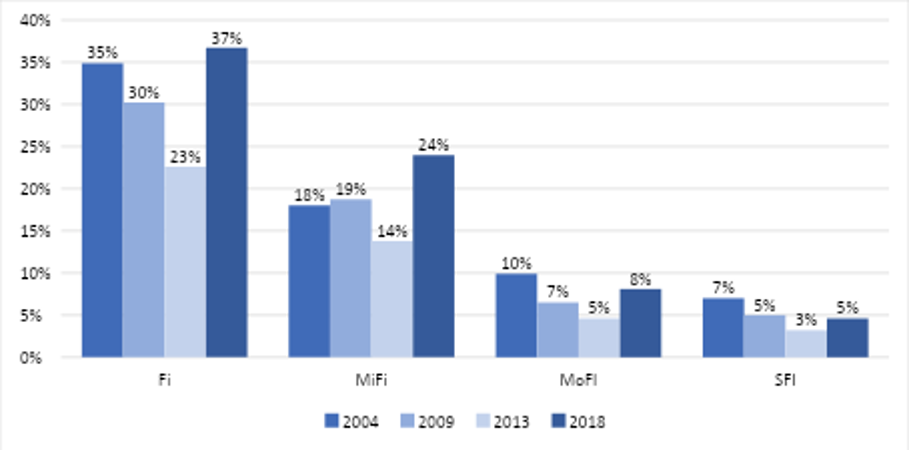
In 2019, Jair Bolsonaro came to power as the new conservative president. On his first day in office, Bolsonaro formally extinguished the National Council for Food and Nutrition Security, a clear signal of the new government’s lack of commitment to the right to food (Burlandy, 2024; Castro, 2019).
In 2020, the COVID-19 pandemic aggravated the difficulty in ensuring the human right to adequate food in Brazil, as the consequent increase in the unemployment rate led to a reduction in the income needed to ensure proper access to food. The crisis resulting from the deterioration of the country’s economic conditions was quickly felt by the population most vulnerable to high unemployment and reduced income. The health crisis, superimposed on the food crisis that was already underway, further aggravated the situation throughout the country. A major concern centered on the rising number of children suffering food and nutrition insecurity as their physical absence from school sites due to the pandemic made it difficult for the National School Food program to reach them. Little was done by the federal government of the day to overcome these difficulties.
The National Survey on Food Insecurity in the Context of the Covid-19 Pandemic in Brazil, conducted in 2022, indicated that over 33 million Brazilians were facing hunger (severe food insecurity) in the country (PENSSAN, 2022). The study also revealed that 58.7% of the population experienced some level of food insecurity—mild, moderate, or severe—indicating a setback that returned Brazil to a scenario similar to that observed in the 1990s.
While the four years of the Bolsonaro government (2019-2022) saw the dismantling or undermining of FNS policies and programs, the following four years of the new government of President Lula (2023-2026) were dedicated to reconstructing and improving them. Support and funding for old programs such as Bolsa Família, School Food, and the PAA were restored. The Lula government also supported new programs, such as the Solidarity Kitchen program. Originally developed as an initiative of the Homeless Workers’ Movement (Movimento dos Trabalhadores sem Teto – MTST) in response to the crisis emerged during the COVID-19 pandemic (Domingues et al., 2024), in 2023 Solidarity Kitchens became part of the set of public policies to combat hunger in the country (MDS, 2024; Salay, 2026). Solidarity Kitchens are run by civil society organizations (such as the MTST). They tend to be smaller spaces than Popular Restaurants, offering meals free of charge (Global Alliance against Hunger and Poverty, nd).
During this period of reconstruction, the country also experienced low unemployment rates, controlled inflation, and growth in the average income of workers. As a result, by 2024, all levels of food insecurity (mild, moderate, and severe) had declined (Agência Gov, 2025b). The country was once again out of the Hunger Map.
3. Conclusion
Reflecting on the trajectory described above, a few points can be emphasized. First, it is important to recognize the centrality of understanding hunger as a political and social problem, a human-made and not a natural phenomenon. This understanding, presented brilliantly in the works of Josué de Castro, was fundamental in shaping the demand for public policies to combat food insecurity and guarantee the right to adequate food.
A second important point is to recognize the crucial role of civil society mobilization and participation in lobbying governments for more actions against food insecurity. Not only that, in Brazil, civil society has played a central role in the creation, development, implementation, and monitoring of FNS policies and programs (see Fagundes et.al, 2026 in this volume). Through councils and conferences, civil society participates in policy-making at all levels of government in the National Food and Nutrition Security System (SISAN) in construction in the country. The institutionalization of civil society participation is a unique feature of FNS policy-making in Brazil.
A final important observation to be made is that progress does not follow a smooth upward trend. There are “ups” and “downs”. Progress is realized when the “ups” are greater than the “downs”. The consolidation of FNS policy through the institutionalization of its most successful programs, combined with civil society participation, has been essential to guarantee that the “ups” have been greater than the “downs”.
In general, FNS policy-making in Brazil serves as inspiration for the boldness and success of its programs, as well as for their participatory nature. The Bolsa Família, School Food, Food Acquisition, Popular Restaurant, Solidarity Kitchen, and others, are examples of the possibilities on how to combat food insecurity. They serve also as examples of policy-making processes with the participation of civil society.
Funding
This study was financed in part by the Coordenação de Aperfeiçoamento de Pessoal de Nível Superior – Brasil (CAPES) – Finance Code 001.
References
Agência Gov (2025a). Bolsa Familia chega a 19,6 milhões de famílias em julho com aporte de R$13,16 bilhões. 18/07/2025.
Agência Gov (2025b). Brasil atinge menor patamar de insegurança alimentar da história. 10/10/2025.
Amaral, V. R., & Basso, D. (2016). Segurança alimentar e nutricional no Brasil: Uma análise em perspectiva histórica. Revista do Desenvolvimento Regional, 13(1), 181–200.
Assis, S. C. R., Priore, S. E., & Franceschini, S. C. C. (2017). Impacto do Programa de Aquisição de Alimentos na segurança alimentar e nutricional dos agricultores. Ciência & Saúde Coletiva, 22(2), 617–626.
Becker, C., & Anjos, F. S. (2010). Segurança alimentar e desenvolvimento rural: Limites e possibilidades do Programa de Aquisição de Alimentos da agricultura familiar em municípios do sul gaúcho. Segurança Alimentar e Nutricional, 17(1), 61–72.
Brasil (2006). Lei nº 11.346, de 15 de setembro de 2006. Diário Oficial da União.
Bravo, M. I. S., Pelaez, E. J., & Pinheiro, W. N. (2018). As contra reformas na política de saúde do governo Temer. Argumentum, 10(1), 9–23.
Burlandy, L. (2011). A atuação da sociedade civil na construção do campo da alimentação e nutrição no Brasil. [PDF] Ciência & Saúde Coletiva, 16(1), 63–72.
Burlandy, L. (2024). O sistema de segurança alimentar e nutricional brasileiro: Tensões, conflitos e paradoxos. In S. Fleury (Ed.), Cidadania em perigo: Desmonte das políticas sociais e desdemocratização no Brasil. Edições Livres Cebes. ISBN: 978-65-87663-11-1
Burlandy, L., Magalhães, R., & Frozi, D. S. (2013). Políticas públicas de segurança alimentar e nutricional. In C. Rocha, L. Burlandy, & R. Magalhães (Eds.), Segurança alimentar e nutricional: Perspectivas, aprendizados e desafios para as políticas públicas. Rio de Janeiro: Editora Fiocruz. ISBN: 978-85-7541-435-4
Casagrande, D., Emanuel, L., Freitas, C., Lima, A., Nishimura, F. & Oliveira, F. (2024). Public food procurement and production: Evidence of the food acquisition program in Brazil. Food Policy, vol. 126: 102656.
Castro, I., (2019). A extinção do Conselho Nacional de Segurança Alimentar e Nutricional. Cadernos de Saúde Pública, 35(2).
Castro, J. (1984). Geografia da fome – o dilema brasileiro: pão ou aço. [PDF] Rio de Janeiro: Edições Antares.
Castro, J. (1959). Geopolítica da Fome. São Paulo: Editora Brasiliense.
Costa, D. M., Magalhães, R., & Cardoso, M. L. M. (2023). Do Bolsa Família ao Auxílio Brasil. Cadernos de Saúde Pública, 39(7).
Domingues, I., Bruno, J., & Colombo, C. (2024). From the plate to politics: the case of solidarity kitchens. Institute of Development Studies – IDS, University of Sussex.
Fagundes, A., Ribeiro, R., Brito, E., Recine, E., & Rocha, C. (2022). Public infrastructure for food and nutrition security in Brazil. Food Security, 14(4), 897–905.
Fagundes, A., Ribeiro de Sá, C.C., Silva, T.C., Santos, F.F., & Recine, E. (2026). Exercise in Democracy: Social participation in public policies for food security in Brazil. In Rocha, C. & Moraes, A. (Eds.) Agency for Food Security in Brazil: Social Mobilization, Participation, and Public Policies. Toronto: TMU Pressbooks.
FAO – Food and Agriculture Organization of the United Nations (2023). The FAO Council Chairperson who revolutionized the geopolitics of hunger. FAO.
FNDE – Fundo Nacional de Desenvolvimento da Educação (2025). PNAE: Programa Nacional de Alimentação Escolar. Brasil, Ministério da Educação.
FNDE – Fundo Nacional de Desenvolvimento da Educação (2026). PNAE: Agricultura Familiar. Brasil, Ministério da Educação.
Global Alliance Against Hunger and Poverty (nd). Brazil: Solidarity Kitchens Program.
IBGE (2025). Pesquisa nacional por amostra de domicílios contínua: Segurança alimentar 2024. Rio de Janeiro: IBGE. ISBN 978-85-240-4673-5
IPEA (2013). Programa Bolsa Família: Uma década de inclusão e cidadania. Brasília: Instituto de Pesquisa Econômica Aplicada – IPEA.
Koc, M. (2026). Changing Discourses of Food Security. In Regnier-Davies, J., Koc, M., Rocha, C., & Edge, S. (Eds), Rethinking Food Security in the 21st Century. Toronto: TMU Pressbooks.
Maluf, R. S. (2007). Segurança alimentar e nutricional. Petrópolis: Editora Vozes. ISBN 978-85-326-3446-7
Maluf, R. S., Menezes, F., & Valente, F. (1996). Contribuição ao tema da segurança alimentar no Brasil. Cadernos de Debate, 4, 66–88.
MDS (2024). Programa Cozinha Solidária: Princípios. Diretrizes e Finalidades. Brasil: Ministério do Desenvolvimento e Assistência Social, Família e Combate à Fome.
MDS (2023). Manual do Pesquisador: Programa Restaurante Popular. [PDF] Brasil: Ministério do Desenvolvimento e Assistência Social, Família e Combate à Fome.
Moraes, A. & Rocha, C. (2016). The Participation of Women Farmers in Food Procurement Programs in Brazil. In Fletcher, A.J. and Kubik, W. (eds.), Women in Agriculture Worldwide: Key Issues and Practical Approaches. Routledge/Gower Press. ISBN 9780367605315
Murça, G. (nd). Restaurante Popular: Garantia de uma Alimentação Digna. Pacto Contra a Fome.
Peliano, A. M. M. (1993). O mapa da fome: Subsídios à formulação de uma política de segurança alimentar. IPEA.
PENSSAN – Rede Brasileira de Pesquisa em Soberania e Segurança Alimentar (2022). II Inquérito Nacional sobre Insegurança Alimentar no Contexto da Pandemia da COVID-19. São Paulo: Fundação Friedrich Ebert. ISBN 978-65-87504-50-6
Prefeitura de Belo Horizonte (2022). Sacolões da rede Abastecer têm produtos a preços acessíveis. Notícias.
Prefeitura de Curitiba (2026). Sacolão da Família de Curitiba.
Rebouças, N. & Redig, A. (2018). Ação da Cidadania: 25 anos. Rio de Janeiro: Senac Rio. ISBN 978-85-7215-063-7
Rocha, C. (2001). Urban Food Security Policy: The Case of Belo Horizonte, Brazil. Journal for the Study of Food and Society, 5(1), 36-47.
Rocha, C. (2009). Developments in National Policies for Food and Nutrition Security in Brazil. Development Policy Review, 27(1), 51-66.
Rocha, C. (2014). A Right to Food Approach: Public Food Banks in Brazil. In Riches, G. & Silvasti, T. (eds.), First World Hunger Revisited: Food Charity or the Right to Food. New York: Palgrave Macmillan
Rocha, C. (2016). Work in Progress: Addressing Food Insecurity in Brazil. In Caraher, M. and Coveney, J. (eds), Food Poverty and Insecurity: International Food Inequalities. Springer. DOI 10.1007/978-3-319-23859-3_10
Rocha, C., Burlandy, L., Sampaio, R. & Dias, P.C. (2026). How Brazil’s National School Food program aligns with the six principles announced in Canada’s first National School Food Policy. In Regnier-Davies, J., Koc, M., Rocha, C., & Edge, S. (Eds), Rethinking Food Security in the 21st Century. Toronto: TMU Pressbooks.
Rocha, S. (2003). Pobreza no Brasil: Afinal, de que se trata? Editora FGV. ISBN: 9788522510580
Salay, A. (2026). Cozinhas solidárias e o direito à alimentação. Jornal da USP. 23/03/2026.
Segall-Corrêa, A. M., et al. (2008). Transferência de renda e segurança alimentar no Brasil. Revista de Nutrição, 21(Supl.), 39–51.
Silva, J.G., Del Grossi, M.E. & França, C.G. (2011). Fome Zero: A Experiência Brasileira. Food and Agriculture Organization of the United Nations – FAO.
Silva, T.C., Fagundes, A., Rocha, C., Mota J.R., Voci, S.M., Gabriel, C.G. & Curado, F.F. (2021). Harvesting rainwater for food security: Farmers’ Perceptions of the boardwalk cisterns program in Alagoas, Brazil. Rural and Remote Health, 21:6055.
United Nations (1966). International Covenant on Economic, Social and Cultural Rights. Adopted on 16 December 1966 by General Assembly resolution 2200A (XXI).
Vasconcelos, F. A. G. (2005). Combate à fome no Brasil: Uma análise histórica de Vargas a Lula. Revista de Nutrição, 18(4), 439–457.
Weber, L. (2024). MST opens Sacolão Popular in SP and promises monthly actions for the homeless population. Friends of the MST, February 25, 2024.