Part 1 – Public Policies and Participation: Institutionalizing Agency for Food Security
Chapter 4 – Food Services as Strategic Settings for Food Security: The Central Role of Menu Planning
Priscilla Moura Rolim*, Ingrid Wilza Leal Bezerra
*Corresponding author: priscilla.rolim@ufrn.br
1. Introduction
Food services refer to settings that prepare and distribute meals on a large scale in institutions such as schools, universities, hospitals, workplaces, and social programs (Conselho Federal de Nutrição, 2018). The field of food services has traditionally been viewed through a technicist lens, primarily focusing on operational efficiency, sanitary control, and cost management (Payne-Palacio & Theis, 2015). However, in the face of increasing global concerns such as food insecurity, environmental degradation, and the burden of diet-related chronic diseases, it becomes urgent to broaden this perspective. Food services can play a strategic role for implementing sustainable and health-promoting food practices (Ministério da Saúde, 2014).
Sustainability goes beyond environmental concerns, encompassing the social and economic dimensions of food chains. Food production, distribution, and consumption directly impact natural resources, biodiversity, and working conditions in both rural and urban areas. Thus, sustainable food systems require integrating strategies that promote agroecology, reduce food waste, value local food cultures, and encourage conscious and responsible consumption (HLPE, 2020).
Food systems determine the availability, accessibility, utilization, and stability of food, which are the pillars of food security (Domene et al., 2023). It is essential to strengthen public policies aimed at food and nutrition security, aligned with the principles of sustainability and the human right to adequate food. Integrating these concepts, as well as reconciling interests for a common agenda among them, can contribute to building fairer, more resilient, and healthier food systems, promoting public health and social equity while preserving the environment and ensuring the well-being of future generations.
In this context, the concept of One Health becomes particularly relevant. One Health acknowledges the interconnectedness of human, animal, and environmental health, emphasizing that changes in one domain can have profound effects on the others (WHO, 2025). It is important to recognize that food services are an integral part of food systems, playing a strategic role in promoting sustainable practices, ensuring food and nutrition security, and advancing health outcomes for populations. By adopting a One Health approach, institutional food services can not only enhance public health through nutritious meals but also promote more sustainable food production systems that protect human health (WHO, 2025).
The relationship between sustainability and food systems has been widely discussed over the past decades, reflecting growing concerns regarding the environmental, social, and economic impacts of food production. Current food systems, shaped by agribusiness hegemony in both production and consumption models, have exacerbated various socio-economic and environmental crises on a global scale (FAO & WHO, 2019). It is important to highlight that food systems encompass different food environments, including food services and institutional food units, which are influenced by political, social, structural, environmental, and demographic factors. These factors directly impact food quality, particularly regarding the promotion of more sustainable dietary practices (HLPE, 2017; United Nations, 2015).
This chapter argues that food services, also called collective feeding, should not be limited to technical functions. Rather, they offer an opportunity for systemic and transformative actions that integrate sustainability, public health, and food security. As such, the chapter explores how the role of nutritionists in food services can be expanded beyond routine menu planning into a broader framework of policy implementation and social impact. We then transition into practical applications, with a focus on institutional experiences and research developed at the Federal University of Rio Grande do Norte in Brazil. This includes strategies for reducing environmental impact through sustainable public procurement, healthy menus, workers’ health, and food waste reduction. Finally, we conclude with reflections and recommendations for strengthening the role of food services in promoting health, equity, and planetary sustainability.
2. Food Services as Space for Action on Food Security in Brazil
The interface between public health and nutrition is a fertile field for promoting Food Security (FS), particularly when considering food services as a privileged space for action. To address the intersection between food services and food security, it is essential to begin with a conceptual and historical understanding of the different scientific fields, namely “Public Health” and “Nutrition”. Public health, characterized by its interdisciplinary nature, encompasses knowledge and practices aimed at health promotion, disease prevention, and the organization of health systems (Osmo & Schraiber, 2015). The relationship between public health and nutrition is based on the notion that public health is a broad field of knowledge and practice that unfolds into subfields with specific cores of expertise. Nutrition, in turn, is a fundamental subfield, with specializations that connect both to public health and to food security. In this context, food and nutrition are recognized as social determinants of health that directly influence individual and collective well-being (Nunes, 2009).
The practices and actions related to healthier and more sustainable food services that enable menu planning from a food security perspective are supported by Brazilian government and academic initiatives, as well as by contributions from non-governmental organizations (NGO). In this context, social media has emerged as an important platform for disseminating these initiatives, as many NGO, collectives, and social groups use digital spaces to inform and engage the population, share knowledge, and promote healthier eating practices (Greenhow et al., 2019).
The field of food services has undergone various transformations, both in its theoretical-scientific foundations and in the scope of its practices. In 2005, Brazil’s Federal Council of Nutritionists designated this field as “Food and Nutrition Services” (Conselho Federal de Nutrição, 2005). However, researchers and specialized faculty have adopted other terms, such as “Food and Nutrition in Meal Production” (Kac, Proença & Prado, 2011) and “Food Services for Collectivities” (Bosi & Prado, 2011). More recently, in 2018, the Council standardized the field’s designation as “Nutrition in Collective Food Services” (Conselho Federal de Nutrição, 2018).
According to a Federal Council of Nutritionists resolution (Conselho Federal de Nutrição, 2018), which defines the responsibilities of nutritionists in Brazil, the field of Nutrition in Collective Food Services encompasses the planning, organization, management, supervision, and evaluation of Food and Nutrition Units, with a focus on producing meals that are healthy, safe, and nutritionally adequate for consumers. The main responsibilities of nutritionists in this field include managing services, planning and supervising meal production, ensuring food hygiene and nutritional quality, developing food and nutrition education programs, designing and implementing menus, and adopting actions that promote sustainable development. The resolution also highlights the importance of nutritionists in promoting health and ensuring food and nutrition security within food services, whether institutional or commercial (Conselho Federal de Nutrição, 2018).
In Brazil, the collective and institutional food service sector, which encompasses companies responsible for providing meals to groups, including industrial kitchens and food services in corporate, hospital, and school settings, play a key role in the economy, creating approximately 350,000 direct jobs (ABERC, 2024). Additionally, it is estimated that the sector provides meals for 17.5% of the Brazilian population daily, covering businesses, schools, hospitals, and other institutions (ABERC, 2024).
Thus, collective food services play a central role in promoting food security by ensuring access to adequate food, encouraging healthy and sustainable eating practices. Beyond service management itself (e.g., personnel management, cost control, and infrastructure planning and supervision), food services connect with food security through:
Access to Adequate Food: Food services implemented through public policies, such as the Brazilian School Food Program and Popular Restaurants (see Rocha et al, 2026, in this volume), ensure access to balanced and safe meals for populations in situations of social vulnerability. These initiatives directly contribute to food security by reducing food insecurity and guaranteeing the human right to adequate food.
Safe and Healthy Eating: Food services promote balanced menus based on nutritional guidelines and dietary recommendations, while also ensuring food safety and hygienic–sanitary conditions throughout food production processes. These practices are aligned with the principles of food security, which emphasize food quality, safety, and dietary diversity.
Sustainability: Food services incorporate sustainable practices by prioritizing foods from family farming, reducing food waste, valuing organic and agroecological products, promoting the rational and efficient use of natural resources such as water and energy, and minimizing the environmental impacts of food production systems and menus. These actions align with food security principles that advocate for more sustainable and resilient food systems.
Food and Nutritional Education: Food services also include food and nutrition education actions, such as cooking workshops, lectures, and educational campaigns, aimed at raising awareness of healthy and sustainable eating habits. These initiatives are essential for empowering individuals and communities to make informed and autonomous food choices.
The development of sustainable and food security-promoting menus is a challenge that requires the integration of knowledge and practices from public health and nutrition. Given the responsibilities of nutritionists as a core professional practice, these encompass activities related to menu planning and all actions required for its effective implementation, integrating principles of food security, sustainability, and public food policies, with the industrial kitchen or food services serving as a privileged locus of action. The activities undertaken are based on a “nutrition-based culinary” grounded in “dietetics” (Bosi & Prado, 2011) and include conceptual and technical tools from the field of management as important instruments for food services (Kraemer, 2014).
The actions involved in menu planning not only contribute to health promotion and disease prevention, but also strengthen responses to the global syndemic (the combined and interacting pandemics of obesity, undernutrition, and climate change), promote the sustainability of food systems, and ensure the human right to adequate food (Swinburn et al., 2019). The planning of menus that promote food security should be an essential practice aimed at aligning collective feeding with the principles of sustainability and health promotion. From this perspective, such planning should involve prioritizing the purchase of food from local producers, seasonal or harvest-based foods, especially those grown by family farming; reducing the use of ultra-processed foods; promoting the full utilization of food; and engaging the community in food and nutrition education actions (Ministério da Saúde, 2014).
Moreover, it is essential in this process to adopt initiatives aimed at workers in the food service sector itself, promoting a more humanistic and inclusive people management approach, particularly focused on striving for a fairer, healthier, and more sustainable diet for socioeconomically vulnerable groups, primarily with the aim of advancing the achievement of sustainable development (Brito et al., 2024). Considering the importance of public policies for the food service sector, with an emphasis on ensuring food security, it is essential to approach food systems as central to promoting sustainability and healthfulness in diets.
2.1 Food and nutrition policies governing food services in Brazil
In Brazil, Law No. 11,346 of September 15, 2006, which established the National System of Food and Nutrition Security (SISAN), aimed to ensure the Human Right to Adequate Food (HRAF). Article 2 of this law states that: “Adequate food is a fundamental human right, inherent to human dignity and essential for the realization of other rights, and public authorities must adopt the necessary policies and actions to promote and guarantee Food Security (FS)” (Brasil, 2006).
Additionally, the law emphasizes that “the adoption of these policies and actions should consider environmental, cultural, economic, regional, and social dimensions” (Brasil, 2006). Public food policies thus serve both as theoretical frameworks and as tools to promote, protect, and fully realize food security and, consequently, to guarantee the Human Right to Adequate Food. These food and nutrition policies often vary in scope, with some being universal, applicable to the entire population, and others targeting specific segments of society, such as women, children, students, workers, the elderly, and homeless individuals. Additionally, they may interface with other policies to define responsibilities for these groups.
Public policies directed at food and nutrition security are not new. Since the post-World War I period, the Brazilian state has intervened in food and nutrition. During this time, food exports to countries at war led to an internal supply crisis in Brazil, compelling the government to control food stocks and regulate prices (Mazon, 2009; Acuña & Cruz, 2003; Nascimento, 2012).
Starting in the 1930s, with advances in scientific knowledge, the field of food and nutrition emerged as a science, profession, and public policy in Brazil (Vasconcelos, 2002). At the same time, the impact of nutrition on various pathologies was recognized, as was the association between low food intake and malnutrition-related diseases, which reinforced the need for public policies to address these issues. The proposal and development of actions in the field of collective feeding gained momentum, leading to several initiatives, including the establishment of the minimum wage (1940); the Social Security Food Service (SAPS, 1940), a precursor to the Worker Food Program (PAT, 1976); the National Food Commission (CNA, 1945); the creation of the National School Meal Campaign (1955), a precursor to the National School Feeding Program (PNAE); and the National Food and Nutrition Program (PRONAN, 1973) (Vasconcelos & Batista Filho, 2011).
These policies are often implemented in food services. According to the Federal Council of Nutritionists, a food service is “a management unit where all technical and administrative activities necessary for meal production are carried out, up to the distribution of meals to healthy and ill collectives, with the objective of maintaining, improving, or restoring the health of the clientele served” (Conselho Federal de Nutrição, 2018). In this context, meals are distributed in stages throughout the day, according to the clients’ presence, and are planned by nutritionists to meet their nutritional needs. The operations and purposes of these communal collective eating settings (catering or food services) should be guided by public food and nutrition policies, enabling the planning and provision of healthy and sustainable meals for groups. From this perspective, the Brazilian National Food and Nutrition Policy (PNAN) serves as the main guide for these practices, specifically through Guideline 2 (Promotion of Adequate and Healthy Food) and Guideline 9 (Intersectoral Cooperation and Articulation for Food and Nutritional Security).
2.2 Menu planning as a strategic tool for healthy and sustainable diets
According to the Federal Council of Nutritionists (Conselho Federal de Nutrição, 2018), a menu is “a set of foods and preparations intended for human consumption, planned in accordance with the nutritional and physiological needs of an individual or group”. It encompasses the sequence of preparations that make up a meal or the meals consumed over a specific period.
From a management perspective in a Food and Nutrition Unit, the menu is the primary tool guiding decisions related to restaurant management. It influences everything from the physical and material aspects of the unit to issues concerning the staffing and composition of the food handling team, as well as cost management (Abreu, Spinelli & Pinto, 2019). From a commercial standpoint, the menu serves as both a communication channel with internal clients (food handlers) and external clients (diners), as well as a sales tool, showcasing the type, standard, and variety of options available at the restaurant (Silva & Martinez, 2019).
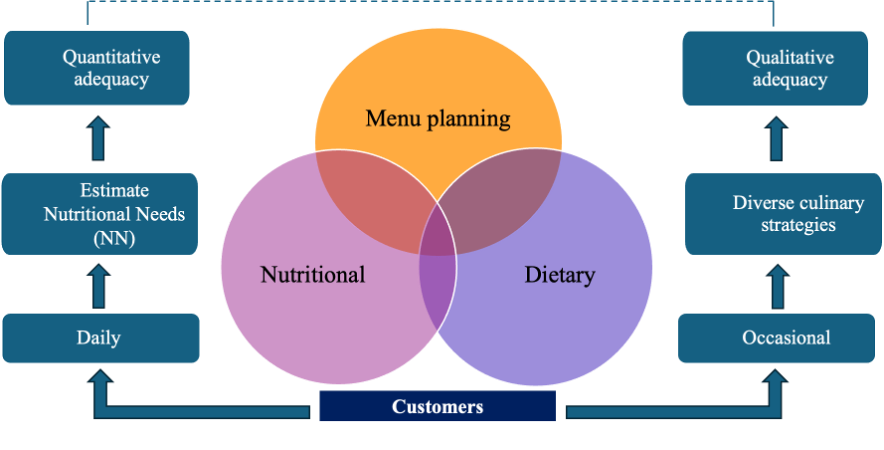
Menu planning should be guided by two complementary dimensions: the nutritional and the dietary (Figure 1). Nutritional planning refers to the attention given to the nutritional needs of the clientele for whom a particular menu is intended. It must consider individual data to determine the average characteristics of the population, such as weight, height, age, physical activity, work-related activities, and other factors that may influence the classification of nutritional status. The objective of data collection is to assess the nutritional status of the population, ideally through random sampling of participants, to obtain representative data that will determine the epidemiological profile of the population. The average data of the population will serve as a basis for calculating energy and nutrient requirements, following specific recommendations for each group or population (Vieira, Japur & Vannucchi, 2012; Silva & Martinez, 2019; Philippi & Aquino, 2017).
The subsequent food planning, following nutritional planning, involves defining the diet by considering both quantitative and qualitative aspects. Quantitative aspects imply that food should be provided in sufficient quantities to meet the energy and nutrient demands of the clientele. Qualitative aspects refer to the nutritional and sensory quality of the foods and culinary preparations, developed with ingredients that reflect the dietary habits and cultural practices of the clientele, represent local biodiversity, and consist predominantly of fresh, minimally processed, and processed foods, while avoiding ultra processed products. These aspects should also account for the temporal availability of foods, as well as their identity and social representations (Veira, Japur & Vannucchi, 2012; Abreu, Spinelli & Pinto, 2019; Silva & Martinez, 2019; Ministério da Saúde, 2014; Proença et al., 2008).
In this context, the Brazilian Dietary Guide (Ministério da Saúde, 2014) currently serves as the primary reference integrating food, nutrition, health, and sustainability, offering a wide range of concepts, clarifications, guidance, and strategies for healthy and adequate eating. Acknowledging that nutrient intake from food is essential for health, but emphasizing that it is food that is consumed, and reclaiming the term “real food”, the guide explores and advocates for the countless combinations of foods and their preparation methods, the behaviours that define eating habits, and the social and cultural dimensions of food practices as ways to value both the act of eating and the food itself (Ministério da Saúde, 2014; see also Lima et al, 2026, in this volume).
Food and nutrition professionals responsible for menu planning in food service establishments should use this guide as an ally in building a path toward offering healthier and more sustainable meals, whether in the broad commercial food market or in institutional food services. In the latter, it is crucial to emphasize the role of nutritionists as technical agents responsible for the implementation of public policies aimed at promoting public health and well-being, ensuring food and nutrition security, particularly those targeted at communities, such as the National School Food Program (PNAE) (Ministério da Educação, 2009), food acquisition and distribution programs, the Worker Food Program, and Popular Restaurants, among others.
In collective feeding, the role of nutritionists is divided into mandatory and complementary activities, according to Resolution No. 600 of 2018 from the Federal Council of Nutritionists (Conselho Federal de Nutrição). The primary activity highlighted is menu planning according to nutritional needs, based on a nutritional diagnosis of the clientele, while respecting regional, cultural, and ethnic dietary habits (Vieira, Japur & Vannucchi, 2012). However, when working with occasional clientele, as in various commercial food services, conducting a nutritional assessment and working with estimated calorie and nutrient goals based on nutritional needs can be a difficult task. Thus, a viable alternative is to plan menus by employing a broader range of culinary strategies, varying cutting and preparation techniques, using cooking methods that preserve, highlight, or add nutritional value to the food, and offering the greatest possible variety of healthy preparations in the distribution line (Proença et al. 2008). This approach helps qualitatively adjust the meals while maintaining alignment with the promotion of food security.
The Framework for Food and Nutritional Education for Public Policies (MDS, 2012) recognizes food and nutritional education (FNE) as a strategic field for food security and health promotion. Its actions play a fundamental role in preventing and addressing contemporary food and nutrition-related challenges. In this sense, the development and implementation of FNE programs within food service settings represent an important strategy to raise clients’ awareness of healthier eating practices, encourage sustainable consumption, and support the reduction and control of food waste.
3. Case studies – Connecting Theory and Practice
3.1 Food services in a university restaurant
A research project led by researchers at the Federal University of Rio Grande do Norte (UFRN), aimed at generating data to support the development of healthier and more sustainable food policies in food environments such as restaurants and institutional food services. It included a compilation of experiences conducted at a university restaurant in the Northeast of Brazil, encompassing studies on environmental footprints, evaluation of public food procurement, food waste and development of byproducts using food residues. From the perspective of the environmental impact of water use in meal production, a menu assessment used water footprint analysis. Based on the findings of these studies, environmental footprint indicators such as water- and carbon-use were incorporated into the technical data sheets of the menu preparations in the restaurant (Hatjiathanassiadou et al., 2019).
Concerning the sustainability and the promotion of food security in menu planning, researchers also evaluated the public food procurement carried out by the restaurant. The study evaluated public food procurement, emphasizing the origin of the food products, the classification of foods according to their level of processing, as well as their water footprint (Nogueira et al. 2020). Other initiatives have been implemented in public educational institutions, such as public calls for procurement in federal institutes. According to De Souza et al. (2023), although significant progress has been made in enabling the acquisition of food from family farming for these institutions, further efforts are needed to enhance the diversity of the products supplied. Strengthening structural and logistical conditions could represent an effective strategy to improve both the quality and variety of foods provided through family farming, thereby fostering environmental, social, and health dimensions of sustainability.
From a systemic perspective on food, which encompasses the assurance of the human right to adequate, safe, and healthy nutrition, researchers also addressed studies examining the risks of exposure to pesticide residues through diet. For example, the study conducted by Da Silva et al. (2024) analyzed menus offered in institutional food services in terms of the estimated intake of pesticide residues and demonstrated that the foods provided in these menus may be contaminated with multiple pesticide residues. The pervasive presence of pesticide residues in daily consumed foods underscores the necessity for greater attention to the source of the food, ensuring access to healthy and safe collective consumption.
Regarding food waste reduction – an issue of critical relevance within the social and environmental dimensions of sustainability – the university dining hall has implemented actions aimed at minimizing food losses and waste throughout the entire production process. This follows compliance with the Brazilian law on solid waste (Brasil, 2010), which requires the development of a “waste management plan” (including diagnosis, actions for waste reduction, possibilities for reuse and recycling, as well as environmentally appropriate disposal). Aquino et al. (2022) conducted a study to evaluate waste management in the restaurant by quantifying waste throughout all stages of the food production process and proposing strategies for its reduction. In this assessment, both plate waste and leftovers were considered components of overall food waste. It is important to highlight that the generation of waste and food losses is substantial in food service operations, and therefore, addressing this issue should be considered a key strategy for ensuring food security.
A large portion of organic waste is still sent to landfills or open dumps, generating leachate, toxic gases, and significant environmental impacts (FAO, 2011). Collective food services, such as university dining halls and school cafeterias, contribute substantially to this waste due to the high number of meals prepared and the large-scale processing of ingredients. Composting emerges as a policy-recommended alternative, capable of converting waste into organic compost, reducing environmental impacts, and closing nutrient cycles. When integrated with urban agriculture, this practice promotes food security, the production of fresh food, and environmental awareness, reinforcing the need to train citizens and professionals with a social and ecological perspective on waste management. In this regard, researchers highlighted the extension project developed by LabNutrir in the Department of Nutrition at UFRN entitled “Nutrients Back to the Plate: Building Knowledge for Food Waste Recycling through Composting” (Nutrir, n.d.). Composting activities at the garden laboratory were expanded to encompass all clean organic waste generated by the university dining hall, particularly residues from vegetable processing. This initiative not only optimizes waste management but also contributes to nutrient recycling and the promotion of sustainable foodservice practices.
Research such as this advances knowledge in the field of food services by generating evidence on the environmental, social, and economic impacts of meal production. By integrating these dimensions, the study strengthens the understanding of how food services operate within broader food systems and highlights the importance of connecting sustainability, food security, and nutritional outcomes. Establishing the connections among these research fields is essential, as it supports more informed decision-making and the development of integrated strategies for sustainable meal planning and food service management.
3.2 Food and Nutrition Education through the Worker Food Program
The Worker Food Program (Programa de Alimentação do Trabalhador – PAT) is a federal policy established in 1976, implemented in partnership with medium and large scale private employers, offering meals to people at their place of work. Several studies have evaluated the dietary aspects of meals provided through the Worker Food Program, highlighting both progress and challenges in its implementation (Savio et al. 2005; Bandoni & Jaime, 2008; Canella, Bandoni & Jaime, 2011). Although research has identified significant prevalences of overweight, abdominal obesity, and nutritional inadequacies, especially the low availability of fruits, vegetables, and healthy fats, as well as excessive amounts of total fat and cholesterol, the program remains an important tool for promoting food and nutrition security among Brazilian workers.
Findings from the research conducted at UFRN led to the development of cross-sectional studies (Bezerra et al., 2017; Pereira et al., 2020; Costa et al., 2022), as well as a longitudinal study (Torres et al., 2020), which compared manufacturing workers from PAT-participating and non-participating companies. The studies showed that workers in participating companies, particularly men, presented unfavorable nutritional indicators, such as increased waist circumference and a higher prevalence of metabolic syndrome. However, the results also showed improvements in specific parameters, including lower saturated fat and sodium intake at lunch, as well as favorable results observed among female participants, who experienced lower blood pressure and modest reductions in obesity.
Considering these findings and recognizing the persistent nutritional risks among the industrial workforce, the same research team developed an extension project to promote food and nutrition education for all workers at participating companies, regardless of their participation in the studies. The initiative aimed to address the limitations of the Worker Food Program by implementing evidence-based health promotion strategies aligned with the Brazilian Food Guide.
The project included educational activities focused on healthy eating, using accessible language and culturally appropriate materials to encourage critical reflection on food choices and eating practices. Activities included in-person guidance on planning and preparing balanced meals adapted to the nutritional needs of workers, as well as interactive sessions emphasizing the importance of minimally processed foods and the reduction of ultra-processed products in daily diets. In addition to the educational component, the project also incorporated health promotion initiatives, such as blood pressure checks, individualized counseling for those with high blood pressure, and referrals to primary health care services when necessary. Educational brochures were distributed in the workplace, reinforcing key messages about healthy eating, cardiovascular risk prevention, and practical tips for organizing meals, both at work and at home (Santos, 2021).
By interacting directly with workers and promoting autonomy in food-related decisions, this outreach initiative represented a concrete step from research findings to community intervention. It not only responded to the evidence of nutritional inadequacies observed among workers assisted by PAT, but also sought to foster a culture of health promotion in the workplace, an essential strategy for improving long-term eating habits and reducing the risk of chronic diseases (Santos, 2021).
The workplace represents a strategic environment for promoting healthy eating habits and preventing diet-related chronic diseases, especially among low-income populations with limited access to health information and services. In this context, the composition of meals offered by institutional food services, such as those of the Worker Food Program, plays a central role in defining workers’ eating habits and health outcomes. The development and implementation of nutritionally balanced, culturally appropriate, and environmentally sustainable menus can serve not only as a health-promoting intervention but also as a catalyst for a broader transformation of the food system, realizing the Human Right to Adequate Food and achieving Food Security in Brazil.
4. Conclusion
This chapter advocates for a paradigm shift in the field of food services, calling for a transition from an only technical perspective to an approach grounded in systemic thinking and social responsibility. To move in this direction, food services must intentionally integrate sustainability, food systems, and food security into menu planning practices. When operationalized in this way, menus become strategic tools capable of influencing production chains, consumption patterns, and waste management practices.
The Brazilian experience, supported by robust public food policies and institutional innovations, offers valuable contributions for international audiences. These experiences highlight the importance of intersectoral governance, public procurement policies, and the central role of nutrition professionals in translating policy principles into daily practices.
Public policies targeting collective food services such as the National School Feeding Program (PNAE), the Worker Food Program (PAT), and the Popular Restaurant Program represent concrete instruments for operationalizing sustainable and equitable food systems. These programs not only guarantee regular access to adequate meals for millions of people but also offer institutional platforms for implementing menu planning practices that align with principles of health promotion, environmental sustainability, and social justice. By incorporating criteria such as the procurement of food from family farming, the valorization of regional biodiversity, and the reduction of ultra-processed foods, these policies reinforce the role of the State in shaping food environments and advancing the human right to adequate and sustainable food. The integration of nutrition science with food sovereignty and sustainability agendas in these settings is essential for consolidating intersectoral actions that respond to the structural determinants of hunger and malnutrition.
Within this framework, the planning of menus emerges as a strategic axis capable of articulating sustainability goals with operational and nutritional parameters. A sustainably planned menu not only meets the nutritional requirements of the target population but also ensures the rational use of resources, favours agrobiodiversity, and encourages the inclusion of plant-based preparations. Furthermore, large-scale meal production offers a crucial opportunity to implement practices that simultaneously address environmental impacts and guarantee the human right to adequate food. Thus, the menu becomes a powerful tool for promoting sustainable food systems, influencing consumer choices, and transforming institutional environments into healthy eating environments that meet the physiological and cultural needs of the collective.
Looking ahead, the future of food services depends on their capacity to adopt prescriptive and action-oriented approaches that connect menus to food systems. This includes strengthening food and nutrition education actions, promoting sustainable procurement, reducing food waste, and embedding monitoring and evaluation mechanisms into food service management. By doing so, every meal served can contribute not only to individual well-being but also to the resilience of food systems, the health of communities, and the sustainability of the planet.
References
Abreu, E. S., Spinelli, M. G. N. & Pinto, A. M. S. (2019). Gestão de Unidades de Alimentação e Nutrição: um modo de fazer (7ª ed., rev. e ampl.). Metha.
Acuña, K., & Cruz, T. (2003). Surgimento da ciência da nutrição e breve histórico das políticas de alimentação no Brasil[PDF]. Revista Baiana de Saúde Pública, 27(1/2), 114–123.
Aquino, S. L. S., Bezerra, I. L. W., Medeiros, G. C. B. S., Seabra, L. M. J., & Rolim, P. M. (2022). Sustainability practices in foodservice: Waste analysis as a first step. Holos, 38(3).
ABERC – Associação Brasileira das Empresas de Refeições Coletivas (2024). Foodservice e mercado de refeições coletivas no Brasil. ABERC.
Bandoni, D. H., & Jaime, P. C. (2008). The quality of meals in companies participating in the Worker’s Food Program in the city of São Paulo, Brazil. Revista de Nutrição, 21(2).
Bezerra, I. W. L., Oliveira, A. G., Pinheiro, L. G. B., Morais, C. M. M., & Sampaio, L. M. B. (2017). Evaluation of the nutritional status of workers of transformation industries adherent to the Brazilian Workers’ Food Program: A comparative study. PLoS ONE, 12(2).
Bosi, M. L. M., & Prado, S. D. (2011). Food and nutrition in public health: Constitution, contours, and scientific status. Ciência & Saúde Coletiva, 16(1).
Brasil. (2006). Lei nº 11.346, de 15 de setembro de 2006. Cria o Sistema Nacional de Segurança Alimentar e Nutricional – SISAN com vistas a assegurar o direito humano à alimentação adequada e dá outras providências. Diário Oficial da União: seção 1, Brasília, DF.
Brasil. (2010). Lei nº 12.305, de 2 de agosto de 2010. Institui a Política Nacional de Resíduos Sólidos; altera a Lei nº 9.605, de 12 de fevereiro de 1998; e dá outras providências. Diário Oficial da União.
Brito, H. H., Faustino, M. L., Figueiredo, T. C., Seabra, L. M., & Rolim, P. M. (2024). Conexões entre a atuação do nutricionista e o alcance das metas de desenvolvimento sustentável para promoção da saúde e bem-estar do trabalhador em Serviços de Alimentação. Nutrivisa: Revista de Nutrição e Vigilância em Saúde. Fortaleza, v. 11, n. 1.
Canella, D. S., Bandoni, D. H., & Jaime, P. C. (2011). Energy density of the meals provided at companies registered in the Worker’s Food Program in the city of São Paulo, Brazil. Revista de Nutrição, 24(5).
Conselho Federal de Nutrição. (2005). Resolução No. 380/2005: Areas of action and attributions of nutritionists.
Conselho Federal de Nutrição. (2018). Resolução No. 600/2018: Areas of action and attributions of nutritionists.
Conselho Nacional de Segurança Alimentar e Nutricional – CONSEA. (2004). Princípios e Diretrizes de uma Política de Segurança Alimentar e Nutricional: Textos de Referência da II Conferência Nacional de Segurança Alimentar e Nutricional. Gráfica e Editora Positiva.
Costa, R. M., Bezerra, I. W. L., Torres, K. G., Pereira, G. S., Souza, A. M., & Oliveira, A. G. (2022). Participation in a food assistance program and excessive weight gain: An evaluation of the Brazilian Worker’s Food Program in male and female manufacturing workers. BMC Public Health, 22, 1125.
Domene, S. M. Á., Agostini, K., Almeida, G. N. P. de, Camargo, R. G. M., Carvalho, A. M. de, Corrêa, F. E., & Saraiva, A. M. (2023). Segurança alimentar: reflexões sobre um problema complexo. Estudos Avançados, 37(109).
Da Silva TM, Seabra LMJ, Colares LGT, de Araújo BLPC, Pires VCdC, et al. (2024) Risk assessment of pesticide residues ingestion in food offered by institutional restaurant menus. Plos One 19(12).
De Souza, S. R. G., Vale, D., do Nascimento, H. I. F., Nagy, J. C., da Silva Junior, A. H. M., Rolim, P. M., & Seabra, L. M. J. (2023). Food Purchase from Family Farming in Public Institutions in the Northeast of Brazil: A Tool to Reach Sustainable Development Goals. Sustainability, 15(3), 2220.
FAO & WHO. (2019). Sustainable healthy diets – Guiding principles [PDF] Rome.
FAO. (2011). Global food losses and food waste – Extent, causes and prevention.[PDF] Rome.
Greenhow, C., Galvin, S. M., & Staudt Willet, K. B. (2019). What should be the role of social media in education? Policy Insights from the Behavioral and Brain Sciences, 6(2).
Hatjiathanassiadou, M., Souza, S. R. G., Nogueira, J. P., Oliveira, L. de M., Strasburg, V. J., Rolim, P. M., & et al. (2019). Environmental impacts of university restaurant menus: A case study in Brazil. Sustainability, 11(19).
HLPE. (2017). Nutrition and food Systems. High Level Panel of Experts on Food Security and Nutrition, Committee on World Food Security.
HLPE. (2020). Food security and nutrition: Building a global narrative towards 2030. High Level Panel of Experts on Food Security and Nutrition, Committee on World Food Security.
Kac, G., Proença, R. P. C., & Prado, S. D. (2011). The creation of the “nutrition” area at Capes. Revista de Nutrição, 24.
Kraemer, F. B. (2014). Meanings of food in meal distribution programs: The case of popular restaurants in Brazil and social diners in Spain [Doctoral dissertation] Universidade Estadual do Rio de Janeiro.
Leão, M. (2013). Direito humano à alimentação adequada e o sistema nacional de segurança alimentar e nutricional.[PDF] ABRANDH.
Lima, S.C., Arruda Neta, A., Oliveira Neta, R. Nolasco, C., Lyra, C., Silva, D., Rocha, C. (2026). Dietary Guidelines for the Brazilian Population: A tool for addressing syndemic problems. In Rocha, C. & Moraes, A. (Eds), Agency for Food Security in Brazil: Social Mobilization, Participation, and Public Policies. Toronto: TMU Pressbooks.
Mazon, M. S. (2009). Padrões de Qualidade e Segurança Alimentar no Terreno Institucional Brasileiro. Revista de Ciências Sociais, 52(4).
Ministério da Educação. (2009). National School Feeding Program (PNAE). Brasil.
Ministério da Saúde. (2014). Dietary Guidelines for the Brazilian Population.[PDF] (2nd ed.).
MDS – Secretaria Nacional de Segurança Alimentar e Nutricional.Brasil (2012). Marco de referência de educação alimentar e nutricional para as políticas públicas [PDF]. Brasília.
Nascimento, R. C. (2012). O papel do CONSEA na construcao da política e do sistema nacional de segurança alimentar e nutricional [Doctoral dissertation] Universidade Federal Rural do Rio de Janeiro.
Nogueira, J. P., Hatjiathanassiadou, M., de Souza, S. R. G., Strasburg, V. J., Rolim, P. M., & Seabra, L. M. J. (2020). Sustainable Perspective in Public Educational Institutions Restaurants: From Foodstuffs Purchase to Meal Offer. Sustainability, 12(11).
Nunes, E. (2009). Saúde coletiva: história recente, passado antigo. In Minayo, M. C. S., et al. (Eds.), Tratado de saúde coletiva. Hucitec. Nutrir.
Osmo, A., & Schreiber, L. B. (2015). O campo da Saúde Coletiva: Definições e debates em sua constituição. Saúde e Sociedade, 24(Suppl. 1).
Payne-Palacio, J., & Theis, M. (2015). Foodservice Management: Principles and Practices. 13th Revised ed. Pearson Education.Pereira, G. S., Bezerra, I. W. L., Souza, A. M., Santos, I. C. C., Silbiger, V. N., Costa, R. M., Torres, K. G., & Oliveira, A. G. (2020). Relationship between metabolic syndrome and the Brazilian Workers’ Food Program in male and female manufacturing workers. Diabetes, Metabolic Syndrome and Obesity: Targets and Therapy, 13.
Philippi, S. T.; Aquino, R. C. (2017). Recomendações Nutricionais: nos estágios da vida e nas doenças crônicas não transmissíveis. Barueri, SP: Manole. Proença, R. C. P.; Souza, A. A.; Veiros, M. B.; Hering, B. (2008). Qualidade Nutricional e Sensorial na Produção de refeições. Florianópolis: Ed, da UFSC.
Rocha, C., Bezerra, M., Pequeno, N. Pinheiro, A., Lima, S., Lyra, C. (2026). Moving Forward in Guaranteeing the Right to Food: Timeline on Food Security Policy in Brazil. In Rocha, C. & Moraes, A. (Eds), Agency for Food Security in Brazil: Social Mobilization, Participation, and Public Policies. Toronto: TMU Pressbooks.
Santos, R. S. (2021). A universidade para além dos muros: um relato de experiência em extensão junto a trabalhadores da indústria de transformação no RN. 2021. 33f. Trabalho de Conclusão de Curso (Graduação em Nutrição) – Departamento de Nutrição, Departamento de Nutrição, Universidade Federal do Rio Grande do Norte, Natal.
Savio, K. E. O., Costa, T. H. M., Miyazaki, E., & Schmitz, B. A. S. (2005). Assessment of lunch served in the Workers’ Food Program, Brazil. Revista de Saúde Pública, 39(2).
Silva, W. F. F. D., Bezerra, I. W. L., Vale, D., Oliveira, A. G., & Seabra, L. M. J. (2024). Comparative Nutritional Profile of Publicly Procured Foods for School Meals in Federal Schools in Northeastern Brazil Pre- and Post-COVID-19 Pandemic. Nutrients, 17(1), 134.
Silva, S. M. C. S., Martinez, S. (2019). Cardápio: guia prático para a elaboração. 4. ed. – Rio de Janeiro: Guanabara Koogan.
Swinburn, B. A., et al. (2019). The Global Syndemic of Obesity, Undernutrition, and Climate Change. The Lancet, 393.
Torres, K. G., Bezerra, I. W. L., Pereira, G. S., Costa, R. M., Souza, A. M., & Oliveira, A. G. (2020). Long-term effect of the Brazilian Workers’ Food Program on the nutritional status of manufacturing workers: A population-based prospective cohort study. PLoS ONE, 15(4).
United Nations. (2015). Transforming our world: the 2030 Agenda for Sustainable Development. United Nations.
Vasconcelos, F. A. G., & Batista Filho, M. (2011). História do campo da Alimentação e Nutrição em Saúde Coletiva no Brasil. Ciência & Saúde Coletiva, 16(1).
Vasconcelos, F. A. G (2002). O nutricionista no Brasil: uma análise histórica. Rev. Nutr., Campinas, 15(2):127-138, maio/ago.
Vieira, M. N. C. M., Japur, C. C., & Vannucchi, H. (Orgs.). (2012). Gestão de qualidade na produção de refeições (316 p.). Guanabara Koogan.
World Health Organization (WHO). (2025). One Health.