
General Information About TFGBV
Chapter 4: Gender, Disability and TFGBV
Learning Objectives
- Understand how disability and gender can create unique experiences of TFGBV.
Technology-facilitated violence impacts everyone… So why do we need to talk about gender and disability?
While it is true that technology-facilitated violence is experienced by people of all gender, disability status and other identities, women with disabilities may encounter unique harms, that are made worse because of other unique experiences of vulnerability.
Let’s think about a different scenario to understand how vulnerabilities are created.
An example scenario:
Someone physically attacks you. What do you do?
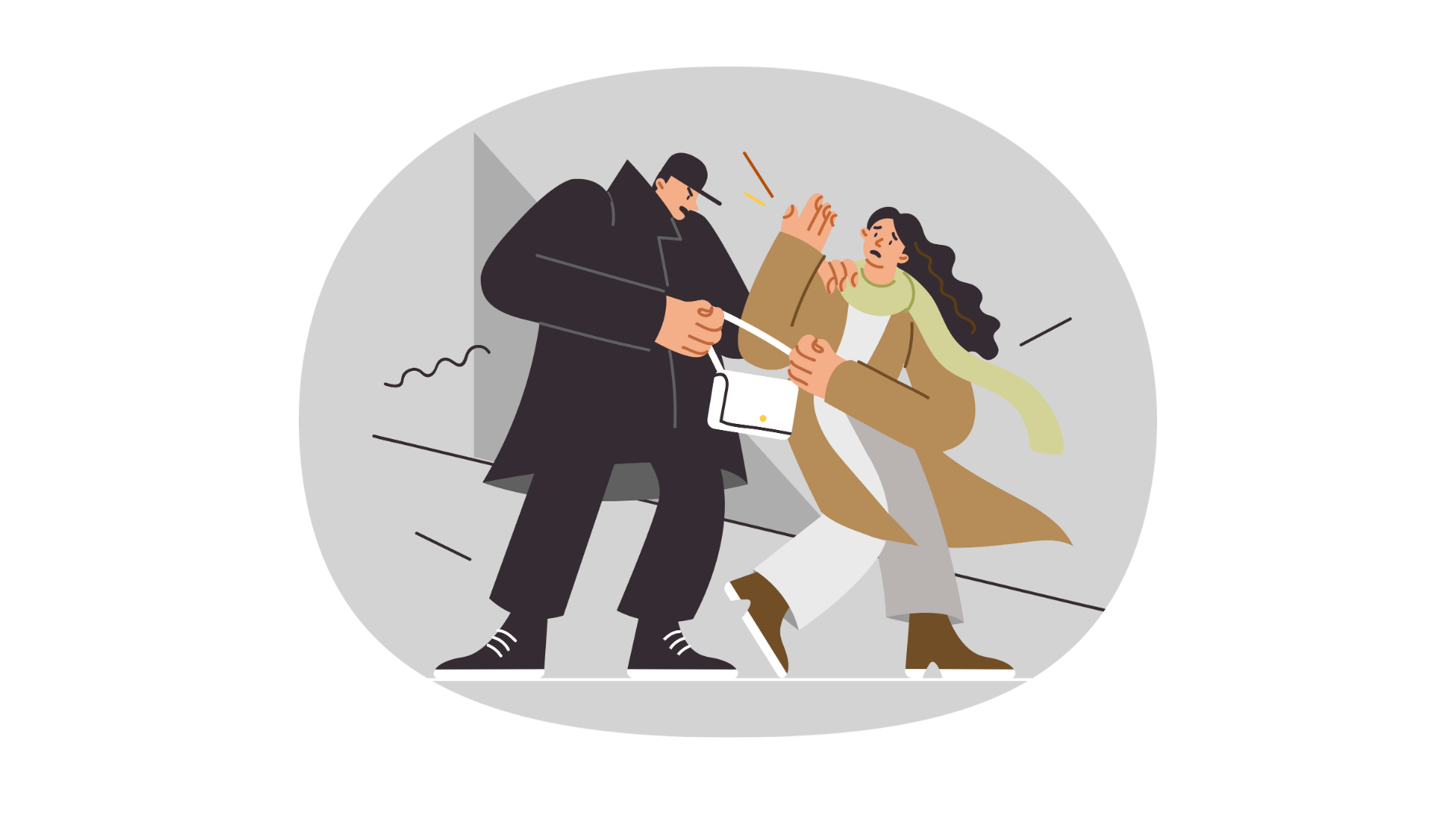
In both scenarios, the same crime was committed against you. However, the context changed how you were able to respond, receive support, and heal. While this is an imperfect example of offline violence, it shows how certain contexts can enable or disable people.
This remains true in online violence scenarios.
For women with disabilities, the context of a misogynistic and ableist society impacts daily life. Digital technology and online worlds replicate existing offline misogynistic and ableist systems.
Disability and Technology-Facilitated Gender-Based Violence
Women with disabilities may face different structural or systemic barriers. These barriers can include things like:
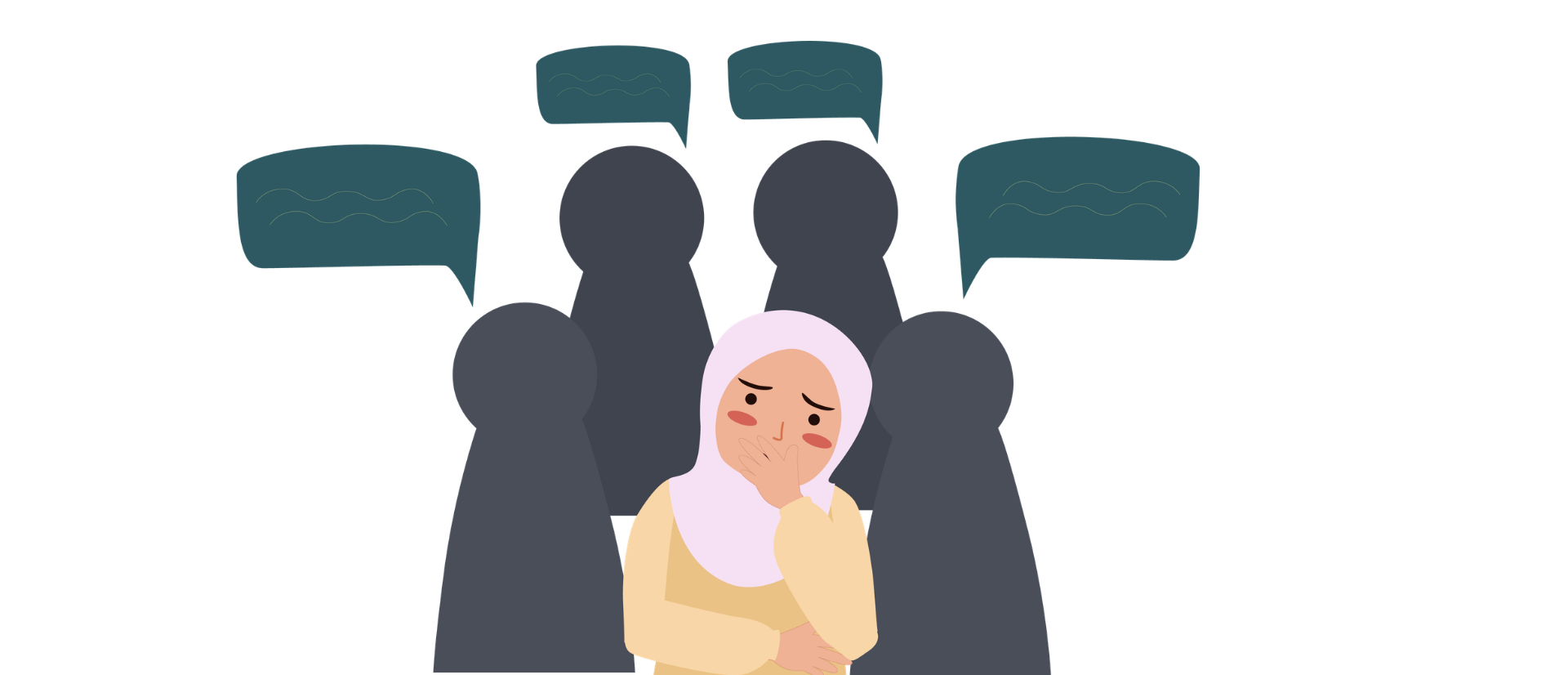
More physical and digital isolation. Often, inaccessible or unwelcoming spaces will prevent women with disabilities from participating in many areas of society. This means that there are fewer witnesses to violence, and can increase vulnerability.
More dependence on caregivers and loved ones. Many people with disabilities rely on support from paid or unpaid caregivers, making them at risk for abuse by these people.
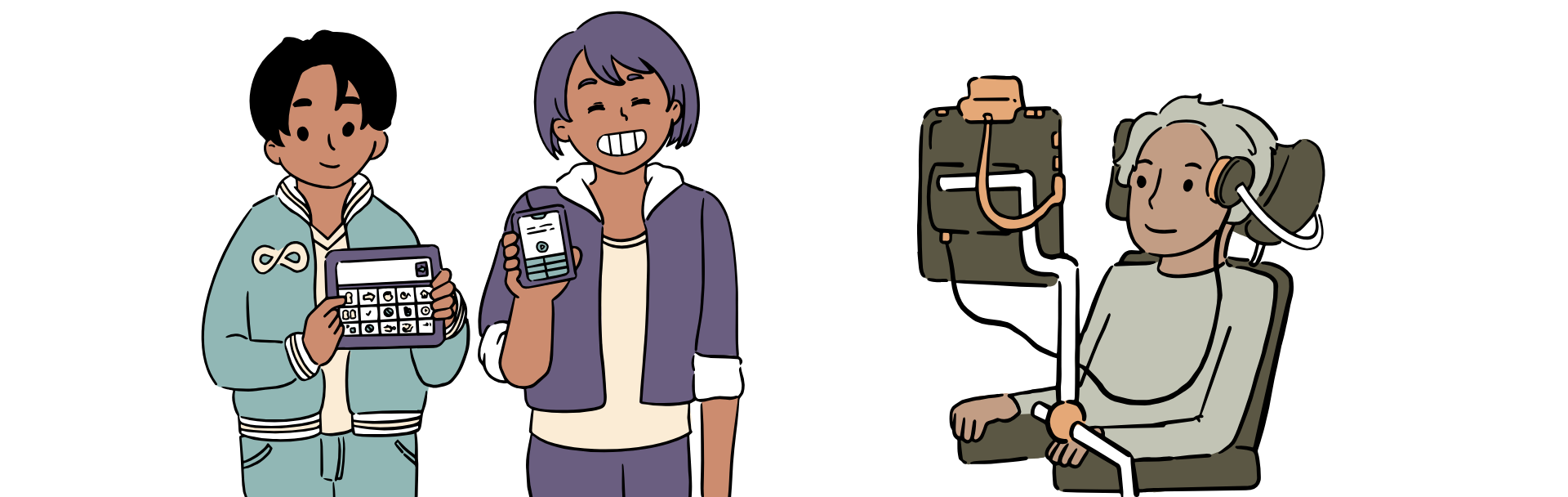
More dependence on technology. Often, people with disabilities use technology to support their navigation through daily life (such as communication, mobility, access to work or school). However, this increased reliance on tech can be used to exploit, manipulate, or control people.
More risk of devices being taken, monitored, or misused. Women with disabilities may rely on caregivers or family members for certain daily tasks, or have less physical autonomy to use their own devices. Because of this, “care” might be used as an excuse for taking away or monitoring devices.
Limited private time or private space. Disabilities can create situations that create constant surveillance for health-related reasons. Often, this lack of privacy can be used against people.
Lower digital literacy or education. Women with disabilities have historically lower levels of digital competency due to inaccessible education and devices, which overall compromises their online safety.

Inaccessible and non-inclusive reporting, safety and education. While tools to report and protect against TFGBV exist, many of them are not accessible for people with disabilities, or poorly explained. Therefore, people with disabilities are less likely to benefit from these tools.
Gendered-disability stigma. Women, people with disabilities, and women with disabilities often encounter societal stigma that creates inequality. These groups are frequently infantilized, fetishized, and/or degraded and demeaned. This carries over into TFGBV.
TFGBV in South Africa
In South Africa, the barriers mentioned above are very common. This is because there are many existing stigmas and discrimination around disability and gender.
For example, infantilization of women with disabilities is common. This further disables women by assuming that they are powerless or have no autonomy, or cannot make wise decisions (Capri & Swartz, 2018; Olkin et al., 2019). These assumptions may lead to increased risk of coercive control being masked as “helping”.
Overall, there is a disproportionately high rate of gender-based violence in South Africa, with 35.8% (1 in 3) of women having experienced some form of gender-based violence in their lifetime (Govender, 2023; Masiko-Mpaka, 2024; Mkwananzi & Nathane-Taulela, 2024). Moreover, levels of proper documenting, reporting, intervening and preventing gender-based violence is currently a major health challenge (Govender, 2023)
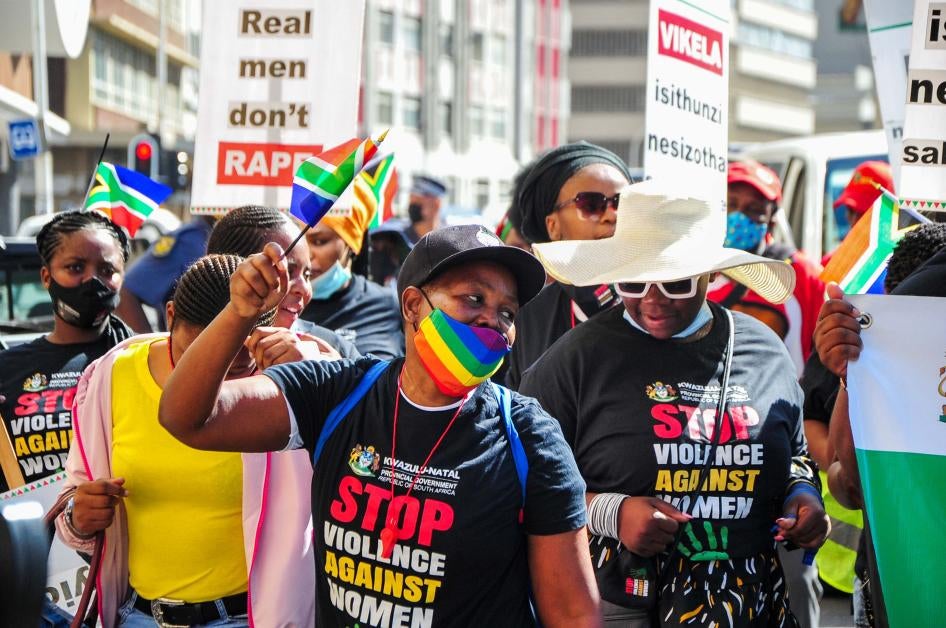
South Africa often has undereducated reporting systems about technology-facilitated violence for women with disabilities, making it difficult to report and find help for technology-facilitated violence. For example, disability-specific forms of violence such as taking away assistive technology, or abuse by caregivers may be less likely to be believed because they are not “generic” forms of TFGBV.
Technology-facilitated gender-based violence is often not taken seriously by law enforcement or by others. Because of this, many survivors will wonder if they are being “too sensitive” or making a big deal of nothing… and many times they will not report violence.
In addition, many people have misconceptions about TFGBV, for example, saying “Oh it’s not so bad. Just turn off your computer!” However, TFGBV has huge implications and impacts on survivors that go far beyond the screen.

How Can Different Forms of Disability Shape Risks?
Disability does not cause tech‑facilitated gender‑based violence (TFGBV), but different access needs can change how abuse shows up and what makes someone more at risk or harder to reach for support. The following examples are not exhaustive, but they can illustrate common patterns associated with different access needs.
If you think of others, leave them in the comment section below (online version)!
Reflection
Which of these vulnerabilities have you witnessed? How did they show up in your life or the life of someone you know of?
Resources
- Capri, C., & Swartz, L. (2018). ‘We are actually, after all, just children’: Caring societies and South African infantilisation of adults with intellectual disability. Disability & Society, 33(2), 285–308. https://doi.org/10.1080/09687599.2017.1409102.
- Govender, I. (2023). Gender-based violence – An increasing epidemic in South Africa. South African Family Practice, 65(1), 5729. https://doi.org/10.4102/safp.v65i1.5729.
-
Masboungi, C., & Quarterman, L. (2025, June 12). When will we listen? – Centering girls’ voices in our efforts on technology-facilitated gender-based violence (TFGBV). Sexual Violence Research Initiative. https://www.svri.org/when-will-we-listen-centering-girls-voices-in-our-efforts-on-technology-facilitated-gender-based-violence-tfgbv/.
- Masiko-Mpaka, N. (2024, November 25). Confronting South Africa’s Crisis of Gender-Based Violence. Human Rights Watch. https://www.hrw.org/news/2024/11/25/confronting-south-africas-crisis-gender-based-violence.
- Mkwananzi, S., & Nathane-Taulela, M. (2024). Gender-based violence and femicide interventions-perspectives from community members and activists in South Africa. Frontiers in Global Women’s Health, 5, 1199743. https://doi.org/10.3389/fgwh.2024.1199743.
- Olkin, R., Hayward, H., Abbene, M. S., & Van Heel, G. (2019). The Experiences of Microaggressions against Women with Visible and Invisible Disabilities. Journal of Social Issues, 75(3), 757–785. https://doi.org/10.1111/josi.12342.
-
South Africa: Broken Promises to Aid Gender-Based Violence Survivors. (2021, November 24). Human Rights Watch. https://www.hrw.org/news/2021/11/24/south-africa-broken-promises-aid-gender-based-violence-survivors

Feedback/Errata