
General Information About TFGBV
Chapter 1: What is technology-facilitated gender-based violence?
Learning Objectives
By the end of this chapter, we hope you:
- Know what technology-facilitated gender-based violence (TFGBV) is.
- Know what counts as TFGBV.
“” () is when someone uses technology like phones, computers, or the internet to hurt, scare, or control another person.
“Gender-based violence” (), is when someone is hurt or bullied because they are a woman or gender-diverse. There are many forms of GBV.
“” (), is when someone uses technology to hurt, scare, or target women and gender-diverse people. It happens online or through digital devices.
The word “violence”, is used to describe a lot of different behaviours and actions that humans can do to hurt others. There are many forms of violence that can occur, such as physical violence, sexual violence.
: this means punching, slapping, cutting, kicking or hurting the body.
: this means any type of sex or sexual touch that is not wanted. For example, rape or sexual assault.
Psychological or : this means using words or behaviours to hurt or scare someone.
Many types of violence can that happen offline can also occur in online spaces or through using technology, which makes them forms of TFGBV. However, not all TFGBV leaves behind visible marks, injuries, or other physical evidence. Because of this, many people do not recognize TFGBV as actual “violence”, and not treated as seriously.
So… Is technology-facilitated violence actually violence?

Question: Is “technology-facilitated” violence actually violence?
Answer: Yes. TFGBV is real violence because it causes real harm. Even though it happens through phones, social media, or online platforms, it can still affect a person’s safety, mental health, dignity, relationships, access to services, and overall wellness.

TFGBV is real but it can look different than offline violence. There is often a digital device (like a phone, computer, iPad/tablet, video game system, etc.) that physically separates the person being hurt from the person committing the violent act (the ).
Sometimes, what starts as online violence can lead to offline violence. For example, a perpetrator may begin cyberstalking someone, but eventually, begin stalking them in-person using the location they shared on social media. In many cases, online violence has led to femicide or physical abuse.
The reverse can also be true. What begins as offline abuse (such as domestic violence) can then start happening using technology as weapon. For example, a perpetrator has been committing through emotional abuse, but soon begins controlling their partner’s ability to use her phone and computer.
Activity
What Counts as Violence?
Violence isn’t always physical. It can happen with words, actions, or technology. To help you understand whether an action or event is violent, ask yourself two questions:
- “Is it harmful?”
- “Is the harm on purpose?”

Let’s talk more about these two questions.
1. Is it harmful?
This question is asking if the action or event is hurting or intruding on someone’s body (including digital images/media/content that involves your body), your privacy, your feelings, or things that belong to you?
Violence causes real harm, even if it happens online or through digital technology.
Harm can be…
- Emotional (fear, anxiety, shame, sadness);
- Social (ruined relationships, employment, education, reputation);
- Physical (threats, doxxing, stalking, stealing physical devices);
- Financial (stealing money, pressuring you to pay, ruining your career);
- Digital (hacking into accounts, sending unwanted images), or;
- Threatening to do things that will cause other forms of harm.
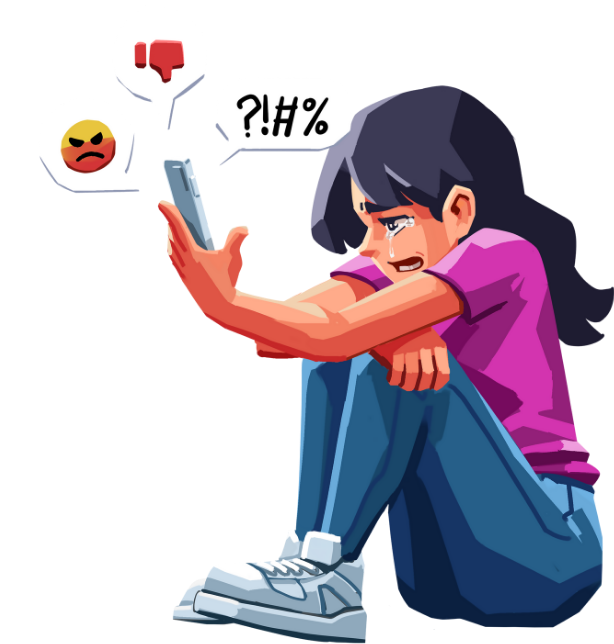
2. Is the harm on purpose?
Violence is intentional, not an accident. Violent actions are when someone is doing or saying something because they wish to…
- Scare;
- Hurt;
- Control;
- Embarrass;
- Pressure;
- Intimidate, or;
- Steal from someone else.

Sometimes, it’s difficult to identify when something is violence, especially if it isn’t a well-known form of violence. TFGBV still not well-known or recognized as violence by many people. This is why it is vital to understand the definition of TFGBV, and to be able to recognize different forms of TFGBV.
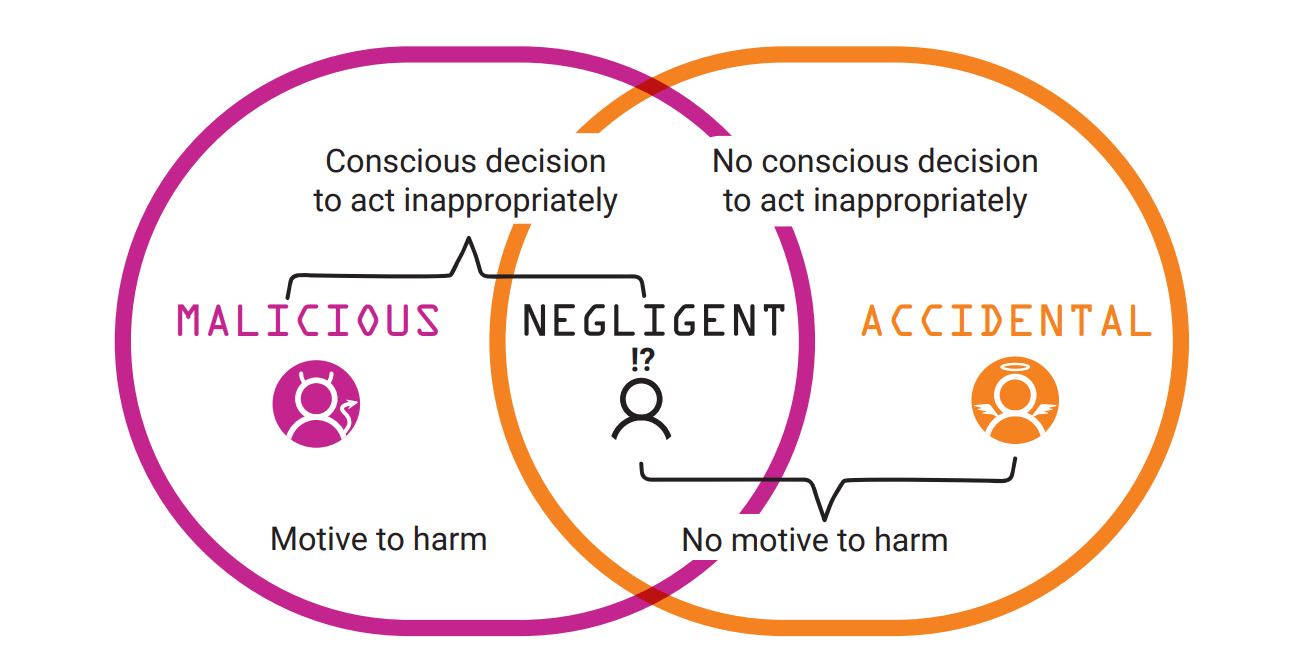
Another way to look at TFGBV and the “what is violence?” question, is by viewing threats of violence as being malicious (or, intentionally bad, or inappropriate), negligent (where there was a conscious inappropriate behaviour, but without any bad intent), or accidental (where there was no intentionally inappropriate behaviour and no bad intent).
Other terms used to refer to TFGBV
We want to make you aware of the other ways that people might refer to TFGBV. Other terms might include:
- Being harassed online
- Online bullying / cyberbullying
- Social media abuse
- Being “dragged” online
- Technology-facilitated violence
- Digital abuse
- Online violence
- Cyber-harassment
This list is not complete, and you may come across other terms or phrases that people use to talk about TFGBV. The important part is that you understand that these terms mean similar things.
Before we learn about about the different types of TFGBV, check your existing knowledge with the quiz below.
Activity
Resources
- UNFPA. (2025). An Infographic Guide to Technology-facilitated Gender-based Violence (TFGBV) [Infographic Guide]. United Nations Population Fund. https://www.unfpa.org/sites/default/files/pub-pdf/An%20Infographic%20Guide%20to%20TFGBV.pdf
- UNFPA. (2023). Guidance on the Safe and Ethical Use of Technology to Address Gender-based Violence and Harmful Practices: Implementation Summary [Implementation Summary]. United Nations Population Fund. https://www.unfpa.org/sites/default/files/pub-pdf/UNFPA_SafeEthicalGBVTechGuide_Summary_2023.pdf
“Technology-facilitated violence” (TFV) is when someone uses technology like phones, computers, or the internet to hurt, scare, or control another person.
“Gender-based violence” (GBV) is when someone is hurt or bullied because they are a woman or gender-diverse. There are many forms of GBV.
Technology-facilitated gender-based violence (TFGBV) is when someone uses technology to hurt, scare, or target women and gender-diverse people. It happens online or through digital devices.
Physical violence is punching, slapping, cutting, kicking or hurting the body.
Sexual violence is any type of sex or sexual touch that is not wanted. For example, rape or sexual assault.
Psychological or emotional violence means using words or behaviours to hurt or scare someone.
A person or group that does a harmful, illegal, or unkind act against someone else.
This includes methods to harm or control a romantic or sexual partner beyond physical force, including sexual, emotional, financial, and technology-facilitated abuse.

Feedback/Errata