Introduction
1 🌱 Values to Guide You
Before You Begin
We recognize that learning about ABR can feel like a task, become emotionally laborious, triggering and content-heavy. At the same time, there is joy. We hope that as you navigate the content, you find:
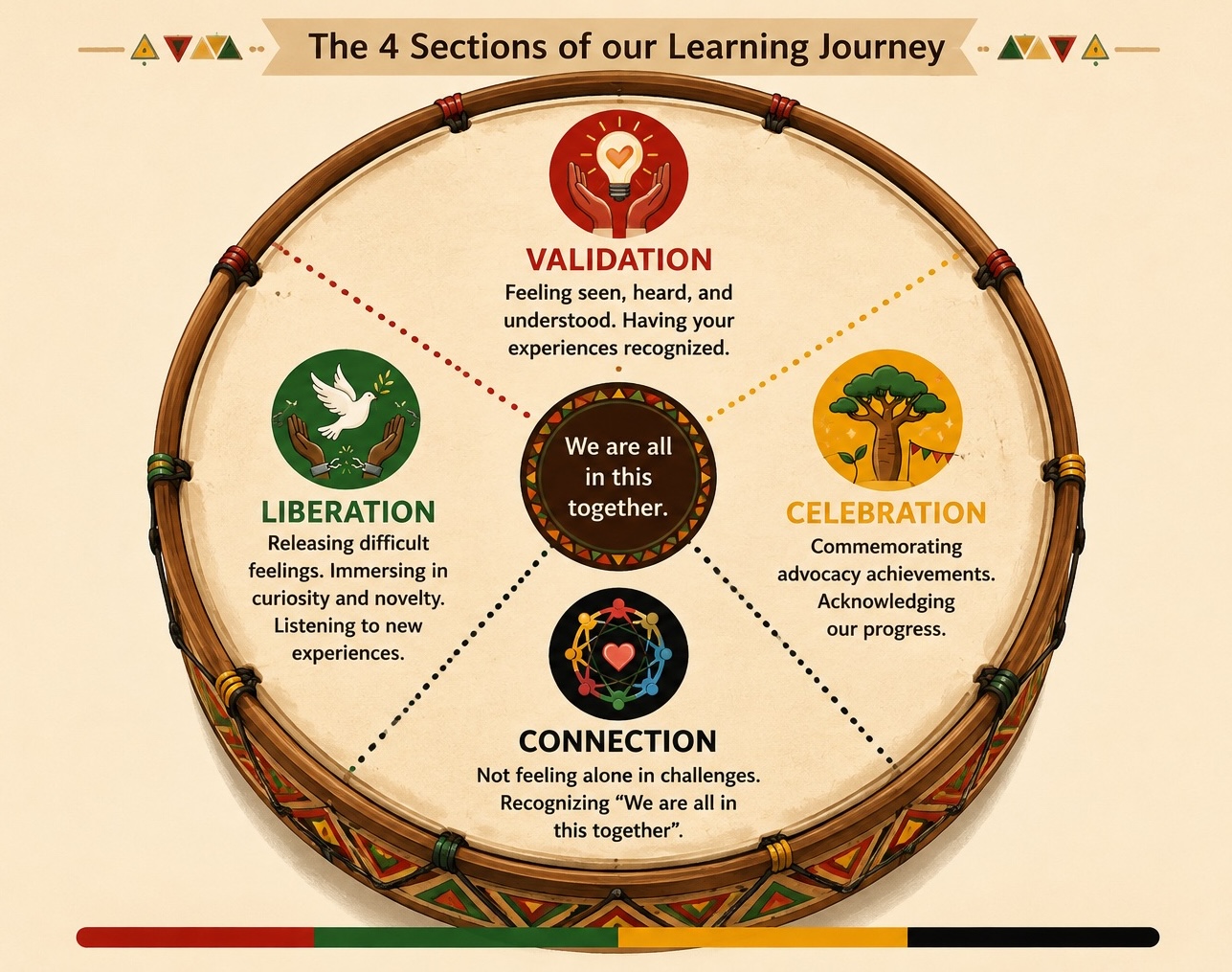
(Click image to enlarge)
A Note on Approach and Readiness
This Pressbook is not an introduction to racism, racism in Canada, Anti-Black Racism (ABR), or anti-oppression.
We strongly encourage you to develop a foundational understanding of these issues before engaging with this Pressbook. Doing so will enhance your learning, deepen your reflection, and help you meaningfully engage with the content.
Here are some suggested starting points:
- Black Lives Matter Canada
- The Canadian Human Rights Commission
- Canadian Race Relation Foundation
- Government of Canada Website
- The Black Health Alliance
- Toronto Academic Health Science Network’s Introduction to Anti-Black Racism eModule
Reading books or watching recorded lectures and interviews by a variety of Canadian and international authors and social justice advocates, including but not limited to:
- Afua Cooper
- Angela Davis
- Audre Lorde
- Austin Channing Brown
- Chinua Achebe
- Christina Sharpe
- Charmaine Nelson
- Desmond Cole
- Ibram X. Kendi
- James Baldwin
- Lawrence Hill
- Lynae Vanee
- Patrisse Cullors
- Reni Eddo-Lodge
- Ta-Nehisi Coates
- Whitney French
You can also find articles in academic journals, including the Journal of Critical Dietetics.
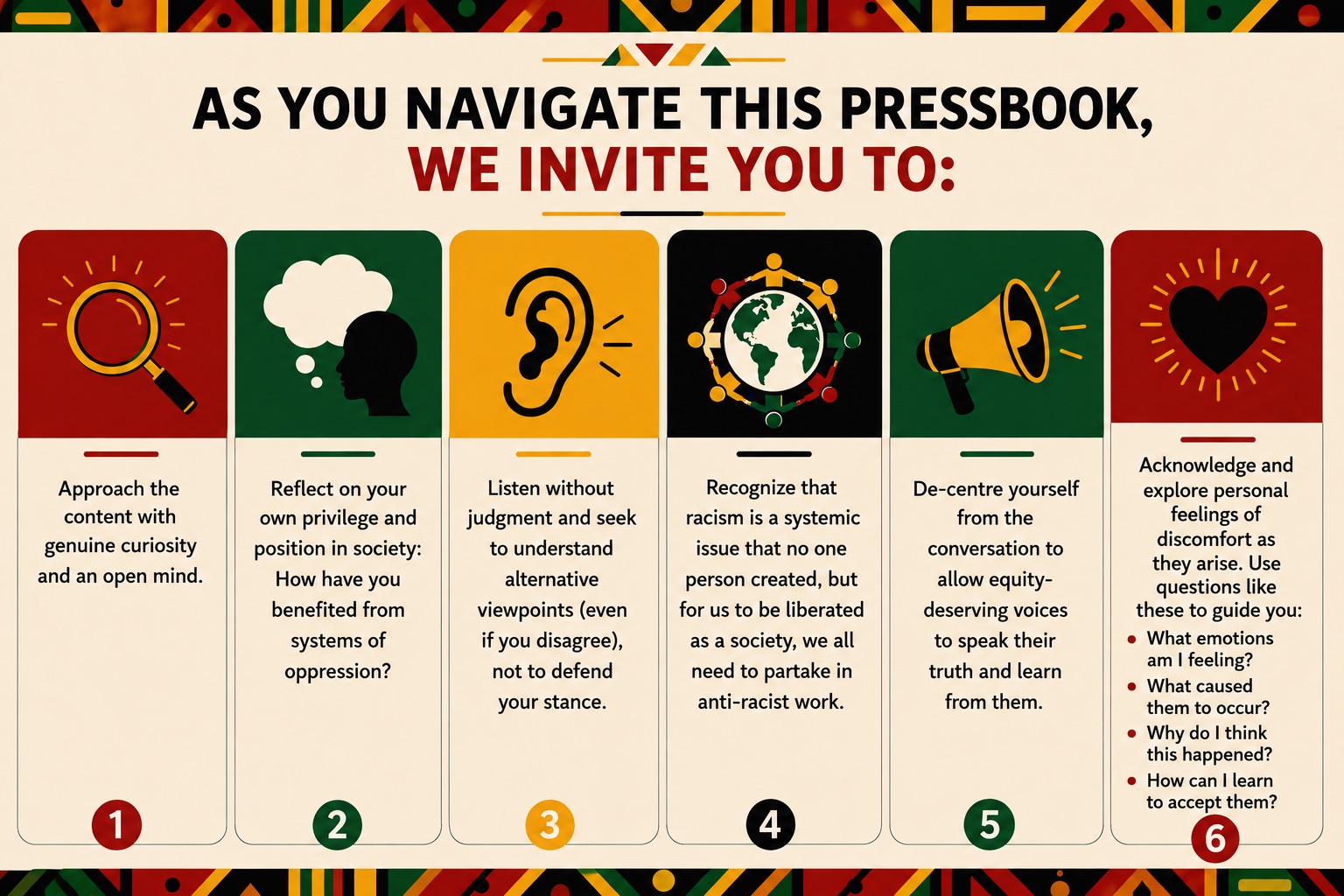
(Click image to enlarge)
🏁 After Completing This Pressbook
It is important that you know and embrace that these topics and issues are not competencies to “check off” your professional development list. Although this Pressbook will expose you to a broad view of the state of ABR in Canadian dietetics and offer tools to help you reflect on the issue, it will leave you with many more questions, concerns, responsibilities and discomfort.
⚠️ It is not a replacement for developing a healthy commitment to addressing ABR.
We strongly encourage you and your organization to invest time and resources to host in-person post-education sessions and conversations on this topic, led by a professional with expertise in ABR education and training.
This is vital in supporting Black and non-Black students, practitioners, educators, and faculty in having generative, safer and supportive conversations about questions, emotions and ideas sparked from engaging with the contents of this Pressbook while also demonstrating your commitment to acknowledging and confronting ABR.