Personalize Your Learning Journey
In our attempt to ease you into a more decolonized way of learning, we offer some support to personalize your learning experience.
Similar to many of you, the creators of this Pressbook were taught to learn in ways that are grounded in westernized teaching methods, including text-based and literature-centred teaching methods and also sequential and linear learning formats (see figure below). However, we have made intentional efforts to also embrace some of the strengths and intentions of many Afro-centric ways of sharing and aquiring knowledge (see figure below).
We choose to embrace the spirit of Audre Lorde’s famous quote:
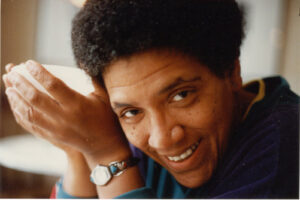
“For the master’s tools will never dismantle the master’s house. They may allow us to temporarily beat him at his own game, but they will never enable us to bring about genuine change. Racism and homophobia are real conditions of all our lives in this place and time. I urge each one of us here to reach down into that deep place of knowledge inside herself and touch that terror and loathing of any difference that lives here. See whose face it wears. Then the personal as the political can begin to illuminate all our choices (Lorde, 2023).”
We have put our limited, yet developing efforts, into providing a variety of decolonized ways of teaching and learning by embracing African and Indigenous wisdoms that recognize multiple forms of intelligence, weaving in oral stories and experiences via video testimonies, offering practice based-learining opportunities through real lifes cases, integrating moral, spiritual, and ethical exploration through introspective and extrospective reflection questions and guided mediations, and recognizing that experts in food and nutrition exist outside of dietetics.
“Wisdom is like a baobab tree; no one individual can embrace it.”– African Proverb
Meaning: True wisdom is vast and multifaceted, requiring the collective understanding and contributions of many people.
Learning Framework: Comparative Analysis of Educational Ontologies
Click on each section below to expand and compare how his Pressbook aims to recognize common Western ways of teaching and learning while embracing inspiration and wisdom from historical and traditional African ontologies.
1. Individualism vs. Communal & Relational Learning
Common Western Ways
Emphasis on individual achievement, autonomy, and personal responsibility. Learning is often assessed at the individual level (grades, exams).
Examples: Individual assignments, independent research, solo examinations.
Historical & Traditional African Ways
Knowledge was collective. Emphasized interdependence and shared responsibility within the community. Elders, peers, and ancestors were all teachers.
Context: Aligns with “Ubuntu” (I am because we are), serving communal survival rather than just personal advancement.
2. Linear & Sequential vs. Oral Tradition & Storytelling
Common Western Ways
Knowledge presented in a step-by-step, hierarchical fashion (beginner to advanced).
Examples: Prerequisites, structured curricula, and linear lesson planning.
Historical & Traditional African Ways
Relies on oral modes like proverbs, songs, poetry, and call-and-response.
Context: These were highly structured pedagogical tools for encoding history, ethics, and social norms through memory and listening.
3. Text-Based vs. Experiential & Practice-Based Learning
Common Western Ways
Heavy reliance on written texts as the authoritative source of knowledge.
Examples: Textbooks, peer-reviewed journals, and written reports.
Historical & Traditional African Ways
Knowledge learned by doing. Observation and imitation were key.
Examples: Apprenticeships and participation in daily tasks (farming, cooking, governance). Assessment was based on demonstrated competence.
4. Teacher as Expert vs. Moral & Spiritual Integration
Common Western Ways
Teachers are “content experts” transmitting info to learners (recipients).
Examples: Lectures and instructor-led discussions.
Historical & Traditional African Ways
Education is inseparable from character formation and respect for ancestors.
Context: Spiritual and material knowledge coexisted; ethics and practical skills were taught together.
5. Objectivity vs. Intergenerational Knowledge
Common Western Ways
Knowledge framed as neutral and value-free. Focus on measurable outcomes.
Examples: Standardized testing and scientific rationalism.
Historical & Traditional African Ways
Multi-directional learning. Youth learn from elders, peers, and younger children.
Context: Social roles determined learning pathways rather than rigid classroom age-grades.
6. Time-Driven vs. Contextual & Place-Based Learning
Common Western Ways
Structured around clock time, deadlines, and efficiency.
Examples: Semesters and timed examinations.
Historical & Traditional African Ways
Rooted in local environments, land, food systems, and local history.
Context: Learning was adaptive and responsive to the specific ecology of the region.
7. Credentialing vs. Lifelong Learning
Common Western Ways
Validation via degrees, certificates, and professional designations.
Examples: Accreditation and licensing exams.
Historical & Traditional African Ways
Learning was not confined to childhood. It continued through every life stage.
Context: Rites of passage, marriage, leadership, and elderhood each carried new knowledge responsibilities.
8. Disciplinary Silos vs. Holistic Conceptions of Intelligence
Common Western Ways
Knowledge divided into distinct academic subjects. Interdisciplinary work is often optional.
Examples: Departmental boundaries and segmented journals.
Historical & Traditional African Ways
Pedagogies integrated multiple intelligences (emotional, social, spiritual, and practical).
Context: Resisted fragmentation; health, art, and politics were seen as interconnected systems.
9. Resistance to Fragmentation of Knowledge
Historical & Traditional African Ways
Knowledge was integrated rather than compartmentalized. Agriculture, health, spirituality, and art were all interconnected, reflecting a holistic systems-based worldview.
10. Education as Survival and Liberation
Historical & Traditional African Ways
Education prepared learners for community continuity, resilience, and self-determination.
Systemic Context: Scholars argue these pedagogies were deliberately undermined by colonial systems to disrupt African governance and memory.
Developing your knowledge about ABR is a lifelong skill and not a competency that you need to “check off” from your list. Rather than aiming to complete every question and reviewing each supportive resource and link, we encourage you to take your time and choose your own path. Here are some ideas:
- Complete the reflection questions that speak to you or challenge your thinking/beliefs the most at this time of your life (i.e. moral, spiritual and ethical integration)
- Focus on only one chapter a day instead of plugging through (i.e., education as liberation instead of survival)
- Have a conversation about what you learned with a friend or family member (i.e. communal, relational learning + intergenerational learning)
- Return to the Pressbook in a few months to explore new resources, to expand your learning or to understand the content with “new eyes” (i.e. lifelong learning)
- Know that you are not expected to “master” what you learn. We encourage you to relax knowing that you may learn for the sake of learning for personal, communal or even professional growth. (i.e. education as liberation instead of survival)
- Reflect on your learning and how it relates to your day-to-day activities and experiences, such as grocery shopping, working in the garden or farm, preparing food, working in the lab, walking the hallways at work, observing a family member, sitting at the table with family, friends or colleagues. ( i.e. resistance to fragmentation of knowledge)